Mar-a-Lago shooting highlights President Trump security challenges


NEWYou can now listen to Fox News articles!
A deadly confrontation at Mar-a-Lago, Florida, on Sunday is the latest in a series of high-profile security incidents threatening the president. Donald Trumpas former Secret Service officials warn that lone, low-tech actors now pose one of the toughest challenges to presidential protection.
“It should be clear to all of us by now that Trump is the most threatened president in American history,” former Secret Service agent William “Bill” Gage told Fox News Digital on Monday, highlighting several high-profile incidents in recent years. Unlike previous presidencies, where threat levels often declined over time, Gage said, “the longer he’s president, the more these attacks continue to occur.”
Gage said the hardest cases to prevent are often the least sophisticated. Recent incidents, he noted, were “very low-tech attacks, carried out by people without any training”, using rudimentary weapons. “If you had stood in line behind them at Starbucks, you wouldn’t have given them a second glance,” he said.
Gage said the threat landscape has changed during his 12-year career as a Secret Service agent. When he joined the Secret Service in 2002, he said the agency was moving away from what he described as the traditional “lone gunman” model — figures like Lee Harvey Oswald, who assassinated John F. Kennedy, or international activists such as “Carlos the Jackal,” one of the world’s most wanted terrorists in the 1970s and ’80s — and adapting to a the post-September 11 world focused on coordinated terrorist networks like Al-Qaeda and later ISIS.

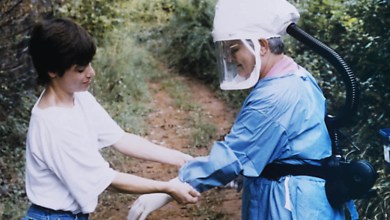
A deadly confrontation at Mar-a-Lago, Florida, on Sunday is the latest in a series of high-profile security incidents involving President Donald Trump. (Marco Bello/Reuters)
“But if you look at Butler and the two Mar-a-Lago incidents, they were very low-tech attacks,” Gage said. “Low-tech players are the ones who tend to slip through the cracks.”
He also warned of a potential copycat effect when details of such incidents are made public.
“If it were up to the Secret Service, they would never report any of these incidents,” Gage said, arguing that widespread media coverage allows others to “study what happened” and try to refine it.
In today’s hyperconnected political climate, he said, this dynamic adds an extra level of complexity for agents trying to stop the next threat before it materializes.
In the early hours of Sunday, a 21-year-old man identified as Austin Tucker Martin of North Carolina was shot and killed by U.S. Secret Service agents and a local sheriff’s deputy after entering the secure perimeter of Trump’s Mar-a-Lago resort in Palm Beach, Florida.
Authorities say Martin came through the north gate with a shotgun and a can of gasoline. After being ordered to drop both, he dropped the can but raised the shotgun at the officers, who shot and killed him at the scene. Trump and First Lady Melania Trump were in Washington at the time.
It was the third high-profile security incident involving Trump in less than two years.
In July 2024, a gunman opened fire at a campaign rally in Butler, Pennsylvania, grazing Trump’s ear and killing an attendee before being shot and killed by a Secret Service sniper.
In September 2024, a man armed with a rifle was confronted by officers near Trump’s golf course while he was playing; this suspect was later convicted of attempted murder.
Although those incidents attracted intense attention, former deputy director Don Mihalek said Mar-a-Lago’s latest intrusion does not necessarily signal a breakdown in protection systems.
“He walked through the exterior door of an active club,” Mihalek told Fox News Digital. “This was not someone arriving at the president’s residence.”
Officers confronted the suspect within seconds, he said, describing the rapid response as proof that the layers of security were working as intended.
Mihalek said presidential protection relies on multiple rings of security because the exterior perimeters of properties like Mar-a-Lago cannot be sealed in the same way as the White House.
“If he ended up at the president’s house at Mar-a-Lago, the conversation might be different,” he said.
He also cautioned against viewing recent incidents in isolation, pointing out that presidents routinely face about 2,000 threats a year, most of which are mitigated before the public becomes aware of them.
“These are just very public instances,” Mihalek said, arguing that the age of social media amplifies perceptions of escalation.
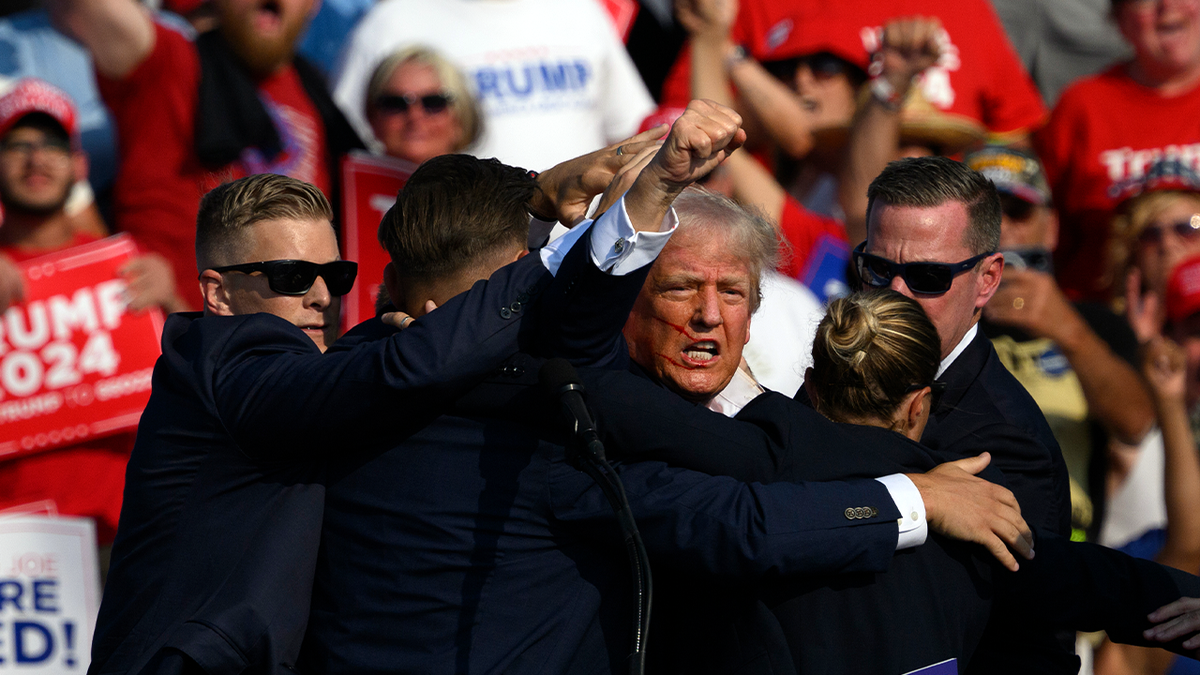
Then-Republican presidential candidate Donald Trump is taken away by the Secret Service after gunshots ring out during a campaign rally at the Butler Farm Show Inc. on July 13, 2024, in Butler, Pennsylvania. (Jeff Swensen/Getty Images)
GUNS, GUNS, AND VANDALISM: TRACKING POLITICAL VIOLENCE IN AMERICA
Mihalek cited the 2024 rally shooting in Butler, Pennsylvania, as an example of how early intervention can be decisive, noting that local law enforcement reportedly identified the suspect before the attack.
“If someone had walked up and said, ‘Hey, who are you?’ we wouldn’t talk about Butler,” he said.
As Trump prepares to address Congress State of the UnionBoth former officials said the security posture at the Capitol was unlikely to change in response to the weekend incident.
The annual address is designated as a special national security event – the highest level of federal security planning – triggering coordination between the Secret Service, the U.S. Capitol Police, the FBI, the War Department and other agencies. The designation allows for expanded perimeter controls, airspace restrictions and continuity of government planning.
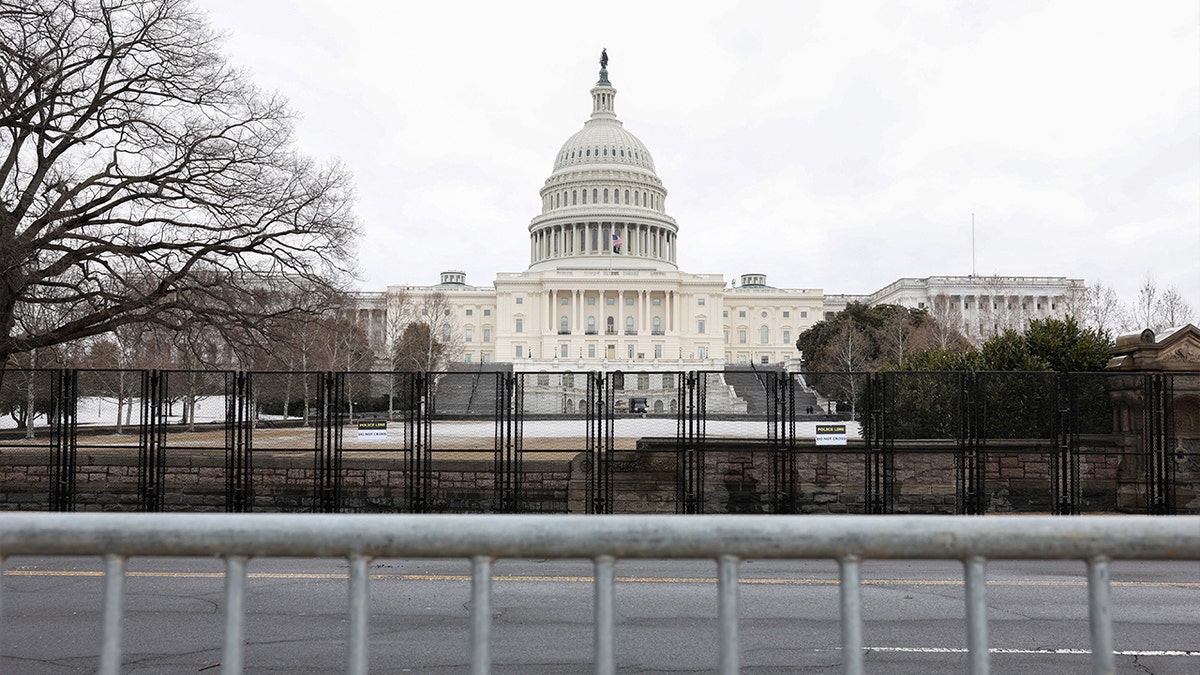
Barricades are erected around the Capitol before the State of the Union. (Kylie Cooper/Reuters)
CLICK HERE TO DOWNLOAD THE FOX NEWS APP
Gage, who previously led planning for the State of the Union addresses, said the event is proceeding according to a well-established security “plan” designed to account for worst-case scenarios. “There’s really no way to increase it,” he said.
Both former officials said the defining challenge for presidential protection today is unpredictability: individuals with minimal training, crude weapons and the ability to find reinforcements online. Unlike organized extremist networks, these actors may leave few detectable signals before acting.
Related article