Blood moon 2026: Where to livestream the total lunar eclipse next week


A a total lunar eclipse will be visible parts of North America on March 2 and 3, but not everyone is guaranteed to see it; Daylight or clouds can obscure your view, depending on your location, and the moon’s low position relative to the horizon during the eclipse can also cause problems.
Fortunately, no matter where you are on Earth, you can still catch the “blood moon” online to savor the 58 minutes of lunar totality, when the moon moves completely into the dark, shady shadow of the Earth and turns red.
The full lunar eclipse on March 2 and 3 — from the time Earth’s outer shadow crosses the moon to the time it leaves — lasts about 5.5 hours, from 3:44 a.m. to 9:23 a.m. EST Tuesday, March 3, according to Time and date. With webcasts delivered to your phone, tablet and/or laptop, you can browse eclipse images in various regions of North America, as well as Australia, New Zealand and East Asia.
Access to the webcasts will be especially important for skywatchers in Europe, Africa and most of Asia – where the eclipse will not be visible at all – or in the eastern time zones of North America. From the Midwest to the west coast of North America, the fully eclipsed moon will be visible above the western horizon. However, over most of the East Coast, the moon will begin to set as it reaches totality.
Look on it
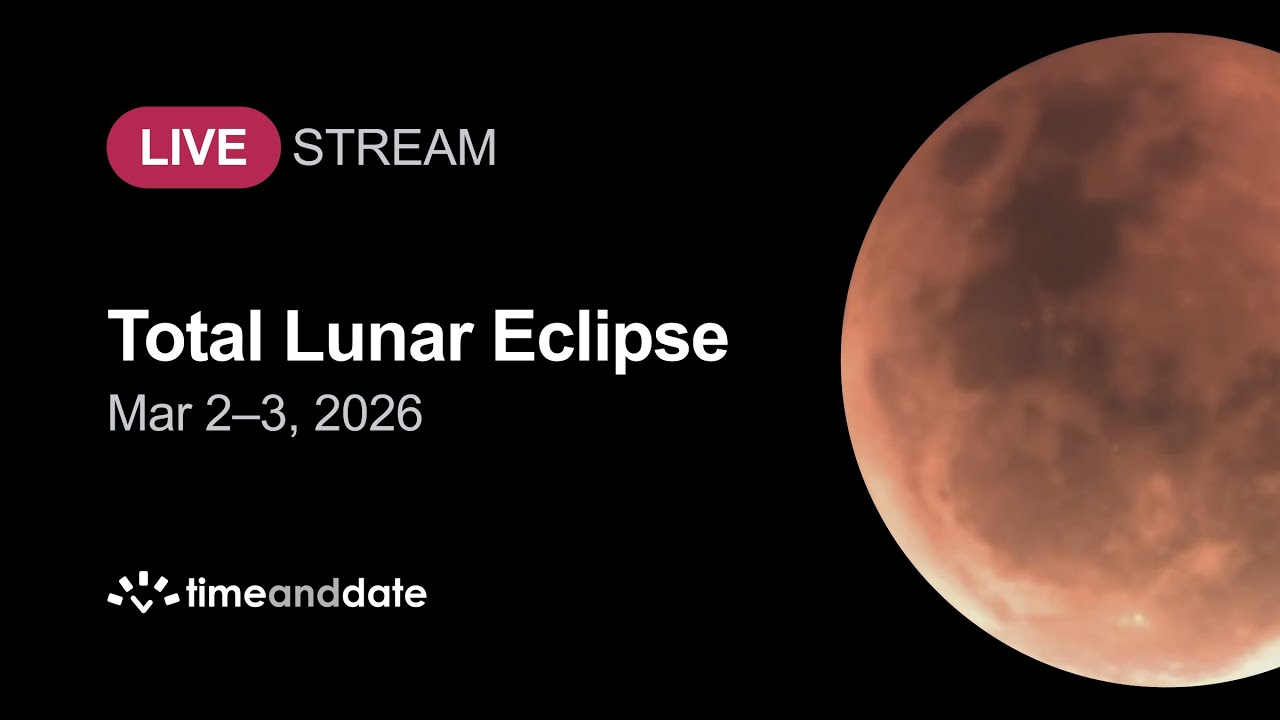
Time and date
One of the most trusted livestreamers of eclipses of all kinds, the Timeanddate.com team will once again be at your disposal with live stream from all over the world. Presenters Graham Jones and Anne Buckle will host, as always. This time, they will be joined by Preethi Krishnamoorthy and Avinash Surendran, aka the Starry Knightswhich will join us from Hawaii, with other feeds from the Perth Observatory in Australia and the website’s mobile observatory near Los Angeles.
Look on it
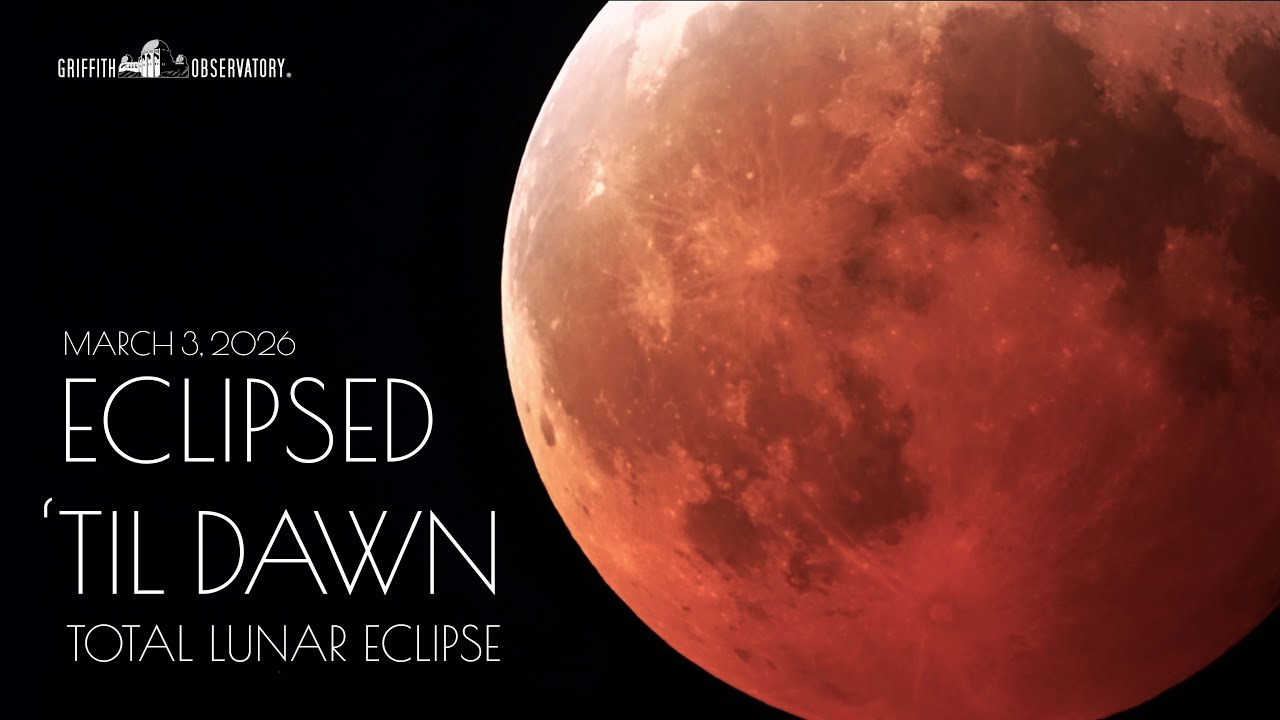
Griffith Observatory
Connect to the live broadcast from the Griffith Observatory in Los Angeles from 12:47 a.m. to 6:25 a.m. PST on March 3, weather permitting. You can find out more about the broadcast on his home page. The views from Griffith will likely be among the finest in North America, perfectly suited to capture the entire event from start to finish, as is the case throughout California. (Note: This is an online-only event, with no on-site public broadcast.)
The virtual telescope project
Astrophysicist Gianluca Masi, founder The virtual telescope projectwill organize a show live images from astroimagers broadcasting live views of the total lunar eclipse around the world, starting at 3:30 a.m. EST. North American coverage will include live broadcasts from Florida, Michigan, New Mexico and Montreal, while Australian sites will feature views from Queensland, New South Wales, Victoria and Western Australia.
Here are the times for lunar totality:
- Eastern Time: 6:04 a.m. to 7:02 a.m. EST on March 3 (in most areas, moonset occurs during totality)
- Central Time: 5:04 a.m. to 6:02 a.m. CST on March 3
- Mountain Time: 4:04 a.m. to 5:02 a.m. MST March 3
- Pacific Time: 3:04 a.m. to 4:02 a.m. PST on March 3
- Alaska Time: 2:04 a.m.-3:02 a.m. AKST on March 3
- Hawaii Time: 1:04 a.m. to 2:02 a.m. HST on March 3


