Ski resorts are increasingly reliant on snowmaking. But at what cost?


This winter’s snow cover is the lowest on record in the western United States. While that could cause a torrent of problems in the spring — more wildfires, less water for farms and fish — for now, there’s one thing on many Westerners’ minds: skiing.
In Colorado, less than a third of courses in the Arapahoe Basin are open. In Washington, the Mount Baker ski area canceled an annual snowboard race “due to unfeasible snowpack.” In Oregon, Hoodoo and Mount Ashland ski areas were temporarily closed for weeks due to lack of snow, while the college ski championships were moved from Montana to Utah.
What to do in a ski resort? Making snow, presumably, although details on resort snow coverage are scarce. Alterra and POWDR, two large ski resort conglomerates, did not respond to questions. Vail Resorts, which owns and operates 42 ski areas around the world, said that while the company doesn’t share specific snowmaking data, “weather conditions, particularly temperature, influence the amount and duration of snow production.”
Despite the dire conditions, Steven Fassnacht, a professor of snow hydrology at Colorado State University, said it would be difficult for western resorts to significantly increase snowpack. This would require resorts to purchase additional water rights, a costly and complex legal process.
Historically, ski resorts in the West rely much less on artificial snowmaking than those in other parts of the country. On average, less than 10 percent of the region’s skiable areas are covered with artificial snow, compared to more than 50 percent in the Northeast and about 80 percent in the Southeast and Midwest.
But as climate change makes winters increasingly warm and unpredictable, snow cover will likely become more severe in the region, leading to environmental consequences and other challenges.
The origins of snowmaking date back to 1949, when the owner of a Connecticut ski resort spread 700 pounds of ice in a single run. It only lasted about two weeks, but it gave an idea to a group of engineers – and bankrupt ski entrepreneurs. “Outside their old ski factory, they connected a 10-horsepower compressor through a garden hose to the nozzle of a spray gun that they used to paint skis,” wrote John Fry, a ski historian.
Today, the basic technology of snowmaking remains the same: spraying water under high pressure into the air, where it freezes. Energy and water consumption are the main environmental concerns, although potential impacts range from land degradation to exposure to chemicals. There is also indigenous opposition which generally focuses on the desecration of sacred places through sewage.

The Olympics give up PFAS waxes – and the “ridiculous” speed they gave skiers
It takes a lot of energy to push the water up and pressurize the air. A study of 10 ski areas across the country estimated that snowmaking accounts for an average of 18 percent of a resort’s energy use.
Then there is the water that is used to make snow. Palisades Tahoe, for example, uses “50 to 70 million gallons of water for annual snowmaking, or enough to cover about 60 acres of land with 1.5 feet of snow,” according to the San Francisco Chronicle.
While 70 million gallons is nothing to sneeze at — that’s what 50 American families could use in a year — Fassnacht pointed out that about 80 percent of the water used for snowmaking returns to streams and rivers. The rest is lost by evaporation.
Although this water comes from the same water source used by cities and farms, the demand is at a different time of year, Fassnacht said. Ski areas typically produce snow in late fall and early winter, and agricultural and municipal needs do not increase until late spring and summer. And in the event that there isn’t enough water available, ski resorts are junior water rights holders, which means they would have to fall in line behind those with senior water rights. In Colorado, snowmaking accounts for about 0.05 percent of the state’s annual water use, while agriculture accounts for about 85 percent.
Artificial snow, however, differs from natural snow in one important respect: it does not contribute to the region’s water supply on a large scale. According to researchers at the University of California at Berkeley, 75% of the water on which Westerners depend comes from mountain snowpack. So while snowmaking helps snow-hungry skiers, it doesn’t make up for dry winters where water is really needed.
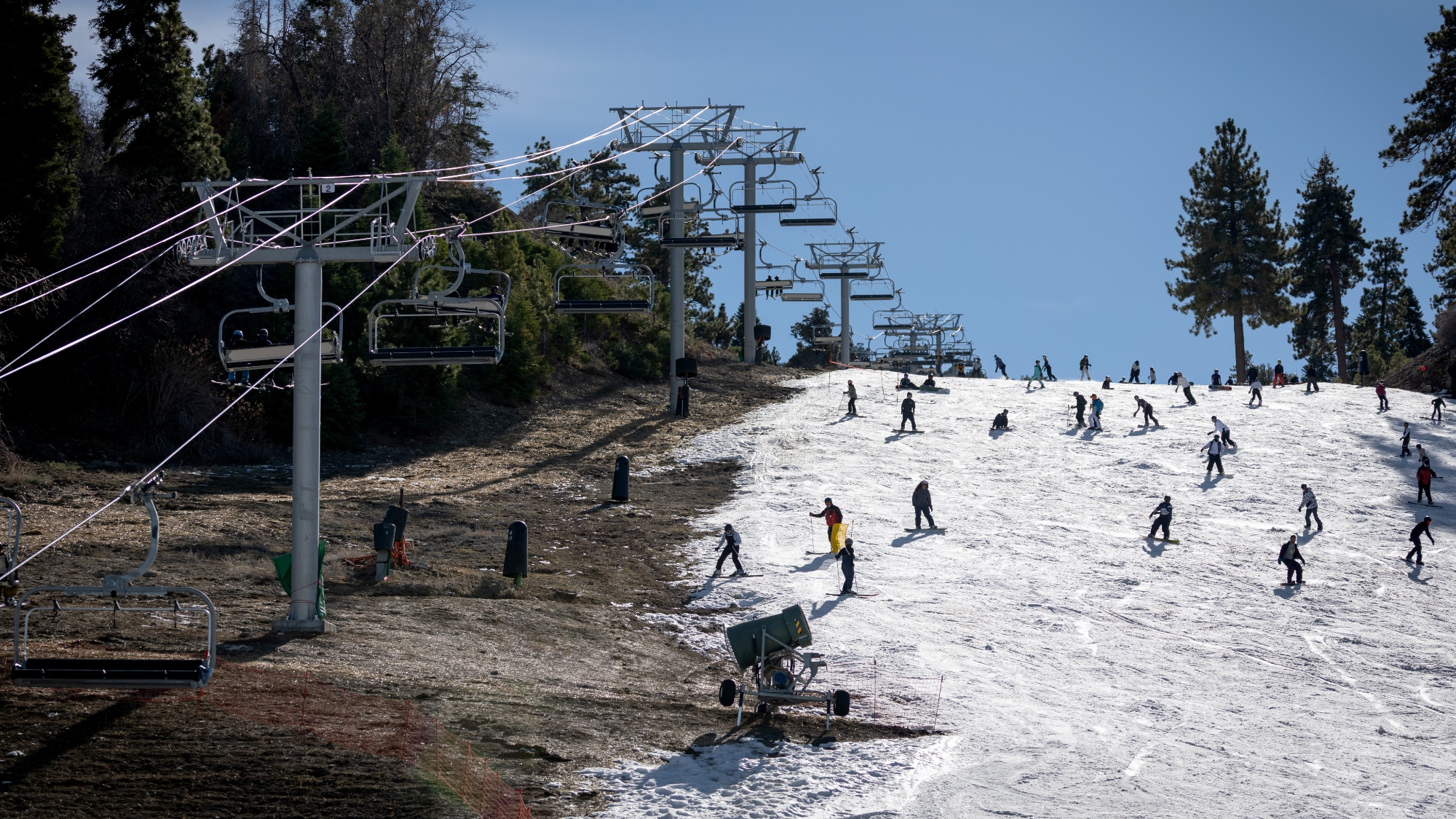
“Snow production should be seen as temporary storage on the mountain rather than in a reservoir,” Fassnacht said. “The water isn’t really removed from the system, it’s just stored elsewhere. It doesn’t replace the snow that falls from the sky.”
Fassnacht’s biggest concern with snowmaking is when resorts decide to draw water from streams. If water is withdrawn during periods of low flow, he explained, it could have a negative impact on aquatic life.
To reduce their use of fresh water, some resorts, including Big Sky in Montana, have begun making snow from treated wastewater. Although one conservation group called the practice a “win-win for the health of our rivers and the economy of resort towns,” it can be controversial.
Flagstaff Ski Area, for example, began using wastewater to create artificial snow in 2013, spraying wastewater onto a mountain sacred to local indigenous people and members of 13 Native American tribes. This practice – and the protests – continue to this day.
Overall, snowfall can be considered an adaptation to climate change, but researchers question whether it is actually a maladaptation, one that contributes to worsening climate change.
The authors of a paper published in 2022 in the Journal of Sustainable Tourism concluded that the environmental impacts of snowmaking depend greatly on the location of the resort. In regions with relatively clean power grids and high water security, like Washington, snowmaking has much less impact than in states like New Mexico, Colorado, Nevada and Wyoming, where power grids emit more carbon and water stress is higher. Although most of these states plan to decarbonize their networks over the coming decades, water scarcity is also expected to increase during this period.
The researchers also said the impact of snow on travel cannot be ignored. On average, they found that skiers only have to travel 36 miles before emitting more carbon dioxide during transportation than at a ski area. So if snowmaking encourages skiers to stay in nearby mountains rather than fly across the country, they said it could actually have a positive impact on the planet.
Either way, the prognosis for skiing, especially in coastal and lower elevation states, is grim.
“There’s a level at which, frankly, the ski industry is screwed,” said Jesse Ritner, an assistant professor of history at Georgia College & State University who is writing a book about snowmaking. “That said, the snowfall is only going to get bigger and bigger.”
The industry sees what is happening on the wall. In 2019, Vail Ski Resort purchased 421 new snow cannons for its Colorado mountain, a move the resort called “the largest snowmaking expansion in North American history.” Other resorts, like Bogus Basin in Idaho, are turning to snowfarming, a practice of collecting and storing snow for the following winter.
But even efforts like these can’t completely protect businesses from bad winters: Earlier this year, Vail Resorts told investors that dismal snowfall in Western states had led to a 20% decline in attendance at its North American properties.
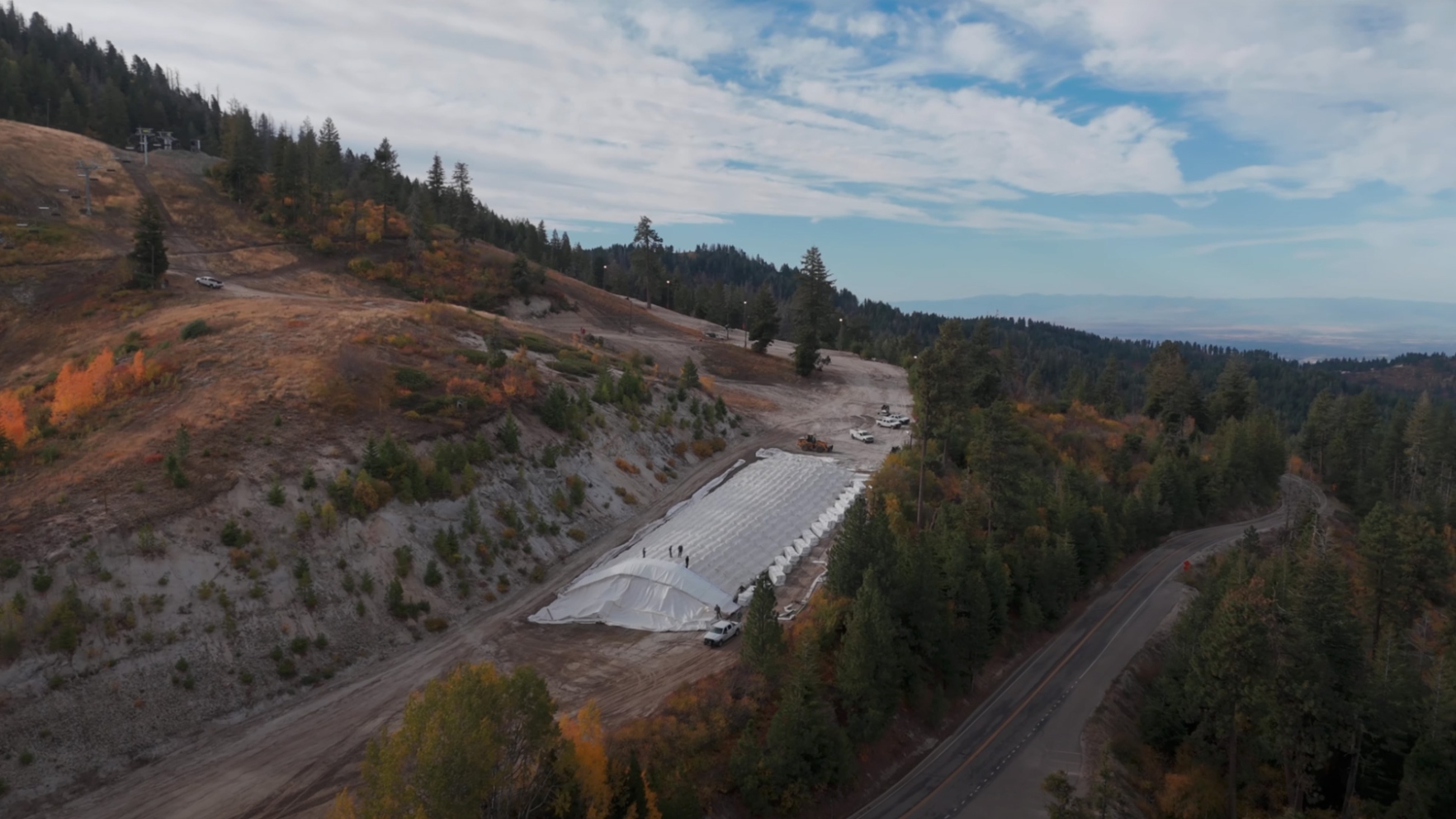
Courtesy of Bogus Basin Mountain Recreation Area
“Bad years used to be really rare, now they’re becoming more common,” said Michael Pidwirny, an associate professor at the University of British Columbia who studies climate change and skiing. “They’re going to increase further in the future, and if it’s too hot, how do we make snow?”
Snowmaking only works when it’s cold enough: “wet temperature,” a combination of humidity and air temperature, must be below 28 degrees.
Pidwirny predicts that Whistler Blackcomb, the famous Vail-owned resort in his home province, will likely reach “a situation where every other year will be really too poor for good skiing around 2050 (or) 2060.”
Stations will just have to adapt, Pidwirny said. “And the way they will adapt is they will recognize that it’s not guaranteed that they will have a ski season every year.”
Maybe even snowmaking won’t be able to change that.