Toucan seen flying around Las Vegas is rescued after surviving in desert for months


A toucan that had been flying around Las Vegas for months has been rescued, a bird rescue group announced Wednesday.
“We are all so worried about him,” said Skye Marsh, president and co-founder of SouthWest Exotic Avian Rescue (SWEAR). “It’s a relief.”
“Sam is found!” the group wrote on social media on Wednesday.
Sam the toucan has been living in Las Vegas since November, much to the chagrin of experts and bird enthusiasts who are concerned about the exotic bird’s health and its ability to survive long-term in a city subject to drastic climate change.
“(The) little stinker decided it was time to call for help and flew into someone’s garage,” Marsh told the Associated Press. The owners knew who the toucan was and closed the garage so it couldn’t escape. Sam captivated the Las Vegas community after surviving in the desert for months.
Skye Marshes / AP 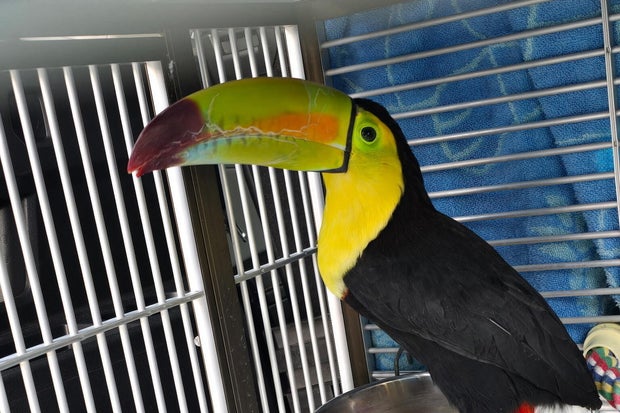
After the rescue group caught him, staff took him to a local veterinarian. There are some signs of “wear and tear,” like dehydrated skin and a chip on the beak, but he seems fine, Marsh said. The vet gave him fluids and ran blood tests.
Sam was eating better since the rescue group distributed healthier toucan food around a cage in an attempt to save him. Marsh said the better food had improved his health, as his droppings appeared healthier before his rescue.
Sam’s owners, who posted on social media that the bird had escaped from his cage in November, have not been in contact with the rescue group.
The toucan will be quarantined at a staff member’s home for 30 to 45 days to ensure it does not have bird flu, which is spread to other birds during the rescue, Marsh said.
According to the San Diego Zoo, toucans typically spend their lives high in the canopy of the rainforests of Central and South America. They are primarily fruit eaters, but are also known to eat insects, tree frogs and lizards.
Marsh told the Las Vegas Review-Journal that Sam likely lived on figs and pomegranates from the trees after his first escape, and later ate citrus fruits, which can be harmful to birds.
Katherine Eddington / AP 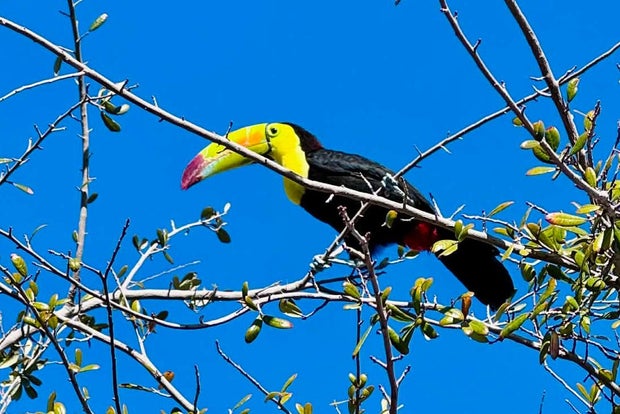
Marsh believes the bird was as happy as the rescue group that it was saved.
“I think he was a little relieved,” Marsh told the Las Vegas Review-Journal. “I think he was done with the free bird thing.”


