HUD proposes time limits for rental aid : NPR


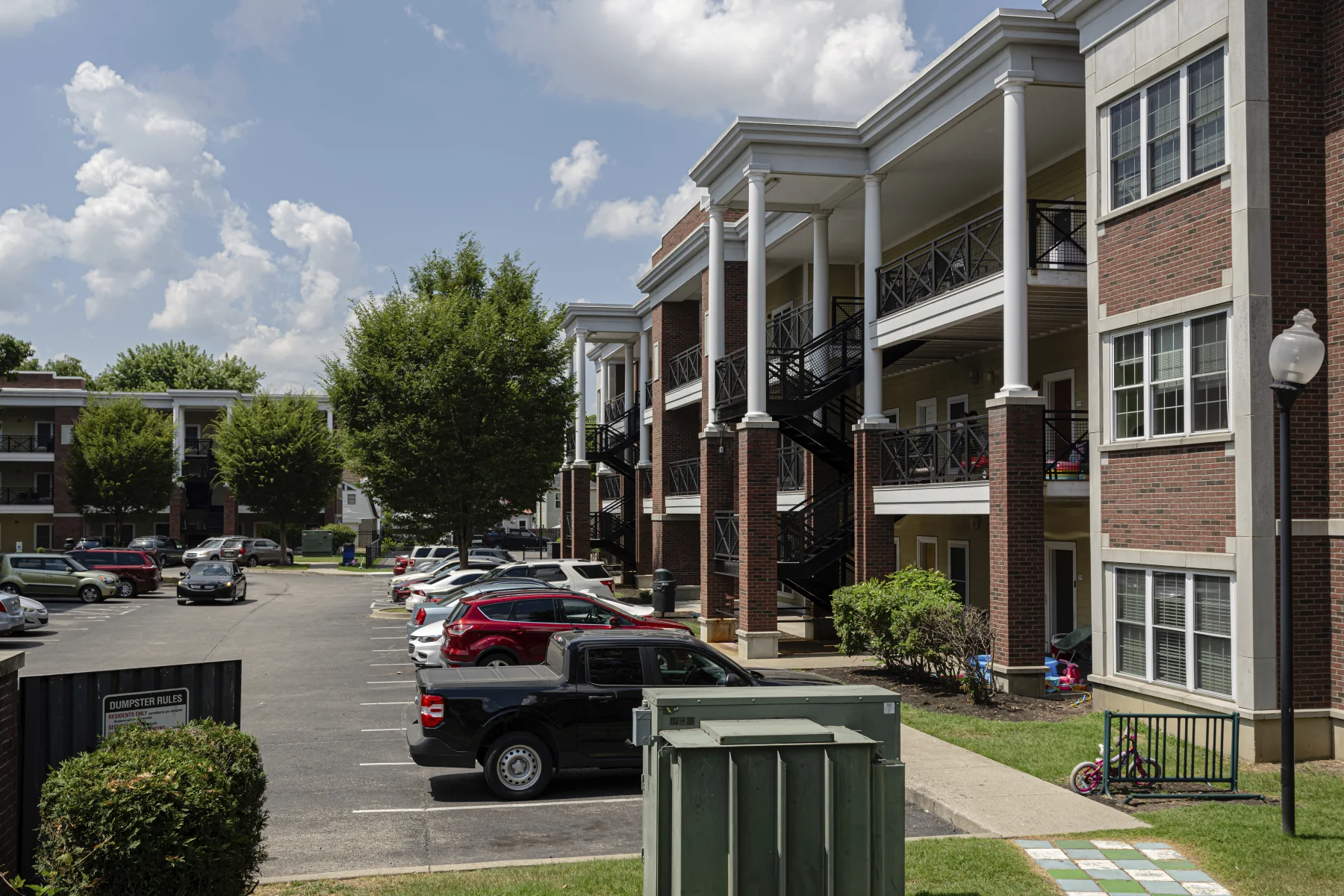
Apartment buildings are seen at the Stoddard Johnston Scholar House, Friday, July 11, 2025, in Louisville, Kentucky.
Jon Cherry/AP
hide caption
toggle caption
Jon Cherry/AP
A rule proposed by the Department of Housing and Urban Development would allow strict deadlines and work requirements as a condition for rent subsidies, a move that critics say could put millions of people in danger to lose this support amid record housing costs and homelessness.
The decision to impose new restrictions would be up to local housing authorities and private landlords who rent to people using a housing voucher, known as Section 8. Time limits could be as short as two years and work requirements up to 40 hours a week. The elderly or disabled — a majority of people receiving federal housing assistance — would be exempt.
President Trump proposed a two-year limit in his White House budget last yearwhile reducing rental assistance by 40%, but Congress rejected this proposal. This rule would bypass Congress, provided it is finalized.
Housing Secretary Scott Turner has repeatedly said he wants to help renters move off federal aid and promote self-sufficiency. Last year, he and three other Cabinet members wrote a New York Times opinion piece calling on Congress to extend work requirements to all safety net programs. They said a growing share of public benefits goes not to the “truly needy” but to able-bodied adults who are not working.
In the United States, approximately 9 million people receive federal housing assistance, and the cost of this assistance the rent is unaffordable for a large number of Americans.

“This proposal is based on false and harmful stereotypes, rather than hard data or best practices,” said Deborah Thrope, deputy director of the National Housing Billsaid in a statement. “This ignores the fact that most participants in federal housing programs who can work are actually working. Saving enough to come off welfare takes a lot of time and a lot of support.”
The arguments in favor of limiting housing assistance over time
Rental assistance is not an entitlement and demand far exceeds available funds. For the lucky minority who obtain a housing document or a place in public housing, often after waiting for years, they can keep it for as long as they need. Supporters say delays could help extend limited rental assistance among more people.

“A lot of people who are eligible for this type of aid don’t get it, so there’s an inefficient use of our housing because people can stay too long,” said Howard Husock, a senior domestic policy fellow at the conservative-leaning American Enterprise Institute.
He said the delays could also encourage upward mobility, but should not be imposed “in a vacuum”. To be effective, Husock said, a deadline should include a fixed rent and automatic savings accountsso that people can advance as their income increases.
The Delaware State Housing Authority is one agency that has had success with such a program. Its period is 5 to 7 years, but can extend longer in certain cases.
The record in terms of delays is mixed
Nationwide, there are approximately 3,300 local public agencies that provide federally subsidized housing. Only about 140 of them currently have the opportunity to try things like deadlines and work requirements, and only a few dozen have done so.

“I just don’t necessarily think that strict term limits have generated the kind of results that people are looking for,” Joshua Meehan told NPR last year. He defends these agencies as president of the Switch to collaborative work.
The group includes Keene Housing in New Hampshire, which Meehan now leads. There used to be a five-year time limit, but he dropped that. As the deadline to end welfare approached, it was clear that their incomes had not increased much.
“I think it’s fair to assume they would have ended up on our waiting lists,” he said.
Given this history, it is unclear whether a significant number of housing authorities would choose to adopt the new restrictions. Forcing millions of people to give up their subsidies every few years could also undermine private landlords who rent to those with housing titles.
The proposed rule is expected to be published Monday and will be open for public comment for 60 days.


