US strike on Iran opens with Tomahawk missiles: What to know the weapon


NEWYou can now listen to Fox News articles!
The first missile in the American arsenal used against Iranian The target of Saturday’s predawn attack was the Tomahawk, a long-range cruise missile launched from Navy ships and submarines.
About half the length of a standard telephone pole, the Tomahawk flies at the speed of a commercial airliner and can carry a 1,000-pound warhead the distance from Washington, D.C., to Miami.
Fired from destroyers or submarines positioned hundreds of miles away, the missiles allow a president to respond quickly to a crisis without sending pilots into contested airspace or deploying ground forces.
The Tomahawk has become a compelling option for limited military action because it provides precision and flexibility while reducing the U.S. footprint. The missiles can hit fixed targets with high precision, reducing the risk of wider escalation.
Presidents of both parties have used Tomahawks during the opening hours of military operations, from strikes in Iraq in the 1990s to more recent operations in Syria and elsewhere.
Defense officials and military analysts say the weapon’s long range, reliability and relatively low risk to U.S. personnel make it an attractive first-strike option when the White House wants to send a message quickly but not engage in a broader war.
This combination of speed, distance and precision kept the Tomahawk at the center of American military planning for decades.
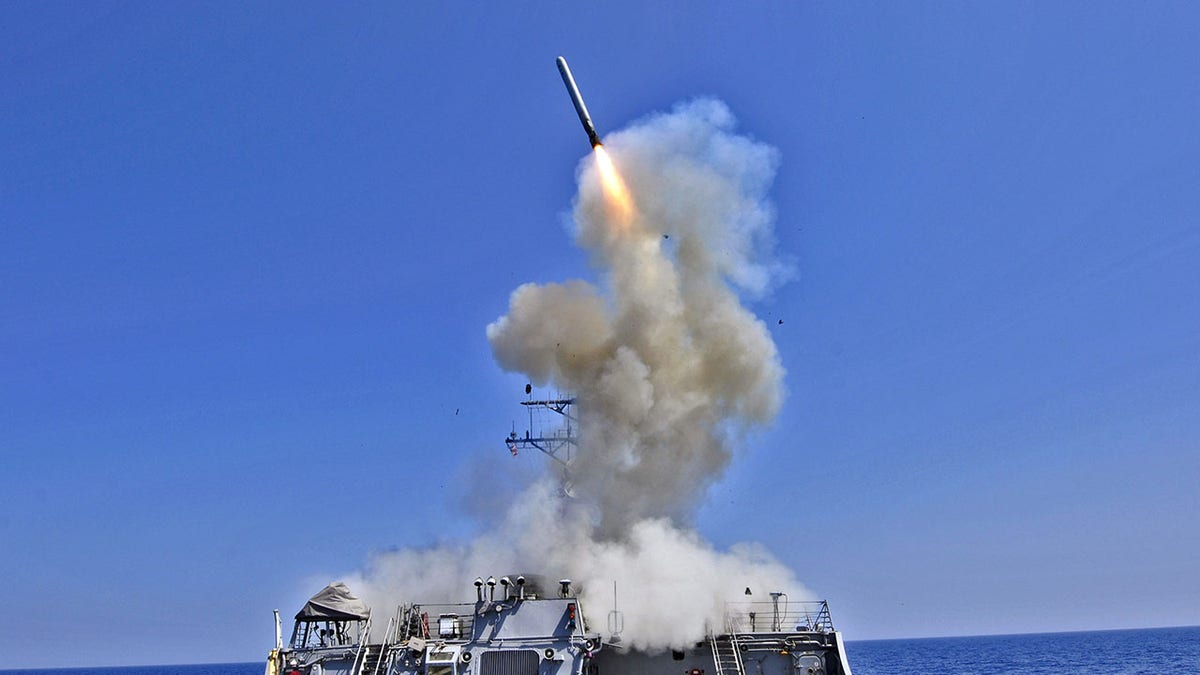
The Tomahawk missile is manufactured by the American defense company Raytheon, also known as RTX. (US Navy via Getty Images)
Manufactured by defense titan Raytheon – now RTX – the Tomahawk is a mainstay of of the navy arsenal since the 1980s. It was first used in combat during the Gulf War in 1991 and has since become a go-to option for presidents seeking to strike at long range without putting U.S. service members at risk.
“Year after year, incoming and outgoing administration, it’s the long-range land-attack cruise missile that presidents seek first in a crisis,” Thomas Karako, missile defense project director at the Center for Strategic and International Studies, told Fox News Digital.
But heavy use has taken its toll. “We use them much more frequently than we produce them,” Karako said.
Before Saturday’s operation, the missile was used in June 2025 in a US strike against Iranian nuclear facilities.
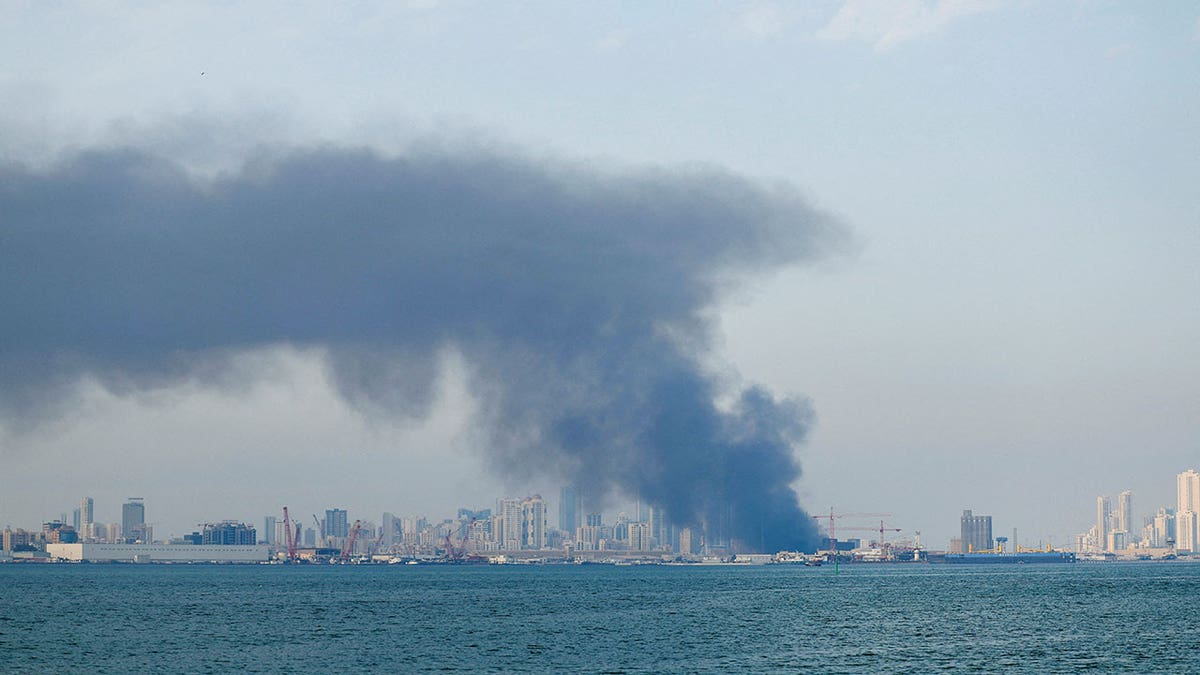
Smoke rises after Iranian missile attacks, following US and Israeli strikes against Iran, in Manama, Bahrain, February 28, 2026. (Reuters)
In total, the Tomahawk has been deployed more than 2,350 times.
Costing about $1.4 million apiece, the Tomahawk missile has an intermediate range of 800 to 1,553 miles and can be launched from more than 140 U.S. Navy ships and submarines.
The Tomahawk strike was just one element of a broader U.S. military posture in the region.
Before the strikes, the US military assembled what Trump had previously called an “armada” in Iran’s backyard. Spread across the Persian Gulf and beyond, the deployment tells its own story, one of calculated pressure backed by credible capabilities.
THE ONLY CARD YOU NEED TO SEE TO UNDERSTAND HOW Serious Trump Is About Iran
The deployment coincided with indirect negotiations between Washington and Tehran over Iran’s controversial nuclear program. Trump warned that the regime must completely dismantle its nuclear infrastructure or face consequences.
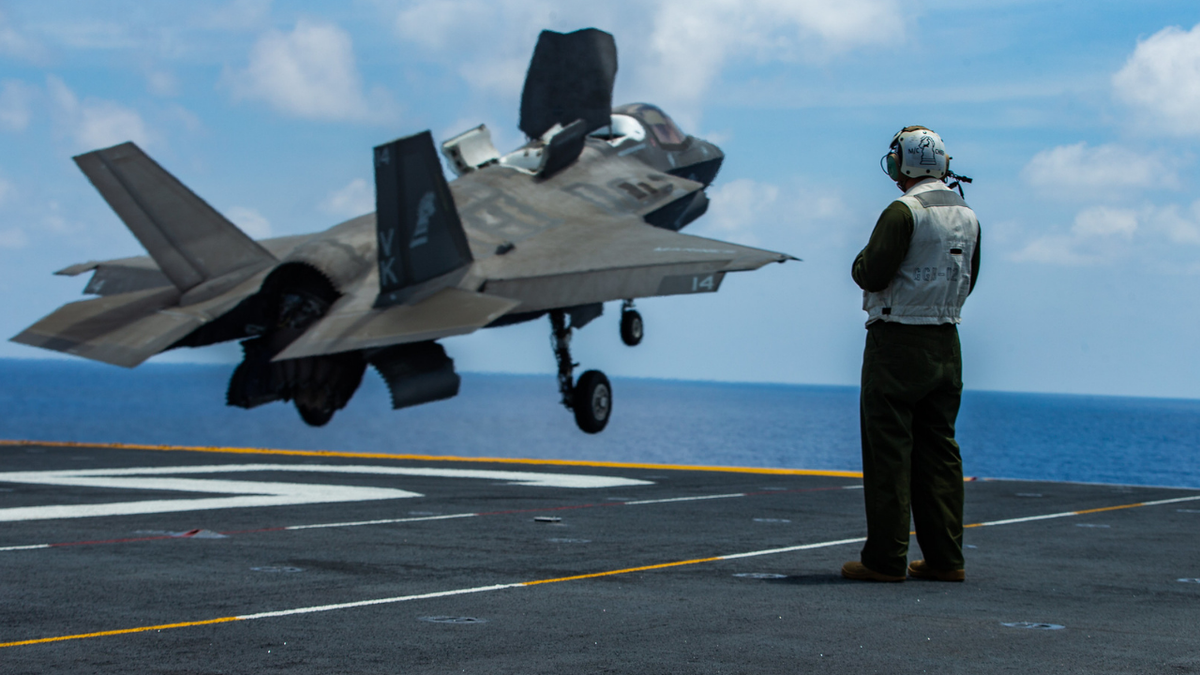
An F-35B takes off from the flight deck of the USS America. (Cpl. Isaac Cantrell/U.S. Marine Corps)
At the center of the U.S. presence are two aircraft carrier strike groups – the USS Abraham Lincoln and the USS Gerald R. Ford – each supported by destroyers and guided-missile cruisers and capable of sustained air and missile operations.
CLICK HERE TO DOWNLOAD THE FOX NEWS APP
More than a dozen additional U.S. warships are also operating in the region in support roles, according to defense officials.
It was not immediately clear how or when Tehran could respond, although Iranian leaders have already warned of retaliation in the event of direct US military involvement.
Related article