The agentic future: Why AI’s greatest power is amplifying human potential


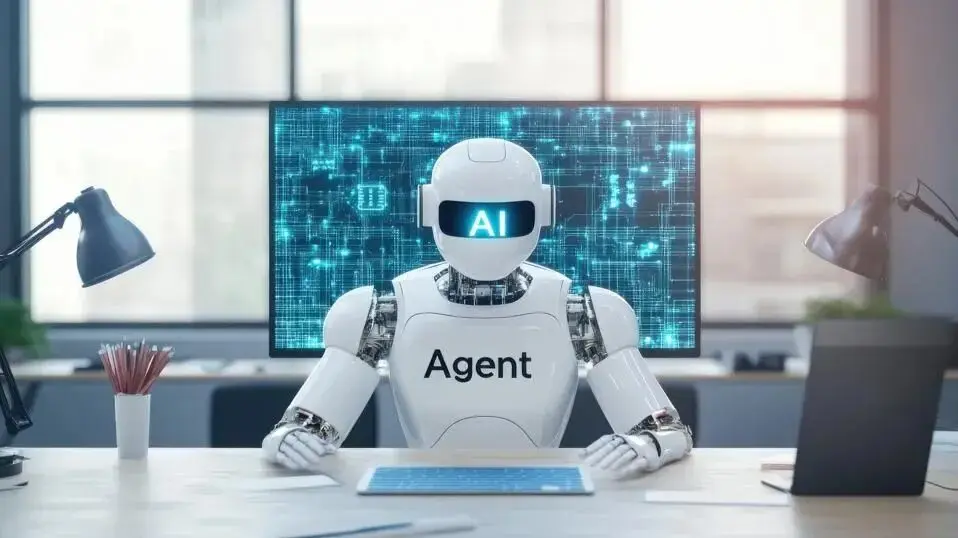
As artificial intelligence becomes an integral part of global business operations, we must abandon the tired “AI versus human jobs” debate.
The real opportunity lies in augmented intelligence, a human-centric approach at the heart of the emerging “agentic future.” Rather than ceding control to machines, augmented intelligence positions AI as a force multiplier for human capabilities.
Product Manager at HCLSoftware.
Consider a customer service interaction: an AI chatbot instantly retrieves the status of an order, then seamlessly transfers complex issues to a human agent. AI handles repetitive queries while humans demonstrate creativity, empathy and ethical judgment.
Given the global push for AI governance and economic optimization, maintaining a “human in the loop” has evolved from best practice to a business imperative, critical to ensuring trust, transparency, and reliable outcomes as AI deepens its integration across industries.
The dual role of AI: assistance and autonomy
Augmented intelligence is not about giving up control; it’s a question of amplification. AI excels at pattern recognition, anomaly detection, and predictive modeling, capabilities that accelerate human decision-making while preserving human accountability.
Do a financial analysis. AI can process large sets of market data and surface investment strategies, but the human expert applies contextual judgment, weighs macroeconomic factors, and takes responsibility for the final decision. The AI informs the decision, it does not own it.
Much of augmented intelligence involves “autonomous agents,” AI systems that can perform tasks independently according to human-defined parameters.
These agents are poised to transform industries from IT operations to urban infrastructure. In traffic management, for example, AI systems dynamically optimize signal timing to improve vehicle flow. But effectiveness depends on strong governance, clear accountability structures, verifiable actions and ongoing human oversight.
Building trust through fairness, transparency and ethics
For augmented intelligence to deliver on its promises, users must trust and understand it. Unlike the “black box” systems of previous generations of AI, augmented intelligence places emphasis on understanding, allowing stakeholders to examine how conclusions are drawn. However, three challenges require our attention:
1. Fight against algorithmic bias
AI systems inherit biases built into their training data, risking perpetuating historical inequalities. MIT researchers have developed techniques to identify and neutralize specific data points that introduce bias or degrade performance, an essential guarantee for fair results.
2. Integrate ethics from the start
Ethical AI requires more transparency and accountability. This requires governance frameworks integrated from day one into development, prioritizing:
– Fair decision-making processes
– Rigorous privacy protections
– Compliance with evolving regulatory requirements
This requires collaboration between businesses, policymakers and technologists.
3. Close the skills gap
Augmented intelligence only succeeds when the workforce evolves alongside technology. Strategic training programs must ensure that:
– Domain experts can interpret AI results without the need for technical expertise
– Organizations cultivate cultures of responsible AI adoption
– AI improves roles rather than eliminates them
The World Economic Forum’s Future of Jobs 2025 report predicts that AI will generate more jobs than it eliminates, provided companies invest in reskilling.
The way forward
Augmented intelligence represents much more than just incremental technological progress; it offers a new model of human progress. To realize its full potential, organizations must go beyond adopting tools to build true human-AI collaboration, guided by three principles:
- Transparency and control: AI should help people, not control them. When AI shows its decisions, people trust and use it more
- Ethical foundation: Governance must ensure fairness, safety and accountability from the outset.
- Focused Implementation: Deploy AI to drive measurable business outcomes, not something new, with clear goals and success metrics.
A new equation: humans plus AI
The future does not belong to AI or humans alone, but to their collaboration: the processing speed and scale of AI, combined with human intuition, creativity and moral reasoning.
Achieving this future requires intention. Companies must invest not only in AI tools, but also in responsible deployment frameworks, collaborative workflows and governance structures. The result will be technology that truly serves human flourishing, fostering innovation while respecting standards of fairness and ethics.
By keeping humans at the heart of AI evolution, we can unlock transformative solutions, tackle complex challenges, and ensure that AI remains our instrument, not our master.
We have introduced the best AI chatbot for business.
This article was produced as part of TechRadarPro’s Expert Insights channel, where we feature the best and brightest minds in today’s technology industry. The views expressed here are those of the author and are not necessarily those of TechRadarPro or Future plc. If you would like to contribute, find out more here: https://www.techradar.com/news/submit-your-story-to-techradar-pro


:max_bytes(150000):strip_icc()/Health-Thyroid-Storm-Symptoms-no-text-8da395cf637544ab87c24ce28b461c19.jpg?w=390&resize=390,220&ssl=1 "A Thyroid Storm Can Strike Without Warning—These Are the Signs To Watch For")

