The Ozone Layer Is On Track for a Full Recovery, Thanks to Global Collaboration Since 1987


Once upon a time, all the countries of the world came together and agreed on a plan to save the planet from a serious threat to life. And it worked. Sounds like a fairy tale, doesn’t it? But it’s a true story.
Over the course of the 20th century, a trickle and then a flood of scientific data and observations showed that something worrying was happening to the ozone layer, the protective layer of the stratosphere that serves as the planet’s sun shield, absorbing ultraviolet radiation and blocking most of it from reaching the Earth’s surface, according to NASA.
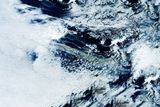
In short, the data reveals that the ozone layer is thinning. And in Antarctica, a hole in the ozone layer would widen each year between September and December. And the hole grew bigger.
The potential consequences were serious. In humans, a depletion of the ozone layer would lead to an increase in skin cancers (and possibly other cancers as well), cataracts and other eye diseases, as well as a weakened immune system. Other animals would suffer from similar illnesses. Increased UV radiation would also affect plant growth, disrupting food webs and potentially reducing agricultural productivity. We really didn’t want to go there.
Learn more: What happened to the hole in the ozone layer?
Save the ozone layer
Scientists worked to determine the cause of the hole. In 1974, Mario Molina and Sherwood Rowland published research in the journal Nature which found the culprits to be chlorofluorocarbons (CFCs), chemicals widely used in air conditioning, refrigeration and aerosol sprays. (In 1995, Molina and Rowland, with Paul Crutzen, won the Nobel Prize in Chemistry for this work.)
Molina, Rowland, and many other scientists continued to accumulate evidence as they sought to understand how these chemicals were damaging the ozone layer.
In 1986, Susan Solomon, a researcher now at MIT and then working for the National Oceanic and Atmospheric Administration (NOAA), led expeditions to Antarctica, where she and her team confirmed that CFCs were responsible for damage to the ozone layer. The science was clear and the solution was obvious: ban CFCs.
And that’s exactly what happened.
In 1987, the world’s nations (eventually all of them) signed the Montreal Protocol, a treaty that phased out CFCs and other ozone-depleting substances. A 2015 study in Natural communications found that without the changes made by the Montreal Protocol, the ozone hole would have increased by 40 percent by 2013. Instead, it is shrinking.
In September 2025, the World Meteorological Organization announced that the ozone layer was on track to fully recover, perhaps as soon as mid-century.
Take the villain’s fingerprints
Much research has documented the recovery of the ozone layer, but it is more difficult to quantify the factors responsible for this improvement, said Peidong Wang, a climate scientist who studied under Salomon at MIT and is now at Stanford. Discover.
Previous research has not been able to determine how much of the recovery resulted from reductions in ozone-depleting chemicals rather than other factors, such as weather variability due to El Niño, La Ninaor the polar vortex.
However, Wang and his colleagues borrowed a technique from researchers studying climate change. Called “fingerprinting,” the method isolates specific climate factors to confirm and quantify the role of human activities in climate change.
Applied to the ozone layer, the results clearly showed that although other factors account for some year-to-year variability in the size of the ozone hole, measures taken under the Montreal Protocol to reduce ozone-depleting substances are the main reason for the recovery of the ozone layer. Wang and colleagues published this research in the journal Nature in March 2025.
Hope to fight climate change
When it comes to climate change, the challenges are somewhat different. For one thing, CFCs were made by only a few companies, and it was relatively easy to find alternatives, many of which were produced by those same companies, Wang explained.
But he nevertheless hopes that we can also solve the climate change crisis.
“My advisor, Susan Solomon, is a very optimistic person and I think I was kind of affected by her opinion,” he said. Discover.
As Solomon said in his 2024 book, Soluble“We’ve done it before and together we can do it again.”
Learn more: How the ozone layer evolved and why it matters
Article sources
Our Discovermagazine.com editors use peer-reviewed research and high-quality sources for our articles, and our editors review the articles for scientific accuracy and editorial standards. See the sources used below for this article:


