Enbridge paid police to protect one pipeline. Now it wants to do it again in Wisconsin.


Canadian oil pipeline giant Enbridge will pay Wisconsin law enforcement for riot chases, training and hours spent monitoring protests, under a deal approved by two counties last week. The secret deal provides an uncapped funding source for local sheriffs as the company prepares for disruptive, Indigenous-led resistance to the controversial Line 5 hijacking.
Last Tuesday, Enbridge began construction on a 41-mile section of Line 5, which transports approximately 540,000 barrels of oil and natural gas liquids daily from a transfer point in Superior, Wisconsin, to Sarnia, Ontario. The pipeline is designed to carry fossil fuels from Canada’s tar sands region and Bakken fracking fields to U.S. refineries before returning much of the refined products to Canada.
The proposed rerouting comes after the Bad River Band of Lake Superior Chippewa fought for years to force Enbridge to close an existing 12-mile segment of the pipeline that runs through its reservation. After several pipeline easements expired in 2013, the Bad River Band refused to renew them due to concerns about a possible oil spill. Enbridge continued operations, and in 2023 a federal judge ruled the company was illegally trespassing and ordered it to close the reservation segment by June 2026.
Enbridge appealed, and last Friday the same judge who issued the trespass ruling lifted the June deadline until the appeal was resolved. Bad River leaders want the pipeline stopped altogether, arguing that the diversion would encircle the reservation and threaten the tribe’s watershed and wild rice fields, protected by the treaty. Tribal nations also joined the state of Michigan in demanding the closure of a separate section of the corroded LIne 5 pipeline under the Straits of Mackinac, which connects Lake Huron and Lake Michigan. However, under President Donald Trump, the federal government has repeatedly come out in favor of maintaining the flow of Line 5 oil. Shortly after taking office, Trump declared a national energy emergency to accelerate the development of fossil fuel projects. Under that directive, the Army Corps of Engineers fast-tracked obtaining a permit last spring to build a tunnel for Line 5 under the strait. The move prompted several tribal nations in the region to walk away from pipeline negotiations in protest.
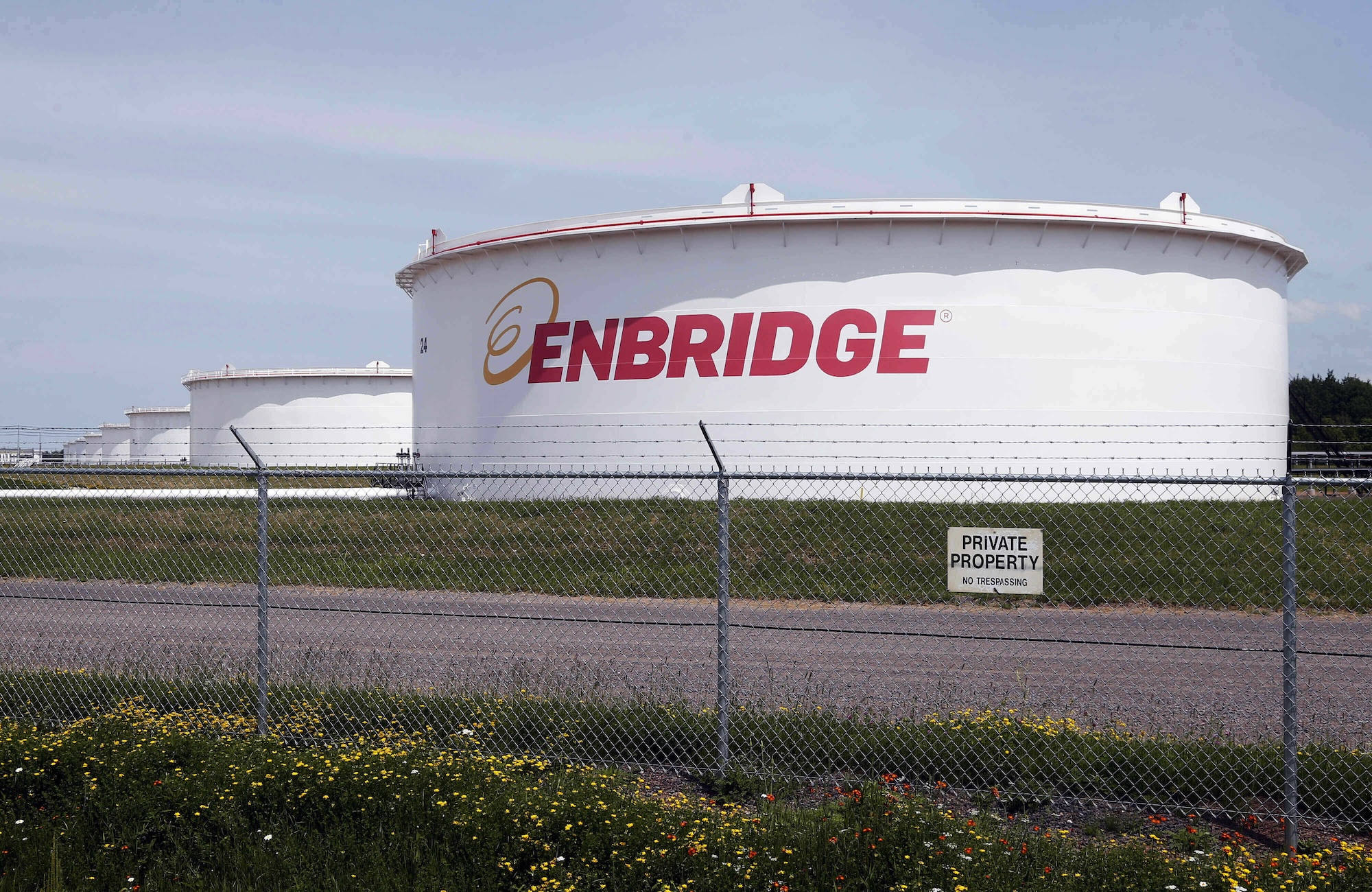
Jim Mone/AP Photo
Anticipating a significant public backlash against the construction of the diversion, Enbridge and the Wisconsin Counties Association negotiated the agreement to reimburse public safety expenses. The agreement is designed specifically to address the cost of potential protests, allowing police and public safety agencies along Line 5 to submit invoices for a range of expenses. Eligible costs include daily patrols in the construction zone, crowd control, police coordination with Enbridge, educational programs and Enbridge training on “human trafficking and cultural awareness” — an attempt to thwart transient construction workers who use trafficked women for sex. Firearms, Tasers, K-9 units and recording devices will not be reimbursed.
An account manager appointed by the Wisconsin Counties Association will review claims before Enbridge pays the policy through an escrow account.
At last week’s Ashland County Board of Supervisors meeting, about a dozen people spoke against that narrative. Community member Riley Clave told the board the deal would “transform our public service into private security.” Another commenter, Soren Bvennehe, called the deal a “blatant conflict of interest,” arguing that paying the sheriff’s office incentivizes preferential treatment for the company.
Wenipashtaabe Gokee, a citizen of the Red Cliff Band of Chippewa of Lake Superior, expressed concerns about the disproportionate policing of Indigenous people in the region. She noted that the Ashland County Sheriff’s Office, which would be responsible for monitoring Native-led protests against Line 5, already has a presence on the Bad River reservation: In 2017, her 14-year-old nephew, Jason Pero, was killed by an Ashland County sheriff’s deputy outside his home. “We are already being targeted,” Gokee said during the hearing. She also pointed to a 2019 state law making it a misdemeanor to trespass on pipeline company property, part of a wave of anti-protest laws passed across the country following the 2016 protests against the Dakota Access Pipeline.
Supporters of the deal have repeatedly expressed a desire to avoid raising taxes or using scarce county resources to control the pipeline. County officials have said they would prefer local law enforcement respond to protests rather than private security. Andy Phillips, attorney for the Wisconsin Counties Association, estimated that counties will face “millions” in public safety expenses related to pipelines. The agreement provides no cap on reimbursements and does not specify that the money must come from Enbridge. “We don’t care where it comes from,” Phillips said, as long as the burden doesn’t fall on taxpayers.
Bayfield County Sheriff Tony Williams said his chief deputy is already putting together a list of equipment, including helmets and shields. “I think that cost was $60,000,” Williams said, adding, “I don’t know if it’s fair to put the cost on the community and the taxpayers if we can convince a billion-dollar company to reimburse us.”
Ashland and Iron counties ultimately approved the deal, while Bayfield County rejected it.
The approved agreement includes a clause stating that all communications regarding reimbursements are highly confidential, citing unspecified risks to public health and safety. “The settlement clause is extremely broad,” said Bill Lueders, president of the Wisconsin Freedom of Information Council, saying it looks like an attempt to “tip the scales” of the state’s public records laws.
Enbridge spokesperson Juli Kellner said, “Enbridge does not believe local communities and ratepayers should be faced with these additional costs associated with the construction of Line 5 and has proposed a constructive solution. »
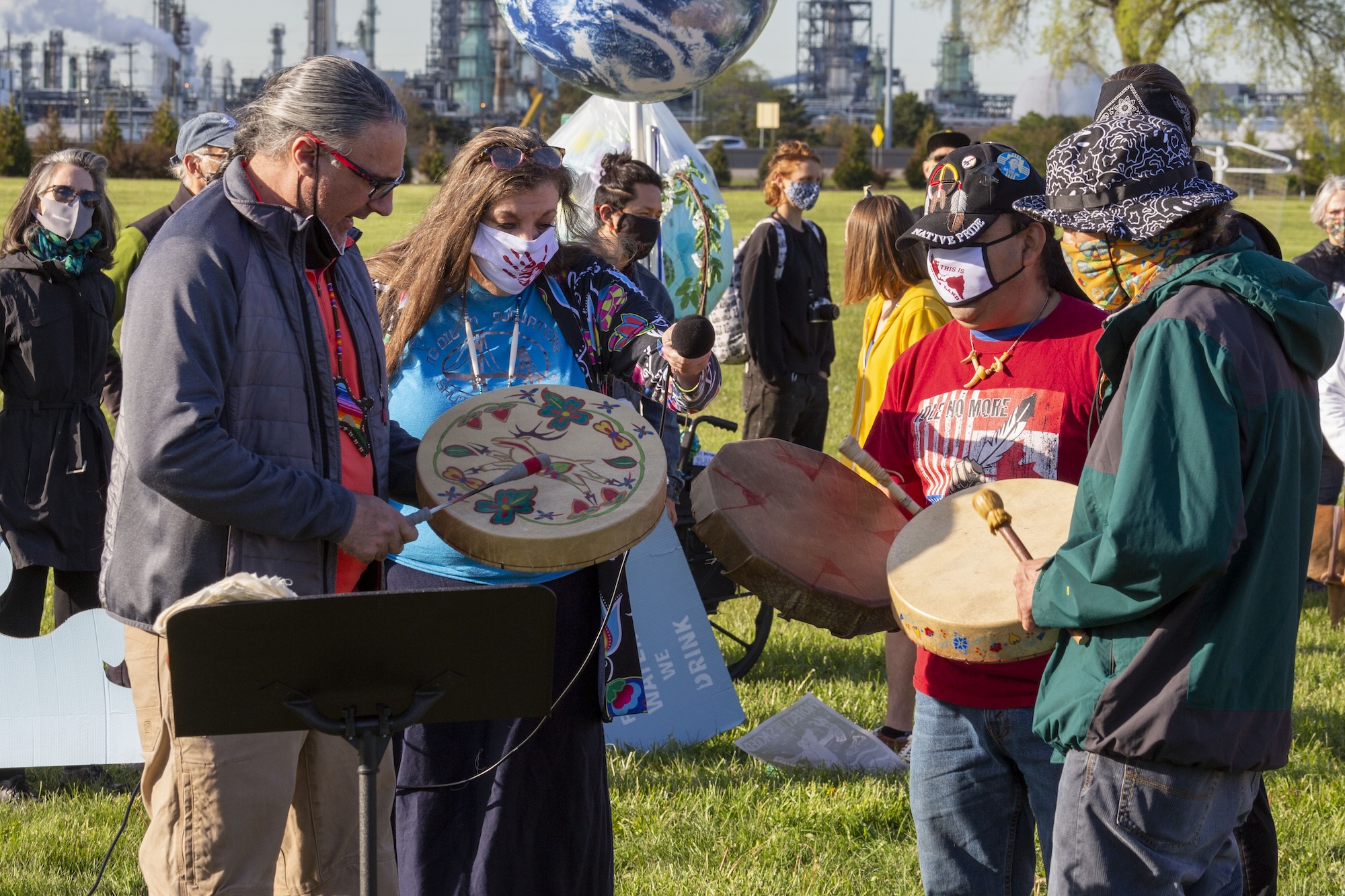
Jim West/UCG/Universal Images Group via Getty Images
Funding deals like this one emerged after the 2016 Standing Rock protests against the Dakota Access Pipeline, which cost North Dakota $38 million in police costs and other protest-related bills. The state spent years in court trying to get the federal government to pay the costs, even after Energy Transfer donated $15 million to offset the bill. In 2019, South Dakota, under then-governor Kristi Noem, authored legislation to create a protest policing fund for the Keystone XL pipeline, before the project was canceled by the Biden administration.
The model was successfully tested in Minnesota during construction of Enbridge’s Line 3 expansion. There, the state Public Utilities Commission established an Enbridge-funded escrow account that ultimately reimbursed $8.6 million to 97 public agencies for everything from energy drinks to zip ties and porta-potties.
Following the Line 3 case, several people arrested during the protests filed lawsuits, arguing that the escrow account created unconstitutional bias by police that violated their due process rights.
While Minnesota’s escrow manager was appointed by the state, Wisconsin’s will be appointed by the Wisconsin Counties Association — an organization that a judge ruled in 2014 is not subject to public records requests. The Wisconsin Counties Association did not respond to requests for comment.
Dawn Goodwin, a member of the White Earth Nation who worked with the nonprofit Indigenous Environmental Network to fight Line 3 in Minnesota, attended the recent Ashland County meeting. She said she has seen trust in law enforcement deteriorate in counties that have accepted Enbridge reimbursements. In his own county, however, the sheriff decided not to submit any invoices to the company.
“Our sheriff told me he took an oath to uphold the First Amendment,” Goodwin recalled. “He insisted on that.”


