More elderly Americans are choking to death. Are these devices the answer?


It was the most scary incident that David Palumbo has ever seen.
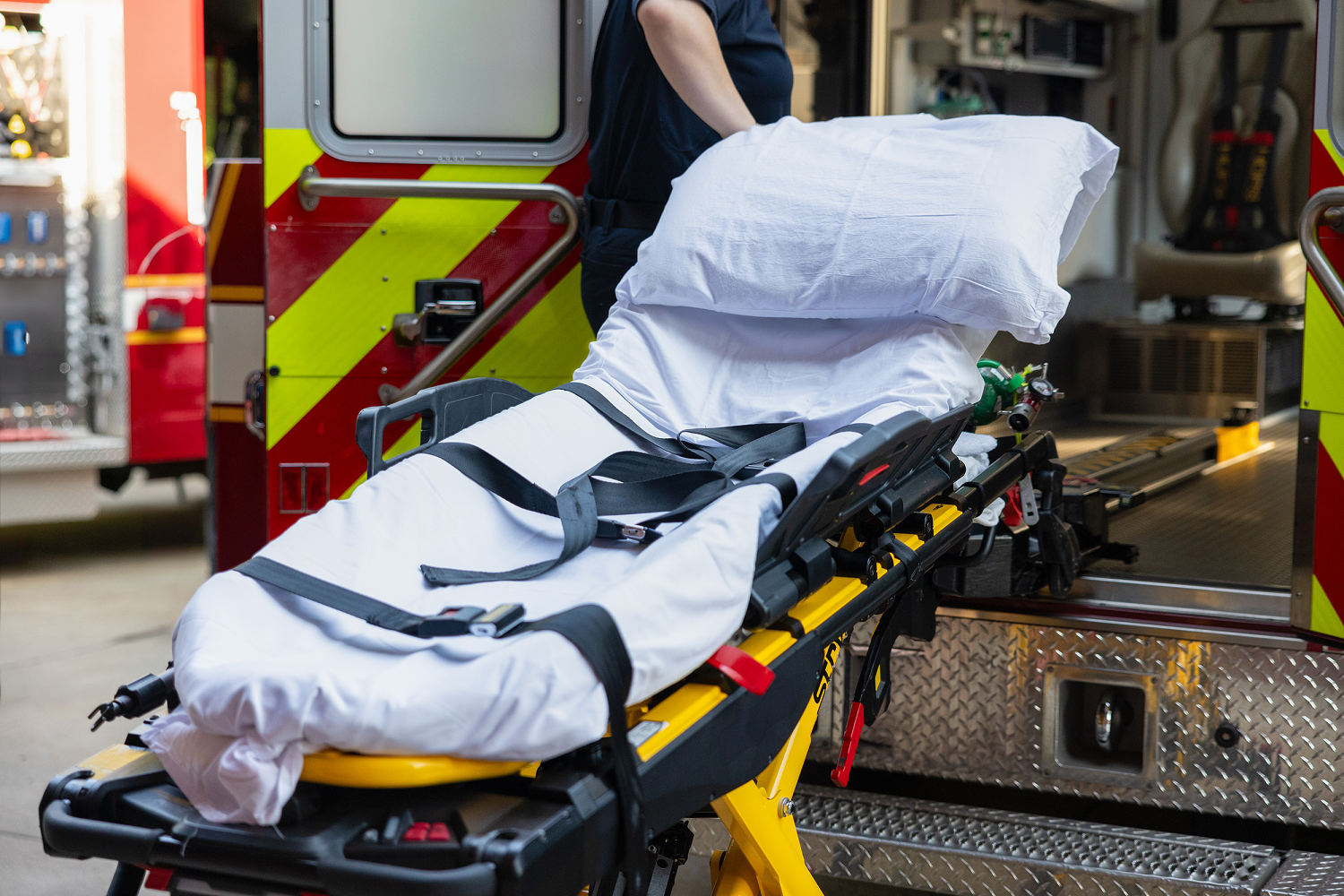
The 88 -year -old man had dinner in a Providence, Rhode Island, Italian restaurant in September 2019. Now he was unconscious, with a piece of bread housed in his trachea. The precious minutes have passed because the first stakeholders could not help him with the RCR or the Heimlich maneuver.
In an ambulance on the hospital path, the skin of the elderly was blue and the firefighters feared dying. PALUMBO – A Captain of the Fire Service – used a scissor device called Magill Force to pull the bread from the man’s throat.
“We receive a lot of calls in the city to choke”, many of which are resolved before the emergency speakers even get there, added Palumbo. “It was by far the worst I am in my career.”
Fortunately, the man survived and recovered, he said.
But many elderly people do not do so. Each year, the suffocation claims the life of more than 4,100 Americans aged 65 or over. It is the most vulnerable age group, representing approximately three-quarters of the dead of the United States, according to Federal Health Statistics.
The mortality rate has been relatively stable, but the number increased, as the country’s retirement population increases.
In response, a number of companies market antichoking devices for the elderly. Health professionals have debated the opportunity to approve the products, sold under the names Lifevac, Savelix, Vitalvac and The Dechoker.
Dr. Nathan Charlton, professor of emergency medicine at the University of Virginia who advises the American Red Cross on first aid, said that there were limited evidence for products and that the Red Cross still assesses them.
Here is an overview of the suffocation and the best ways to prevent death from suffocation.
Small is a danger to the elderly
The suffocation occurs when food or another object partially or completely blocks the trachea, preventing oxygen from reaching the lungs.
The revealing signs include someone who reaches his neck and losing the ability to speak normally. Brain lesions can occur after four minutes and death can come a few minutes later.
The elderly are more at risk for several reasons. As people age, the mouths of the mouth and throat can weaken. The elderly also make less saliva. Certain chronic diseases and drugs can make swallowing even more difficult. Dental prostheses can be a risk of suffocation.
The best ways to stop choking
The risk of suffocation can be reduced by cutting food into small pieces, slowly chewing foods, drinking a lot of liquids with meals, and not laughing or speaking at the same time as you mince and swallow.
When someone is choking, you can try the oldest first aid shape: the back slaps.
There is also Heimlich’s maneuver, named after the doctor credited to having designed it in the 1970s. This implies standing behind the suffocation, wrapping your arms around their abdomen and – with a ball fist – pushing inward and upwards. The idea is that it forces air out of the lungs and obstruction with it.
The American Red Cross recommends alternating backs and abdominal thrusts in five sets.
It is for situations in which someone is there to help a suffocation victim. But what happens if they are alone?
Someone may try to self-administer a heimlich by pushing their abdomen against the back of a chair, said Charlton.
Manufacturers of certain most recent anti-shoeing devices say that this is where their products can make the difference.
“The elderly are probably not able to dive on a chair or a counter,” said Arthur Lih, founder and chief executive officer of Lifevac.
Antichoking devices are not always without risk
They vary in the design, but generally devices resemble a facial mask attached to a tube or bellows, with a handle at the end. They usually sell about $ 30 at $ 100.
A muffled person puts on the mask, pushes on the handle and then stops. It is supposed to create an aspiration that would remove the blockage.
Some research suggests that at least certain devices can hurt the tongue or cause bleeding and swelling in the throat. And the Food and Drug Administration of the United States reported that certain products have not generated enough aspiration and left people with bruises around the face, lips and mouths.
An injury report led the FDA to inspection and publish a warning letter to Dechoer in 2021.
Manufacturers note that their products are recorded with the FDA, but it is not the same as approval. Indeed, the agency published a notice last year to consumers who declared that it had not approved antichoking systems sold over -the -counter, because their safety and their efficiency have not been established.
LIH said that FDA’s action was in response to the proliferation of antichoking devices entering the market that vary in design and quality.
More research is necessary, says the suffocation expert
Currently, consensus – even among the manufacturers of antichoking devices – is that the backdors and abdominal blows should always be tried first. (The pliers used by Palumbo are not recommended for the general public.)
LIH said thousands of nursing homes and emergency intervention agencies bought new antichoking devices.
An example: the Acworth police service in Georgia bought about 75 Lifevac aircraft after an officer used his personal device last year to save an elderly woman. They are now in each patrol car, said the SGT. Eric Mistretta.
The manufacturers say that the products have saved thousands of lives in several countries, but it is difficult to document how much they actually work, said Dr Cody Dunne, a researcher from the University of Calgary who tried.
The first evidence comes from cases of cases or small studies which used models and corpses.
“I think the case is definitely under construction,” he said, but more rigorous research is necessary. For example, a broader study could compare what happened during suffocation incidents in nursing homes that store devices with those who do not.
Dunne, however, noted that the evidence of Heimlich’s maneuver and slaps on the back also evolves. He co-wrote a study last year which revealed that the backgrounds worked better than the heimlich or thoracic compressions.
“We only get good evidence on the old suffocation techniques, not to mention this news,” he said.


