Iranian activist Mehdi Mahmoudian was freed, then came war : NPR

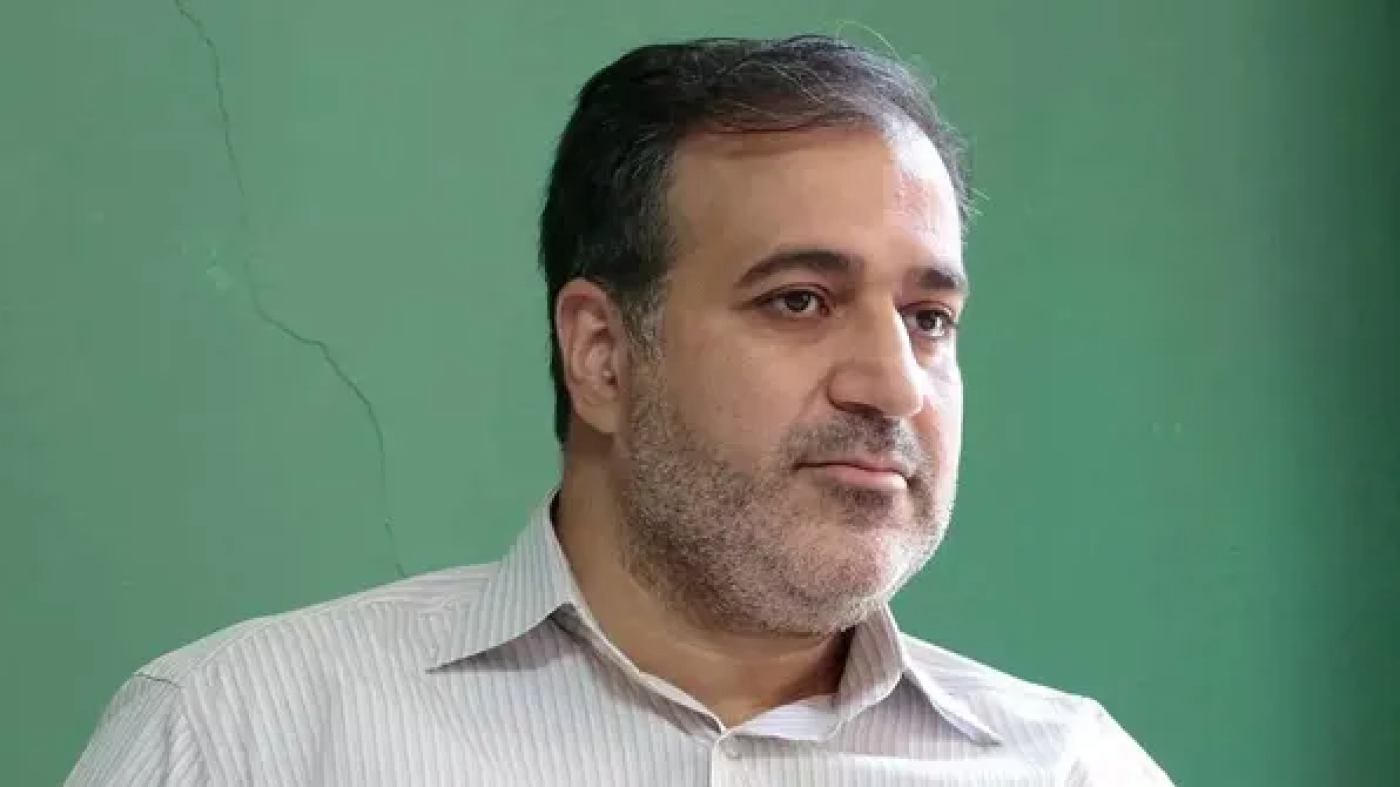

Mehdi Mahmoudian was repeatedly imprisoned for decades for his activism against the Iranian regime.
Neon
hide caption
toggle caption
Neon
Iranian human rights and political activist Mehdi Mahmoudian has been in and out of his country’s prisons for decades for daring to express dissent.
On February 17, he was released from his final term. He was arrested because he was among 17 political activists, artists and human rights lawyers who signed an agreement open letter accusing Supreme Leader Ali Khamenei for the murder of thousands of anti-government protesters.
Eleven days after Mahmoudian’s release from Nowshahr prison, the United States and Israel launched a war against Iran. Khamenei was killed on the first day, but the conflict is enlargement.
Iran is retaliating against its Gulf neighbors, key U.S. ally Azerbaijan claims it was hit by Iranian drones, Israel is striking Iranian-backed Hezbollah targets in Lebanon and European countries are rushing to deploy military assets in the region.
“Unfortunately, I don’t see a bright future,” Mahmoudian said Morning edition host Leïla Fadel. “If we fail to break this cycle of violence, it will last forever.”

Mahmoudian is also co-writer — alongside director Jafar Panahi — of It was just an accidentcandidate for Best International Feature Film and Best Original Screenplay at the Oscars on March 15. He shared with NPR his thoughts on this precarious chapter in Iran’s history.
The following exchange has been edited for length and clarity.
Leila Fadel: You are in Tehran at the moment. Can you tell me what it’s like where you are?
Mehdi Mahmoudian: I am in the center of Tehran. The scale of the bombing here has become less intense since last night. Right now, they are attacking the eastern part of Tehran. In the central areas, it is calmer than yesterday.
Fadel: How does it feel to have to go through this right now?
Mahmoudian: There is almost nothing beautiful about war. But this war also brought us a certain happiness: the death of the man who, for years, took the Iranian people hostage. It’s a war where we look at the people who walked alongside us yesterday, who left today.
Fadel: I just want to ask a question about this particular person, Iran’s Supreme Leader, Ayatollah Ali Khamenei. When you learned he had been killed, you were imprisoned for accusing the supreme leader of killing protesters. What was going through your mind?
Mahmoudian: I had two feelings about Mr. Khamenei’s death. One of them was happiness due to the death of a dictator. The other is my sadness for the way he died. Mr. Khamenei should not have died, he should have been prosecuted in court, so that no one else dares to restore tyranny. Mr. Khamenei was killed by those who in 1953 overthrew a beloved government in Iran and replaced it with a dictatorship. They installed a dictator who, for the next 25 years, controlled the destiny of our people. And I fear that this time the United States will replace one dictator with another to rule Iran.
Fadel: You are referring to the American intervention in the 1950s. Are you concerned that the United States will once again install a dictator aligned with the United States?
Mahmoudian: Yes, I’m worried. Recently, what the United States did in Afghanistan was the same. After 20 years of war in Afghanistan, the United States left the country and its people in the hands of dictators and tyrants like Al-Qaeda and the Taliban.
Fadel: When you say you had these two feelings about the assassination of the supreme leader, happiness because he is a dictator, he is responsible for the murder of Iranians, the repression of Iranians. But you also wanted him to face his accusers. Is it about the fact that he needs to confront the people he hurt and killed? Is it about showing the world that justice has been done here?
Mahmoudian: Here’s what’s important to me: I don’t want the past to repeat itself. And what is clear here is that Mr. Khamenei bears the primary responsibility for recent crimes in Iran. We believe that whether he is dead or alive, if the structures he built do not end or if the one who replaces him is a tyrant who wants to rule alone, the result will be the same.
Fadel: What would you like to see happen in Iran right now?
Mahmoudian: We hope that the Islamic Republic will give up power and transfer it to the people. Those who oppose Islamic rule in the country should come to power, and through a referendum we should decide what kind of people we want. This way we can establish a democratic regime in Iran. This is what we have fought for over the decades.
Fadel: When you think about the future today, is it possible to break this cycle? I mean, a lot of times people get revenge when they see someone who hurt them, who killed their family, who tortured them. And we’ve seen this cycle in Syria, Iraq and other places where dictatorships have been established and then replaced. Could it be different for Iran?
Mahmoudian: Unfortunately, I don’t see a bright future. I cannot say that the Iranian people want or have already reached the point where they seek justice rather than revenge. I want to emphasize that I am not talking about forgiveness. I’m talking about justice. My point is that if we fail to break this cycle of violence, it will last forever. During the 1979 revolution we saw many people executed, and now many people want revenge. It is likely that those who are executed today have people who will want revenge in the future. What can break this cycle of revenge as justice? If we stop and abolish the institutions responsible for past violence, those who committed these crimes will be punished. But legal sanctions must be consistent with human rights laws.
Fadel: Just to clarify, when you talk about justice, you want them to go to court, to be tried under international humanitarian law? And what institutions must be destroyed so that systemic repression can end?
Mahmoudian: In Iran, our first step should be to move away from the Islamic Republic. What we need to see is that instead of revenge, there are fair trials in Iran or before international institutions. However, I must emphasize that torturing and harming citizens is justified within the structure of the Islamic Republic, and is a clear human rights violation that we can remedy once we leave the Islamic Republic.
The broadcast version of this story was produced by Lindsay Totty And Milton Guevara. Reena Advani And Olivia Hampton edited.


