What was on the menu for Stone Age cooks? The results are surprising

Ancient European hunter-gatherers were much more advanced in their cooking methods than previously thought, combining ingredients in a “remarkably selective” way, with cuisines even varying by region, according to a new study.
Researchers analyzed burnt food scraps stuck to the sides of pans, called “food crusts,” and found that Stone Age cooks used a range of plant and animal products to create meals.
The team’s findings, published Wednesday in the journal PLOS ONE, provide new insights into the diets of Europeans who lived between 5,000 and 8,000 years ago.
The researchers analyzed 85 pottery shards, 58 of which contained identifiable plant fragments.
The pottery came from 13 sites, stretching from present-day Denmark to what is now Ivanovo Oblast in eastern Russia.
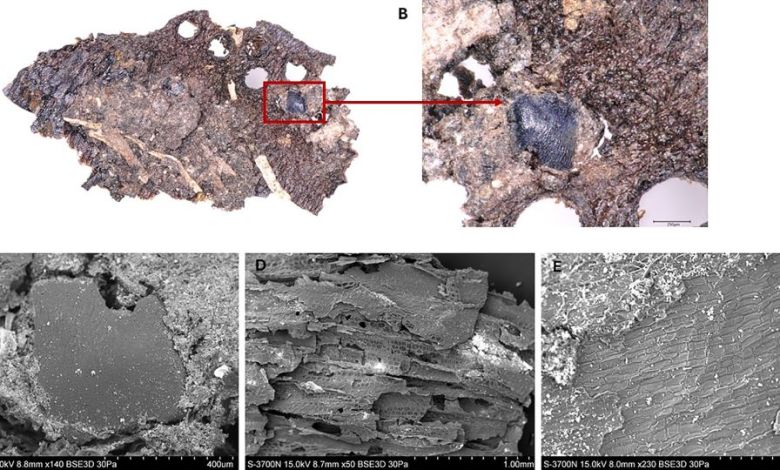
The team first found plant remains in the food crust, then, using microscopes, searched for samples that were well preserved enough to be able to identify the plants by their cellular structure.
Initial research revealed that some plants had been used, so the team cooked up some of the “recipes,” Oliver Craig, study co-author and professor of archaeological sciences at the University of Leeds, England, told CNN.
They combined carp and viburnum berries, as well as oak-leaved lambsquarters and beets, and cooked them in replica clay pots over a fire. This gave them new samples with which to compare ancient food crusts.
The standard narrative around hunter-gatherers was that they “just put things in the fire,” Craig said.
Most analyzes of hunter-gatherer diets have focused on the fatty residue left on cooking utensils and bones of slaughtered animals, Craig said, meaning researchers knew a lot about hunters but little about gatherers.
“(Lead author of the study) Lara (González Carretero) simply looked where no one else had,” Craig said.
The new study shows that Stone Age people had “sophisticated ways of cooking food,” he said, and that they were “remarkably selective” in the foods they cooked.

Researchers found that certain plants, like the viburnum berry shown above, were popular across regions and are still used today. – Lara González Carretero/University of York et al.
These hunter-gatherers “had extensive knowledge of all the roots, tubers, fruits and berries that…(were) available to them,” Craig said.
But when the team analyzed what was in the jar, they found only a limited variety.
“We only find a few select items, maybe because they taste good or go well with other foods,” Craig said.
Regional cuisines
Not all regions have the same tastes. Although the ingredients are available across Europe, the study found that there were “separate preparations” in some regions.
A combination of freshwater fish and wild herbs was particularly popular near the Ukrainian-Russian border, while further east, in modern central Russia, they seemed to prefer amaranth plants with their fish.
Danish hunter-gatherers also valued amaranth, although they preferred the plant’s flowers.
“It’s a conscious choice,” Craig said.
Some of these trends have carried over to the present day, researchers say.
Viburnum berries, also known as Gelderland rose berries, found in several samples, are still eaten in Poland, Ukraine and Russia.
The idea that Stone Age peoples depended on hunting is “fundamentally false,” said Mark Robinson, an associate professor of archeology at the University of Exeter, England, who was not involved in the study.
Instead, research now suggests they had a “sophisticated approach” to using plants, Robinson told CNN.
Although some of the ingredients identified in the pots are still used today, Robinson pointed out that “we still know very little about how foods were combined in meals or how culinary traditions and recipes developed over time.”
For more CNN news and newsletters, create an account at CNN.com


