Hackers know your social security number. Here’s how to stay safe


It is difficult to protect your personal information. Even if you take all the necessary steps, a hacker can still infiltrate a business over which you have no control and steal sensitive information.
As a result, Social Security numbers — essential for filing taxes, applying for and maintaining credit, and receiving certain U.S. government benefits — have become widely available to hackers and would-be criminals to exploit them. And if your SSN hasn’t yet reached the dark web, the sad reality is that another data breach will inevitably change that.
But you don’t need to wait for trouble to find yourself. There are several steps you can take to minimize the risk of identity theft or fraud in your name, as other details such as your full name, date of birth, and residence are also likely to be lost in the wild. Here’s what to do.
Further reading: Data Breaches Are Everywhere, But You Still Need to Pay Attention
1. Freeze your credit reports
Experienced
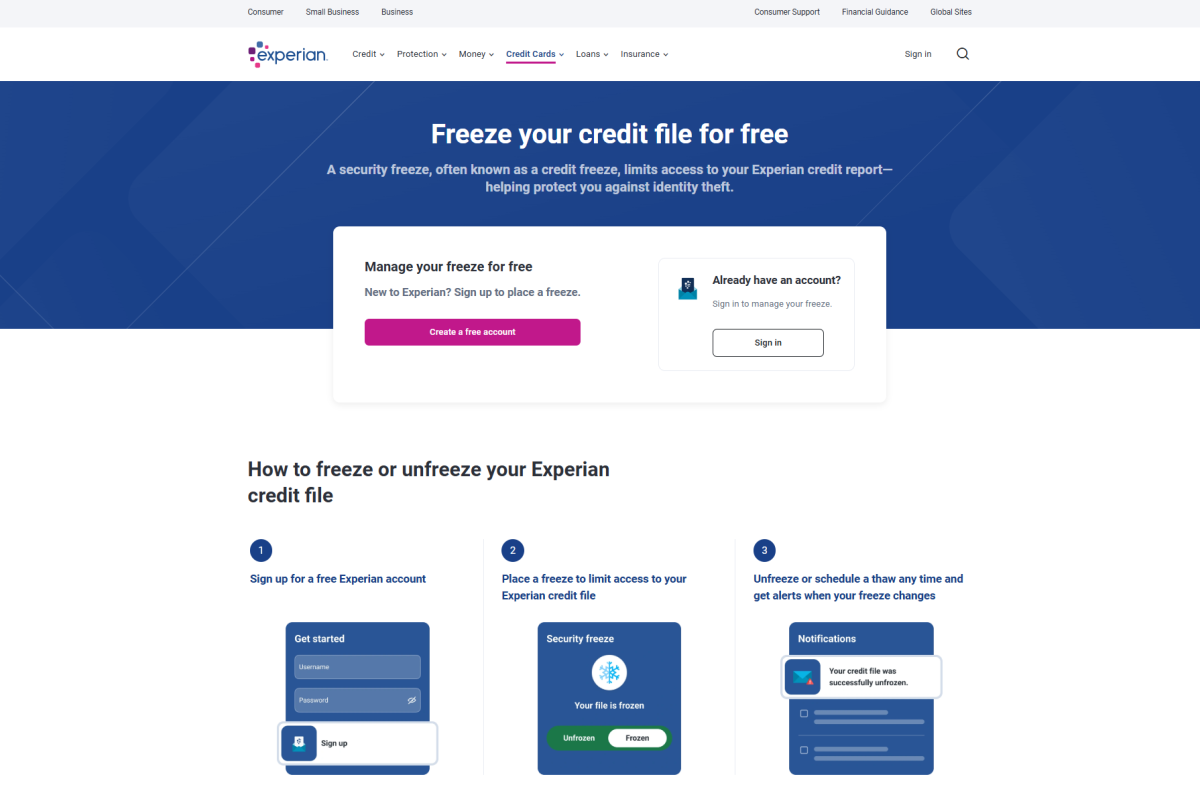
Freezing your credit costs nothing and prevents scammers from opening credit cards and loans in your name – a smart move when your full name, date of birth, and Social Security number are floating around the Internet.
You must complete the security freeze with each credit bureau. In the United States, the three main ones are Equifax, Experian and TransUnion. For completeness, you can also freeze your report with Innovis, a fourth, smaller credit bureau.
Once frozen, your credit reports become available only to you. If you need to authorize a third-party credit check, such as when renting a new apartment or opening a new line of credit, you can temporarily lift the freeze through the Equifax, Experian and TransUnion websites or through their phone lines. You will need the PIN issued to you to request the temporary lift.
2. Check your credit reports
PCWorld
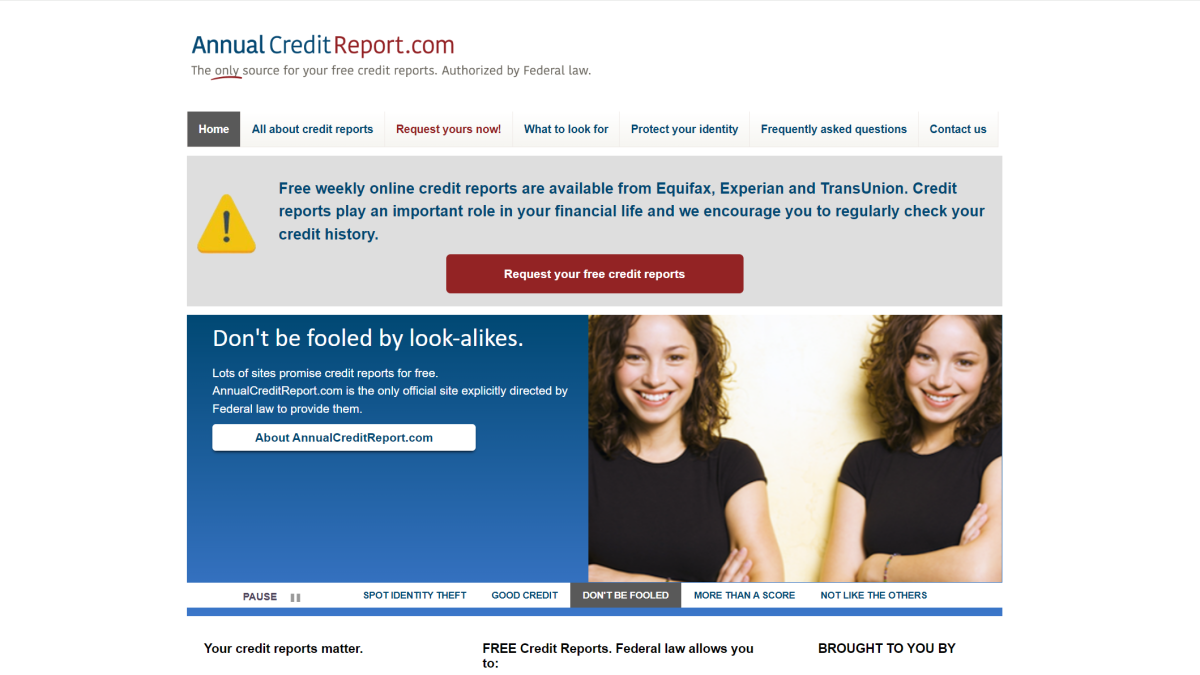
When you process your credit reports, you should also review them for fraudulent activity. You can do this weekly through the official website (AnnualCreditReport.com) or request paper copies once a year by phone or mail.
If you spot inaccurate information, you can dispute it, and if you think you see signs of identity theft, you can report it and start doing something about it.
3. Request an IRS Identity Protection PIN
IRS
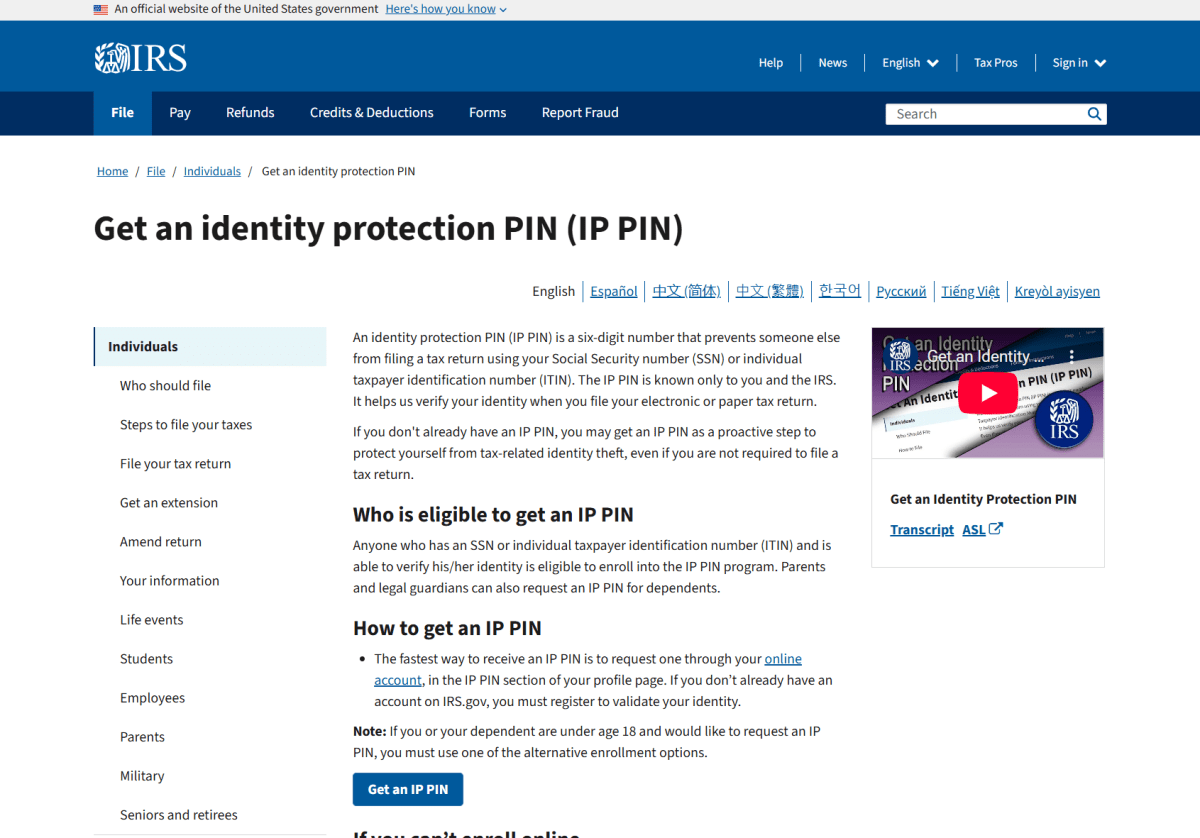
Tax fraud can be a real headache. Fortunately, the Internal Revenue Service (IRS) allows you to prevent others from fraudulently filing a return in your name (even if you don’t need to file a return). If you are requesting an Identity Protection PIN (IP PIN), any return filed must include the six-digit PIN in order for it to be processed.
Most taxpayers will need to apply for a new PIN every year, unless you have been a victim of tax-related identity theft. If so, you should already automatically receive a new IP PIN each year from the IRS.
If you forget your IRS Identity Protection PIN, the IRS has methods to help you recover it. You can also store the information in a good password manager. If you’re worried about cloud-based services, you can use one that saves your data to a local hard drive or USB drive.
4. Freeze your bank report
PCWorld
As with credit, there is a file on you about your bank account activity – and if someone starts opening fraudulent accounts in your name and causes them to fail, banks may not want to do business with you in the future.
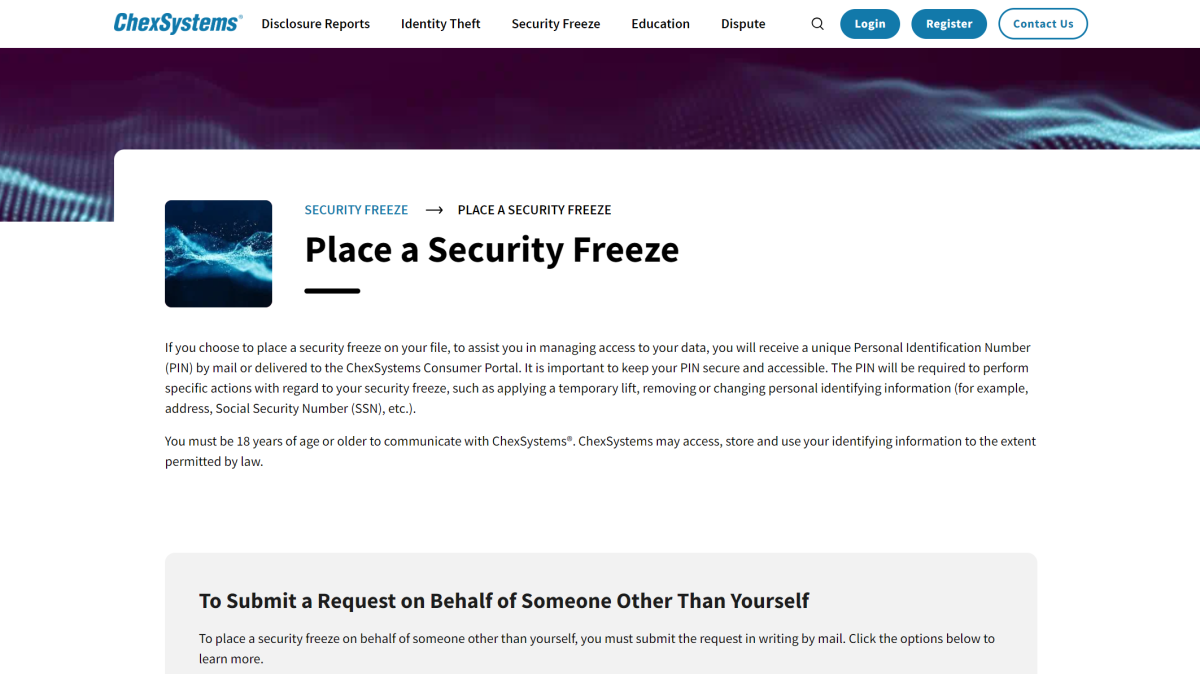
You can avoid being blackballed by also placing a security freeze with ChexSystems, the main company used by banks to verify whether you are a worthy customer. Once in place, only you can access your report. To temporarily lift the freeze (for example when requesting to open a new bank account), you can make your request online, using the PIN code that was issued to you when the freeze came into force.
Related content
- 5 Sneaky Ways for Malware to Bypass Your PC’s Antivirus
- Everyone should know which passwords suck. Do you?
- Best antivirus software: These 8 apps keep your PC safe


