Millions more people are in the path of rising seas than previously thought : NPR

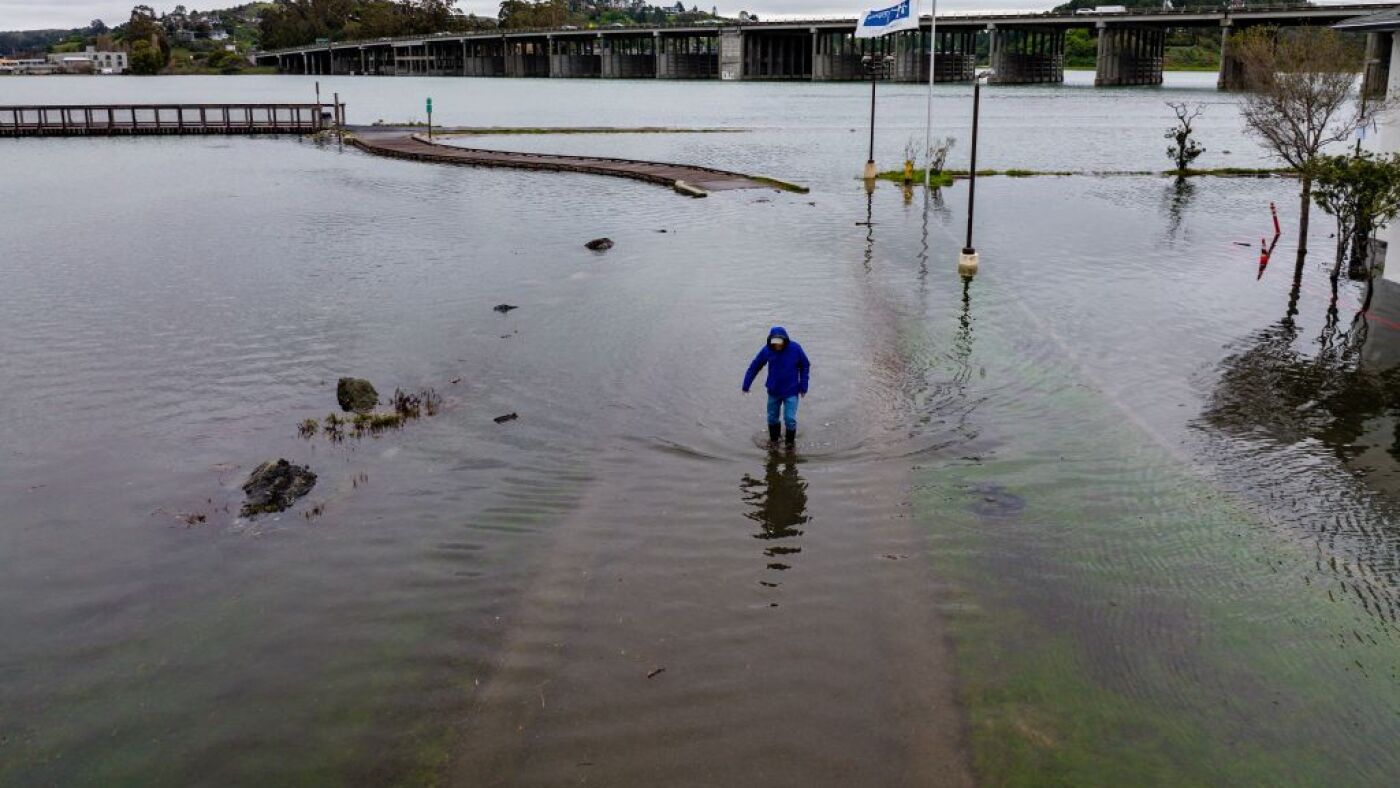

Rising sea levels are already affecting coastal communities, exacerbating high tide events like this “king tide” in Mill Valley, California. A new study shows that researchers may be underestimating how many people will be affected worldwide.
Josh Edelson/AFP via Getty Images
hide caption
toggle caption
Josh Edelson/AFP via Getty Images
As the climate warms, sea levels are already rising across the planet. Scientific research shows millions of people live in areas at risk of flooding, but a new study reveals these figures have been vastly underestimated.
According to a study published in the journal, up to 132 million more people than previously thought could be victims of rising seas. Nature. This would happen if sea levels rose 3 feet from their 1995 to 2014 levels, which could happen by the middle of the next century, depending on how well humans can reduce the burning of fossil fuels that produce heat-trapping emissions.
The discrepancy comes from the starting point of current sea levels. The new study finds that most scientific research uses ocean heights that are about 10 inches lower than they are now.

This means the full impact of future sea level rise is underestimated, as more land is exposed to flooding than previous studies have shown. The underestimation is greatest in Southeast Asia and the Indo-Pacific region, where sea levels today are more than a meter higher than most research assumes.
Oceanographers say more recent studies account for this discrepancy. It also likely won’t affect communities planning for sea level rise, as they use direct measurements to conduct more localized studies. Still, climate scientists say it’s important to have a clear picture of the overall global impact, especially for vulnerable countries urging the world to do more in international climate negotiations.
“People who live on a very low-lying island and are already feeling the effects of sea level rise know from their own experience at the seaside how high the water is,” says Philip Minderhoud, associate professor at Wageningen University in the Netherlands and co-author of the new study.
Calculate the world’s oceans
Globally, sea levels have already risen 8 to 9 inches since 1880. As the planet’s temperature warms, glaciers and polar ice caps melt, releasing fresh water into the ocean. Ocean temperatures are also increasing, causing water to expand and take up more and more space. The effect is even greater in places where the ground is sinking, such as on the East Coast of the United States.
Coastal communities are already seeing the consequences during storms and hurricanes, where rising sea levels mean more water surges onto land. Flooding also occurs on sunny days, as high tides become even higher.

Study author Minderhoud says he was working in Vietnam’s Mekong Delta when he realized the water level was much higher than global studies predicted. He and his colleagues looked at 385 studies of sea level rise between 2009 and 2025 and found that 90% of them started with sea levels too low.
This “methodological blind spot,” as Minderhoud calls it, comes from the computer models used by scientists. To estimate current sea levels, they use a gravitational model of the planet, also called a geoid model. It simulates how oceans meet land, taking into account gravity and Earth’s rotation. But it doesn’t take into account other factors that affect ocean height, like tides, ocean currents and trade winds.
“In a way, a geoid gives you the surface of the ocean in a calm situation, therefore without disturbances,” he explains.
Using actual measurements of current sea levels, Minderhoud and his colleagues found that up to 37 percent more land area and 68 percent more people would be affected by about 3 feet of sea level rise, compared to what most current studies show.
More recent sea level studies are beginning to take this discrepancy into account. “The community is increasingly aware that this data is valuable and will improve assessments, so we are already seeing this trend,” says Minderhoud.
These results could help provide a more accurate global picture of the impacts of climate change, which is important for islands and low-lying countries around the world. During international climate negotiations, they have pressed richer countries to reduce their emissions and reimburse poorer countries for the consequences of the floods they are already experiencing.
Other scientists point out that this new study may not affect how local communities plan for sea level rise. To assess their vulnerabilities, planners typically use more detailed data on land and sea elevations in their own regions.
“If you’re actually planning for adaptation, any responsible planner will probably know where the water actually is, and not just use pre-analysis on a global level to figure out where the water is,” says Bob Kopp, a professor of earth and planetary sciences at Rutgers University, who was not involved in the new study.
Assessing local risks means looking at where people, buildings and infrastructure live as well as the dynamics of coastal conditions, including what protections communities have in place, Kopp says.
Analyzing these aspects will ultimately help determine how many people are affected by sea level rise. Indeed, it informs how local governments will manage the situation, such as building sea walls and raising infrastructure, restoring marshes and other natural coastal protections, or even moving people away.


