Stand Up for Science protests spread to more than 50 cities


March 9, 2026
3 min reading
 Add us on GoogleAdd SciAm
Stand Up for Science protests have spread to more than 50 cities
Speakers at the Stand Up for Science rally in Washington, DC, criticized the politicization of science and cuts to research serving the public.
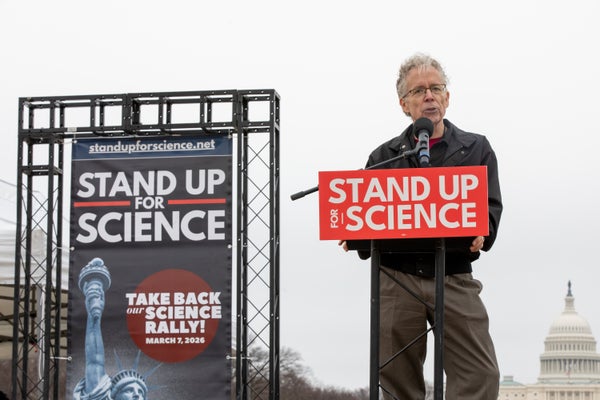
Former head of the National Oceanic and Atmospheric Administration Steve Volz speaks on the National Mall on March 7, 2026 in Washington, DC.
Brian Stukes/Getty Images
WASHINGTON, DC—Scientists, advocates and lawmakers gathered outside the U.S. Capitol on Saturday for the second annual Stand Up for Science rally. Speaking to the crowd, government scientists spoke out against moves by the Trump administration to curtail or censor their work.
“Science needs integrity,” said Jenna Norton, a scientist at the National Institute of Diabetes and Digestive and Kidney Diseases, who was one of the speakers at the gathering in Washington DC. Scientific American. “It is important that we talk about how we are affected and the future of our country.”
Norton, who filed a whistleblower complaint after the National Institutes of Health placed her on administrative leave in November, told protesters Saturday that the Trump administration was “opposed to science itself. Eventually, they will come for your science, too.”
On supporting science journalism
If you enjoy this article, please consider supporting our award-winning journalism by subscription. By purchasing a subscription, you are helping to ensure the future of impactful stories about the discoveries and ideas shaping our world today.
More than 2,000 people demonstrated on the National Mall; Similar rallies took place in more than 50 cities across the country, according to organizers, up from about a dozen a year ago. There were almost as many signs in the crowd as there were people, as well as a large inflatable duck standing next to the stage as a visual protest against “quack” medicine, a nod to how federal vaccine and nutrition recommendations changed under the Trump administration’s Health Secretary Robert F. Kennedy, Jr., a vaccine skeptic.
Since the new Trump administration took office in 2025, U.S. science agencies have lost more employees than in the previous two decades. About 10,000 other experts with doctorates in technical fields employed by the U.S. federal government were lost to retirements, layoffs or buyouts. Science reported.
Among the speakers at the Washington rally was Steve Volz, former head of the National Oceanic and Atmospheric Administration’s satellite division, who said the Trump administration sidelined him in order to privatize federal weather reporting. (The agency did not respond to a request for comment.) Also addressing the protest were young researchers at the National Institutes of Health, whose union received a letter in March from the agency saying the government would no longer recognize it. Lawmakers and political figures, including Democratic Sen. Chris Van Hollen of Maryland and conservative lawyer turned Trump critic George Conway, also filled the speaker list.
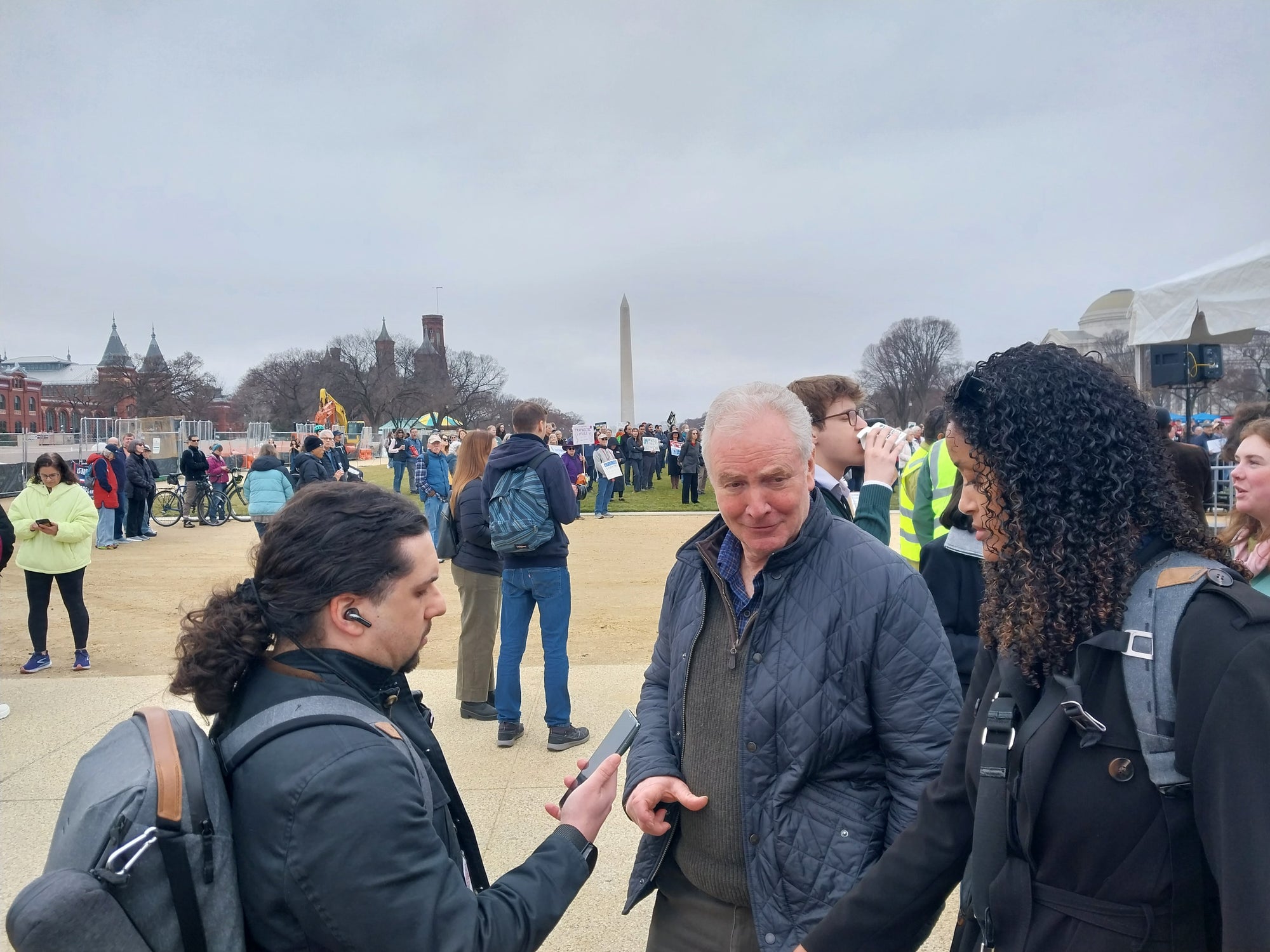
Senator Chris Van Hollen of Maryland behind the scenes at a March 7, 2026 protest in Washington DC
Dan Vergano/Scientific American
Congress’ decision to back away from the cataclysmic cuts in science funding that the Trump administration had proposed in 2025 is a “ray of sunshine,” Van Hollen said, speaking behind the scenes to Scientific American. But he added that an upcoming presidential budget request focused on defense spending will almost certainly require further cuts. “That response made a difference,” Van Hollen said, adding that Congress has written into law requirements that science funds be spent for the research purposes for which they were set aside. The administration could ignore these laws, he said, triggering lawsuits and ultimately putting science on hold. “That’s why I say a ray of sunshine, not that the sun came out,” he said.
Last year, “we saw scientists mobilize during several days of action to defend science, [which] has become a rallying cry for the broader resistance movement,” says sociologist Dana Fisher of American University, who studies and investigates the protests. The scientists fit neatly into the demographics of the Trump administration’s expected protesters: white, highly educated, and middle-aged or older, she says.
“I hope we continue to view science as a focus and a driver of action,” she adds.
Editor’s note: This story is under development and may be updated.
It’s time to defend science
If you enjoyed this article, I would like to ask for your support. Scientific American has been defending science and industry for 180 years, and we are currently experiencing perhaps the most critical moment in these two centuries of history.
I was a Scientific American subscriber since the age of 12, and it helped shape the way I see the world. SciAm always educates and delights me, and inspires a sense of respect for our vast and magnificent universe. I hope this is the case for you too.
If you subscribe to Scientific Americanyou help ensure our coverage centers on meaningful research and discoveries; that we have the resources to account for decisions that threaten laboratories across the United States; and that we support budding and working scientists at a time when the value of science itself too often goes unrecognized.
In exchange, you receive essential information, captivating podcasts, brilliant infographics, newsletters not to be missed, unmissable videos, stimulating games and the best writings and reports from the scientific world. You can even offer a subscription to someone.
There has never been a more important time for us to stand up and show why science matters. I hope you will support us in this mission.


