Please stop paying for vibe coded apps


Recently, I’ve seen a lot of people promoting apps on forums. These are applications that they coded themselves and that they are trying to monetize. There are many reasons why you shouldn’t pay for these apps.
Your data is one moment away from disaster
Vibe encoded apps may not be secure
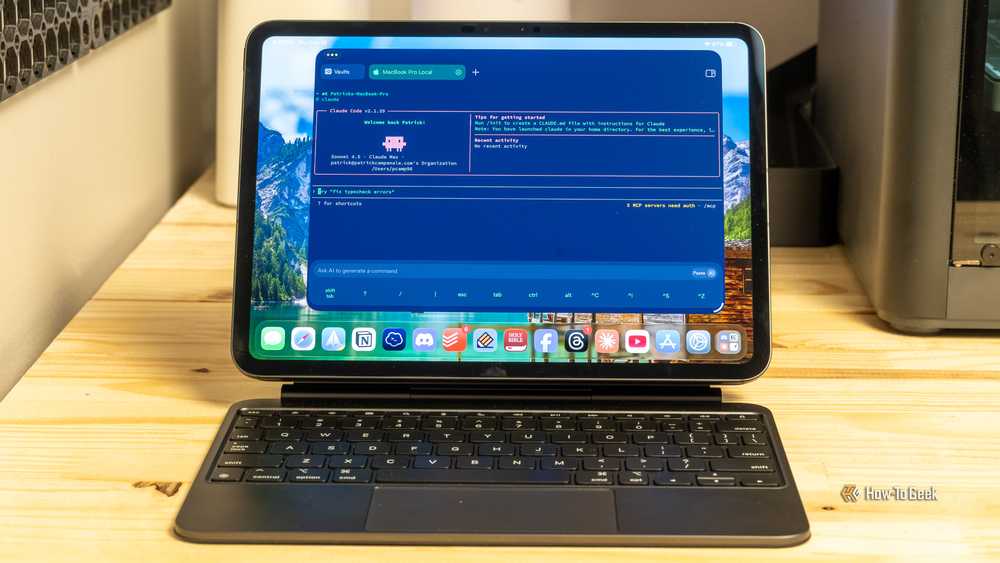
Vibrational coding is truly impressive. With just a few prompts, you can ask AI chatbots to generate impressive apps that really work without writing a single line of code yourself. With time and effort, you can refine your application into something that, at least on the surface, does exactly what it’s supposed to do.
If you’ve ever used an AI chatbot for more than about five minutes, you’ll know that it can hallucinate. They don’t just make mistakes; sometimes they actively make things up out of the blue. The problem is that if you code an application without any coding knowledge, you have no idea when this happens.
Vibe-encoded applications may contain significant security risks, such as storing passwords in the clear or broken authentication due to faulty code. When you hand over your payment information and personal data to the app, you’re not only trusting the developer to keep it safe; you trust every crazy line of code written by the AI model.
No one checked the work, including the seller
Closed source means lack of control

I see a lot of projects online where the application is rather specialized and would only apply to a small subset of people. For example, on the Home Assistant subreddit, there are regular posts from people who have created an app that can do a specific job.
The philosophy of Home Assistant is that it’s free and open source, so trying to monetize it already goes against everything Home Assistant stands for. Usually when people create projects, they host them on GitHub so everyone can review the code and see exactly how they work.
However, with closed apps this is not the case. No one else can review the code to see if it’s solid or if it’s a total mess full of potential security issues. With open source software, people who know how to code can check the work and warn others if things look bad, but with flavor-coded applications, no one has checked the code, and that probably includes the “developer” themselves.
The pitch is usually a warning
Building an app in a weekend is not a selling point

Most of the time, these ambiance-coded apps have dead giveaways. They include statements like “I put this together in a weekend” or “I built this solo in less than 48 hours.” This is not something to be proud of; This is a clear indication that the app was created in a hurry, without proper care and attention.
Building real apps takes time. If something was prepared over a weekend, then it is very unlikely that there was any testing, vulnerability scanning, or edge case research. This means that at best the app is likely to break when you try to do something the developer hasn’t considered, and at worst the app could put all your data at risk.
Unfortunately, not all ambiance-coded apps make things this obvious. Some articles will attempt to hide the fact that the app was created using AI. Vibe coded apps can look polished and professional, so it’s not always easy to tell.
However, there is often a clue to pay attention to. People who use AI to write apps for them also often use AI to write forum posts for them. If there is a post promoting an app and it looks like the post was written using AI, then there’s a good chance the app was too.
If they can do it, so can you.
Why pay when you can do it yourself?
This is the biggest problem with people trying to sell mood-coded apps. If the developer has no coding skills, then they built everything using AI models and a few prompts. They then want you to pay them money for what they built.
If they can build the app using AI, so can someone else. If you see an app that looks ambiance-coded and someone tries to sell it to you, you might be able to ambiance-code your own version of an app that does the same thing.
If you rely solely on flavor coding, your app may have the same risks and problems as the one they’re trying to sell you, but at least you’ll be aware of those risks. Since you are creating it for your own needs, you may also be able to remove many elements that would make the app a security risk. If you run an app on your phone or your own computer, for example, you don’t need accounts, servers, or databases storing credentials, and you don’t necessarily need to send data outside of your home.
In other words, flavor-coding your own version of an app might not just save you from paying for it. This could also reduce the security risk.
Vibrational coding has its place
Make no mistake, vibrational coding can be very helpful. I used it to create simple applications for my personal use. That’s the whole point; When you can do it yourself, there’s no reason to pay for someone else’s poorly designed app.


