Sports gambling could be boosting binge drinking in young men


March 11, 2026
2 min reading
 Add us on GoogleAdd SciAm
Sports betting could boost binge drinking among young men
Men aged 35 or younger who already drink heavily may be even more likely to binge drink because of legal online sports betting, a new study suggests.
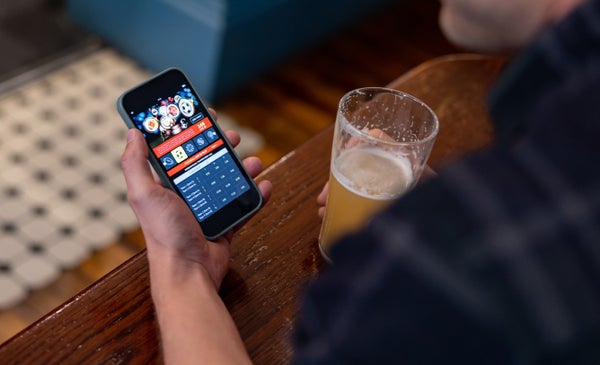
Online sports betting is pushing some young men to drink excessively more than ever before, a new study suggests. The findings add to growing evidence that legalizing online gambling and sports apps could “have spillover effects beyond gambling itself,” says Keshar Ghimire, lead author of the study and an economist at the University of Cincinnati.
Since the U.S. Supreme Court struck down a federal ban on sports gambling in 2018, the industry has exploded. Americans wagered nearly $41 billion on sports betting in the first quarter of 2025 alone, according to one estimate. At the epicenter are young men: a 2024 US survey found that one in four men aged 30 or younger bet on sports online. And as the market grows, scientists and public health advocates are increasingly concerned that young men who participate in sports betting are at increased risk of negative physical and mental health consequences.
In the new study, Ghimire and his co-author found that men with a history of binge drinking — defined for the men in the study as consuming five or more drinks in a single sitting — had a 10 percent increase in the frequency of binge drinking, on average, after online sports betting became legal in their state.
On supporting science journalism
If you enjoy this article, please consider supporting our award-winning journalism by subscription. By purchasing a subscription, you are helping to ensure the future of impactful stories about the discoveries and ideas shaping our world today.
Gambling apps or websites are designed to make it difficult to click, and bars are popular places to watch sports. These factors can combine to put men at increased risk.
“Online sports betting differs from traditional gambling because it is immediate, continuous and easily accessible via smartphones,” explains Ghimire. “This accessibility could make it easier to play in contexts where alcohol consumption is already common, such as watching live sports.”
He adds, however, that the research “identifies causality but does not directly test the behavioral mechanisms underlying it.”
It’s important to note that the study relies on participants’ self-report of how much they drink. This “could mean that the real level of consumption – and perhaps the magnitude of the increase – is somewhat higher than what appears in the survey data,” says Ghimire.
Ultimately, Ghimire says the study could help local policymakers target messages about responsible gaming to young men. Currently, online sports betting is legal in 31 states and Washington, DC.
It’s time to defend science
If you enjoyed this article, I would like to ask for your support. Scientific American has been defending science and industry for 180 years, and we are currently experiencing perhaps the most critical moment in these two centuries of history.
I was a Scientific American subscriber since the age of 12, and it helped shape the way I see the world. SciAm always educates and delights me, and inspires a sense of respect for our vast and beautiful universe. I hope this is the case for you too.
If you subscribe to Scientific Americanyou help ensure our coverage centers on meaningful research and discoveries; that we have the resources to account for decisions that threaten laboratories across the United States; and that we support budding and working scientists at a time when the value of science itself too often goes unrecognized.
In exchange, you receive essential information, captivating podcasts, brilliant infographics, newsletters not to be missed, unmissable videos, stimulating games and the best writings and reports from the scientific world. You can even offer a subscription to someone.
There has never been a more important time for us to stand up and show why science matters. I hope you will support us in this mission.


