Watch Northrop Grumman’s 1st ‘Cygnus XL’ cargo spacecraft leave the space station on March 12

When you purchase through links on our articles, Future and its syndication partners may earn a commission.

Credit: NASA
The first mission of Northrop Grumman’s new cargo spacecraft is almost complete.
This cargo ship, known as Cygnus XL, is expected to leave the International Space Station (ISS) Thursday morning (March 12), ending an orbital stay of almost six months.
Departure is scheduled for 7:05 a.m. EDT (11:05 a.m. GMT). You can watch it live here on Space.com, courtesy of NASA, or directly via the space agency. Coverage will begin at 6:45 a.m. EDT (10:45 a.m. GMT).

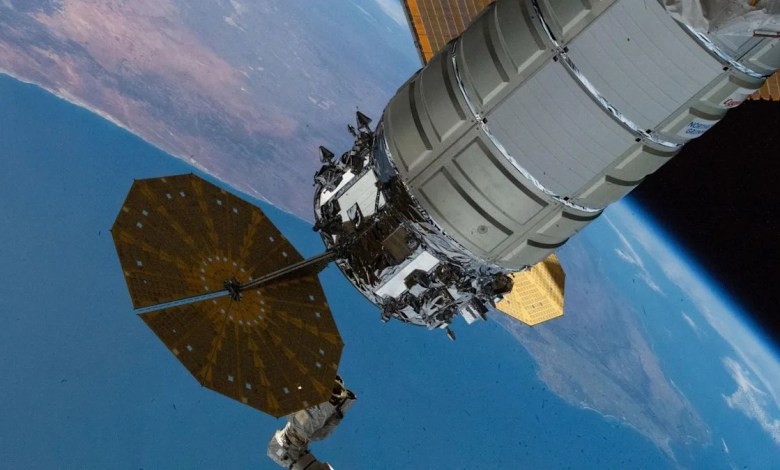
Northrop Grumman’s first Cygnus XL cargo craft is pictured installed on the Unity module’s Earth-facing port as the International Space Station orbited 262 miles (422 kilometers) above the Atlantic Ocean off the coast of South Africa. | Credit: NASA
The Cygnus XL launched atop a EspaceX Falcon 9 rocket September 14carrying approximately 11,000 pounds (4,990 kilograms) of scientific equipment and other supplies to the ISS.
This large cargo explains the name of the new cargo: earlier versions of Swan carried approximately 8,500 pounds (3,856 kg) to the orbiting laboratory.
Cygnus XL had a small setback during its first mission, suffering from an engine problem on the way to the station. The spacecraft – named SS William “Willie” McCool, in honor of one of the seven astronauts who died in 2003. space shuttle Columbia accident — however overcame the problem by arriving at the ISS September 18a day later than initially planned.
The orbiting outpost’s Canadarm2 engaged the Cygnus XL that day, docking it with the Unity module. The big robotic arm will also be at work Thursday, removing the SS William “Willie” McCool from Unity, then releasing it “into Earth orbit for a fiery but safe reentry over the South Pacific Ocean two days later,” NASA officials wrote in a statement. Tuesday update (March 10).
Cygnus is one of four robotic cargo spacecraft serving the ISS these days, along with SpaceX’s. Dragon capsule, from Russia Progress vehicle and the HTV-X of the Japan Aerospace Exploration Agency (JAXA). Dragon is reusable, but the other three burn Earth’s atmosphere when their missions are completed.
HTV-X — a more advanced version of the Japanese HTV cargo ship — has just completed its first-ever visit to the orbiting laboratory, departure March 6 after a four-month stay. This cargo ship will remain in orbit as a free traveler for approximately three months, hosting a suite of JAXA scientific experiments.