13-inch MacBook Air (M5) review: Fast and steady wins the race


At a glance
Expert rating
Benefits
- Fantastic performance for this class of laptop
- Double the storage capacity and performance
- All-day battery life and more
Disadvantages
- Still no HDR or variable refresh rate
- Little has changed in four years
Our Verdict
The more things change, the more the MacBook Air stays the same. It may not be much different from last year’s or 2022’s model, but it’s still a winning formula that works great for most users.
Price when reviewed
This value will display geotagged pricing text for the undefined product
Best price today
Best prices today: Apple MacBook Air 13-inch (M5, 2026)

If you’ve used a MacBook Air in the past four years, you know exactly what to expect from the new M5-equipped model. Apple’s most popular laptop has changed very little. It’s really all about the M5 chip, which delivers impressive performance improvements year after year.
However, the MacBook Air is no longer the entry-level option. With the launch of the MacBook Neo at $599, the MacBook Air, which now starts at $1,099, sits firmly in the mid-range of Apple’s laptop lineup. This doesn’t necessarily mean the Air is targeting a different audience, but its positioning puts it in a different light.
Unfortunately, you won’t find anything surprising or particularly noteworthy about the new M5 version of the MacBook Air. It continues to be a stable workhorse in Apple’s lineup and a great laptop for most, but it’s hard to get excited about somewhat longer benchmark bars on a benchmark chart year after year.
MacBook Air M5: design, display and specifications
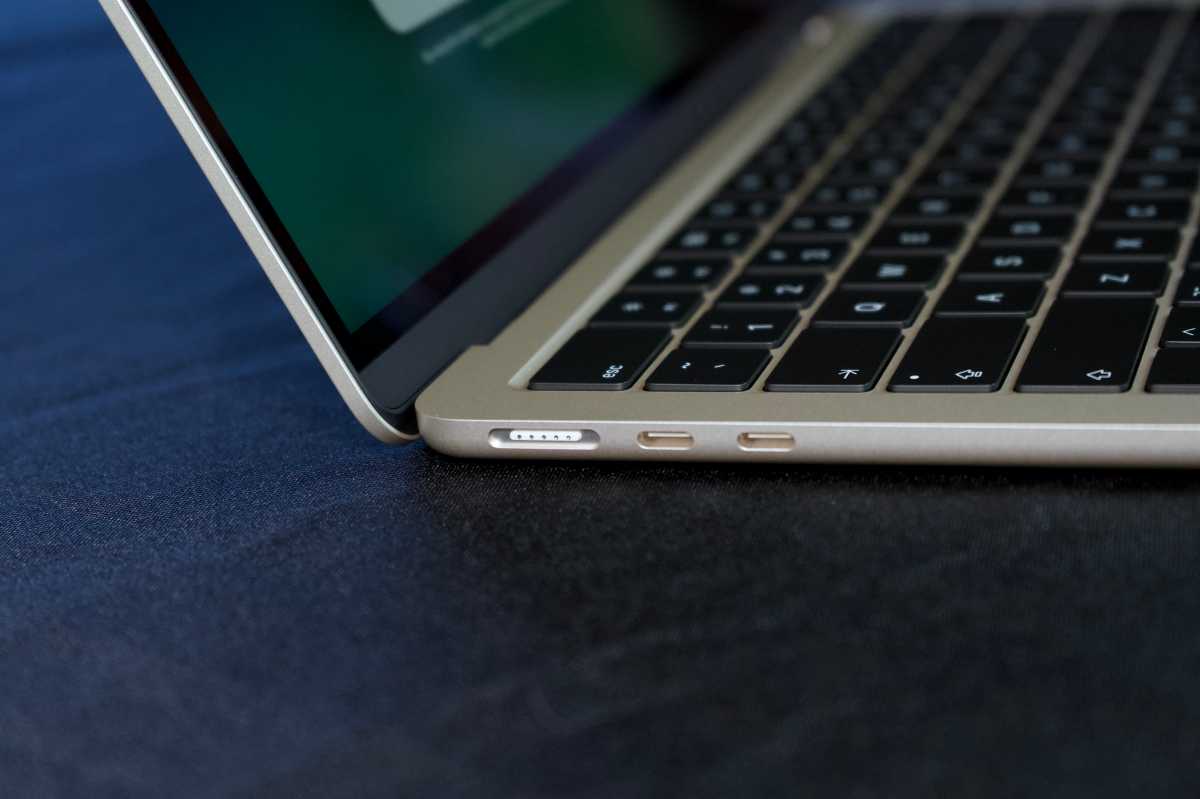
Apple has changed little about the MacBook Air since introducing the M2 model four years ago. With last year’s M4 model, it replaced the Space Gray color option with Sky Blue and added the new 12MP Center Stage camera with Desk View, updated the USB-C ports to Thunderbolt 4, and improved Wi-Fi support to Wi-FI 6E.
Foundry
This year, Apple updated the wireless chip to its own N1 (with Wi-Fi 7 and Bluetooth 6 support) and doubled the starting storage to 512GB (while increasing the price by $100). The SSD is also much faster. One minor detail: the keyboard now features glyphs on the Tab, Caps Lock, Return, and Shift keys instead of words like the rest of Apple’s MacBook line. Unfortunately, it features the same four colors, which look even more subdued next to the MacBook Neo.

Foundry
MacBook Air prices have been rebounding for years. The M1 model started at $999. That jumped to $1,199 with the M2 model, then was reduced to $1,099 when the 15-inch model arrived. The M4 model further reduced the price to $999, and now we’re back to $1,099 for the 13-inch model or $1,299 for the 15-inch model.
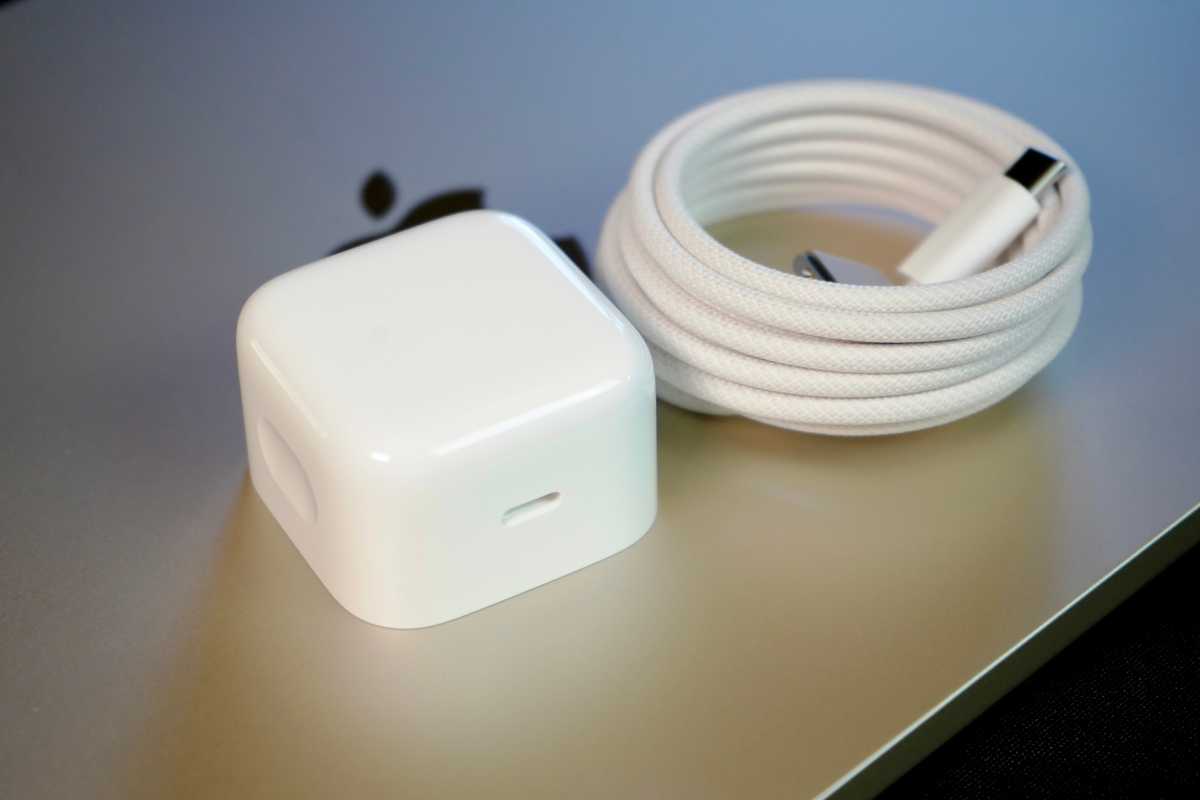
This entry-level model gives you the lower-spec M5 with 10 CPU cores and 8 GPU cores. Our review unit includes the M5 complete with 10 CPU cores and 10 GPUs, 16GB of RAM, and a 1TB SSD, bringing the price to $1,299. In the US, Apple is now including the new 40W Dynamic Power Adapter with 60W maximum with the MacBook Air rather than the 30W USB-C Power Adapter (13-inch base model only) or the 35W Dual-Port USB-C Power Adapter.
MacBook Air M5: performance
We’ve already seen the M5-based MacBook Pro, and as expected, the MacBook Air’s M5 performance is very similar. As is always the case, the MacBook Pro will perform certain tasks a little faster thanks to its active cooling for sustained maximum performance, while the MacBook Air offers quiet performance, without any fans. This causes the CPU to slow down when things get too hot, decreasing performance.
Geekbench 6 processor
From the old standby Geekbench 6, we see the same CPU performance improvement as the M5 MacBook Pro. Peak single-threaded performance and very good multi-core performance for a chip that uses this little power. It’s amazing how consistent and predictable Apple Silicon processor performance improvements are from year to year.
Cinébench 2024
There is a new 2026 edition of Cinebench, but we will present the 2024 version here to give you historical context of previous models. Once again, CPU performance shows consistent, predictable, and impressive year-over-year gains.
Geekbench AI
A more recent test, the Geekbench AI benchmark runs a range of common AI workloads, from image classification and face detection to machine translation. It uses Apple’s CoreML framework and can be forced to run on the CPU, GPU, or Neural Engine.
Here we present the Neural Engine scores. It’s interesting to have a test that can isolate its performance, where we can see that when running real AI workloads, the neural engine in Apple’s M-series chips has become 2-3 times faster over the past few years.
Handbrake video encoding
In our video encoding test, we use the popular HandBrake utility to convert the 4K Tears of Steel video to a 1080p H.265 file, measuring the number of seconds it takes. Shorter bars are better, and while the classic CPU encoding shows impressive year-over-year gains, the “VideoToolbox” encoding, which uses Apple’s hardware video encoder, is the really interesting result. Apple’s video encoder is much faster in the M5 than in the M4.
iMovie video export
When exporting a 4K iMovie video at the High setting, the M5 is only slightly faster than the M4. With the exception of Apple’s addition of ProRes encoding to its M2-generation video encoder, performance in this particular test showed only minimal improvement year over year.
Video game benchmarks
Looking at frame rates in high-end video games, even ones that are a few years old, shows that you’re not going to buy an M5 MacBook Air for gaming. The lack of active cooling results in a drop in performance after about 10 minutes of gaming. You can play casual games just fine, but for a variety of reasons, if you like AAA games, the Air isn’t the best choice.
Blackmagic disk review
One area where the MacBook Air M5 really shines is SSD performance. Like other M5 generation Macs, Apple has significantly improved storage performance. After years of speeds of plus or minus 3 GB/s, Apple doubled its speed in just one year.
MacBook Air M5: battery life
Battery life on 13-inch MacBook Airs hasn’t really changed much in years. You’re still looking at a 53.8 watt-hour battery, and Apple claims 15 hours of wireless web browsing and 18 hours of video streaming.
We used a downloaded movie on loop to drain the battery, with the screen brightness set at 150 nits, bright enough for a well-lit office. 18 hours and 24 minutes later, the battery finally died. That’s a few minutes longer than older M-series MacBook Air models, but the difference is small enough to not be noticed.
In hands-on testing, we were able to work for hours and barely see any battery drain. With basic tasks like web browsing, email, or writing, we could work all day and still have half the battery left. Are you traveling on a transatlantic flight? You’ll land with so much battery life left that you can turn around and take off again. You won’t need to find an outlet during a typical 8-hour work day.
Foundry
The MacBook Air M5 comes with the new dynamic 40W power adapter, which typically charges the laptop at close to 60 watts, at least until you get over 80%. That’s not enough to benefit from what Apple calls “fast charging,” which involves charging from 0% to 50% in 30 minutes or less, but it’s close. The MacBook Air M5 supports fast charging, but you’ll need a 70W or higher power adapter.
Should you buy a MacBook Air M5
The MacBook Air is the workhorse of the MacBook range. The MacBook Pro is an expensive, high-end, high-speed offering beyond the needs (and means) of most users. The new MacBook Neo is an inexpensive laptop aimed at new users, students, and those with lesser computing needs.
Which puts the MacBook Air in the middle. High-end and high-performance enough to please almost everyone. As always, I feel compelled to complain that Apple’s 60Hz SDR display technology is a bit dated for this price range, but the color accuracy and brightness uniformity are still top-notch. I would also like better speakers.
But this quiet, durable, and reliable laptop will get the job done for all but the most demanding users for years to come. There may be nothing to get excited about, but there’s nothing to complain about either.


