What Bugonia reveals about the real search for aliens


March 15, 2026
3 min reading
 Add us on GoogleAdd SciAm
What Bugonia reveals the true search for extraterrestrials
In the Oscar-nominated film BugoniaEmma Stone’s character is accused of being an alien. But would we know about extraterrestrial life if we saw it on Earth?
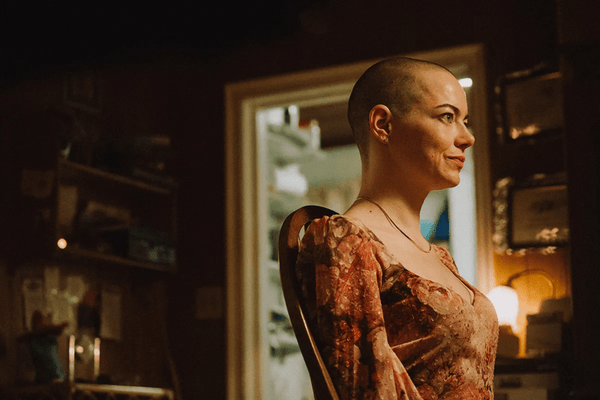
In Bugonia, it all starts with bees. Teddy (played by Jesse Plemons), a warehouse worker, accuses powerful CEO Michelle (Emma Stone) of being an alien who is secretly killing bees, disrupting the ecosystems that humans depend on for food.
“The signs,” said Teddy, “are obvious. »
It’s a funny and captivating premise. But at the center of the film is a fascinating question that scientists around the world are working to answer: How will we know if we’re seeing an alien?
On supporting science journalism
If you enjoy this article, please consider supporting our award-winning journalism by subscription. By purchasing a subscription, you are helping to ensure the future of impactful stories about the discoveries and ideas shaping our world today.
To identify extraterrestrial life, scientists must be able to tell that the thing they are studying is alive. But there isn’t as much consensus on what “life” actually is as one might think.
“We don’t have a really clear theoretical and experimental program for asking questions about the nature of life,” says Sara Walker, an astrobiologist and theoretical physicist at Arizona State University. Essentially, our working criteria are based exclusively on life on Earth. But in the vastness of the universe, life could be radically different from what we have seen on our planet.
Walker theorizes that life does not necessarily have to be based on organic molecules, cells and DNA, for example. It might be easier to identify life using what she and her colleagues call “assemblage theory,” which means spotting complex systems that arose from traceable lineages and modified their environments in ways that only a living entity could.
What might this look like beyond Earth? Well, we have no idea, yet. “The vast space of possibilities [of] life far exceeds both what has been achieved here on Earth in our biosphere alone and also potentially our imaginations,” says Mike Wong, an astrobiologist at the Carnegie Institution for Science’s Earth and Planets Laboratory.
Every living thing on Earth has been shaped by millions of years of evolution and co-evolution alongside all other creatures and different environments on the planet. It’s reasonable to assume that an alien probably won’t look like an Earthling, Wong says, because its evolutionary history might be determined by a radically different world with unique pressures and environments.
And as for Bugonia, “I think it would be very unlikely that aliens would look like Emma Stone,” says Wong.
Even small distinctions between worlds can significantly alter the results of evolution. For example, take two identical Earths, says Nathalie Cabrol, an astrobiologist and director of the Carl Sagan Research Center at the SETI Institute, a nonprofit organization dedicated to the search for extraterrestrial intelligence. If one Earth has a fraction of a second difference in its orbit compared to the other, then it’s possible that “evolution could be radically different,” she says. “You’re going to have extinctions that aren’t timed the same way. You’re going to get hit by more asteroids, or you’re going to avoid one,” she speculates.
But for the sake of argument, let’s say that an alien, as proposed BugoniaIt turns out he looks a lot like us. How would we know it wasn’t a human?
The last universal common ancestor of all life on Earth, known as LUCA, is written into the genes of every being. Because everything living originated from LUCA, plants, animals, and microbes all share certain fundamental traits, such as storing genetic information in DNA and RNA. Apparently, extraterrestrial life originated elsewhere and therefore would not share this common ancestor. As a result, the alien would almost certainly not have the same basic chemical or genetic elements that all life on Earth shares — and a simple genetic test would reveal this, Wong says.
However improbable it may be, one day we will encounter an extraterrestrial who that’s how it happens look like Emma Stone, Bugonia shows how fictional stories about extraterrestrials tend to get wrapped up in very real human problems, says Cabrol of the SETI Institute.
“Why would I start looking at someone and saying, ‘You’re an alien?’ “, she said. “Is there something in our society today that says, ‘You look like something I can recognize, but that’s not really us’?
It’s time to defend science
If you enjoyed this article, I would like to ask for your support. Scientific American has been defending science and industry for 180 years, and we are currently experiencing perhaps the most critical moment in these two centuries of history.
I was a Scientific American subscriber since the age of 12, and it helped shape the way I see the world. SciAm always educates and delights me, and inspires a sense of respect for our vast and beautiful universe. I hope this is the case for you too.
If you subscribe to Scientific Americanyou help ensure our coverage centers on meaningful research and discoveries; that we have the resources to account for decisions that threaten laboratories across the United States; and that we support budding and working scientists at a time when the value of science itself too often goes unrecognized.
In exchange, you receive essential information, captivating podcasts, brilliant infographics, newsletters not to be missed, unmissable videos, stimulating games and the best writings and reports from the scientific world. You can even offer a subscription to someone.
There has never been a more important time for us to stand up and show why science matters. I hope you will support us in this mission.


