Hubble catches rare view of a comet crumbling

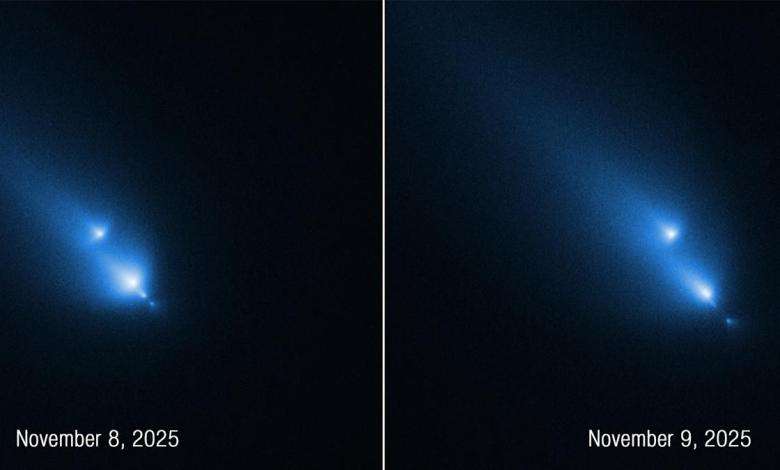
NASA and ESA have released new Hubble Space Telescope images of a comet crashing as it exits the solar system, captured in a study recently published in the journal Icarus. The images are notable not only because they offer a more detailed view of a comet’s interior, which could offer new insights into the early days of the universe, but also because they were taken by accident.
Photographing K1, or “Comet C/2025 K1” as it is officially known, was not the original intention of the study. “This comet [was] “We had to find a new target – and just as we observed it, it broke, which is the slimmest of chances.”
The comet split within a few days into “at least four pieces,” each surrounded by a “fuzzy envelope of gas and dust.” Hubble specifically captured the disassembly on November 8-10, 2025. K1 was interesting before it began to collapse because at “about 8 kilometers in diameter” (about 5 miles), it is larger than the average comet, and having images of its breakup will likely offer new insights into comet physics in general. Additionally, the lack of carbon in the gases released by the comet when it broke up is apparently “very strange chemically,” suggesting that K1’s composition could also bear scientific fruit.
Hubble has been tracking comets of different sizes and compositions for years. Their study remains a priority because comets are often made up of ice and rocks dating from the primordial period during the formation of solar systems. The ESA hopes to greatly expand our understanding of this period with its “Comet Interceptor” mission, expected to launch in 2028 or 2029, and aims to use photos captured from multiple angles to create a 3D model of a comet.


