Restless Kīlauea Launches Lava and Ash


Kīlauea entered its second year of episodic activity after waking up in December 2024. Since then, the Hawaiian volcano has experienced dozens of lava fountaining episodes, each lasting several hours to several days.
Activity resumed on March 10, 2026, for episode 43 of the eruption. That day, between approximately 9 a.m. and 6 p.m. local time, lava gushed from two active vents on the southwest side of Halema’uma’u crater, adding to the ever-thickening layer of fresh basalt rock in the summit caldera. The eruption also featured the tallest lava fountains of the current eruption, estimated at 1,770 feet (540 meters). Meanwhile, ash and other airborne debris fell on communities up to 50 miles away.
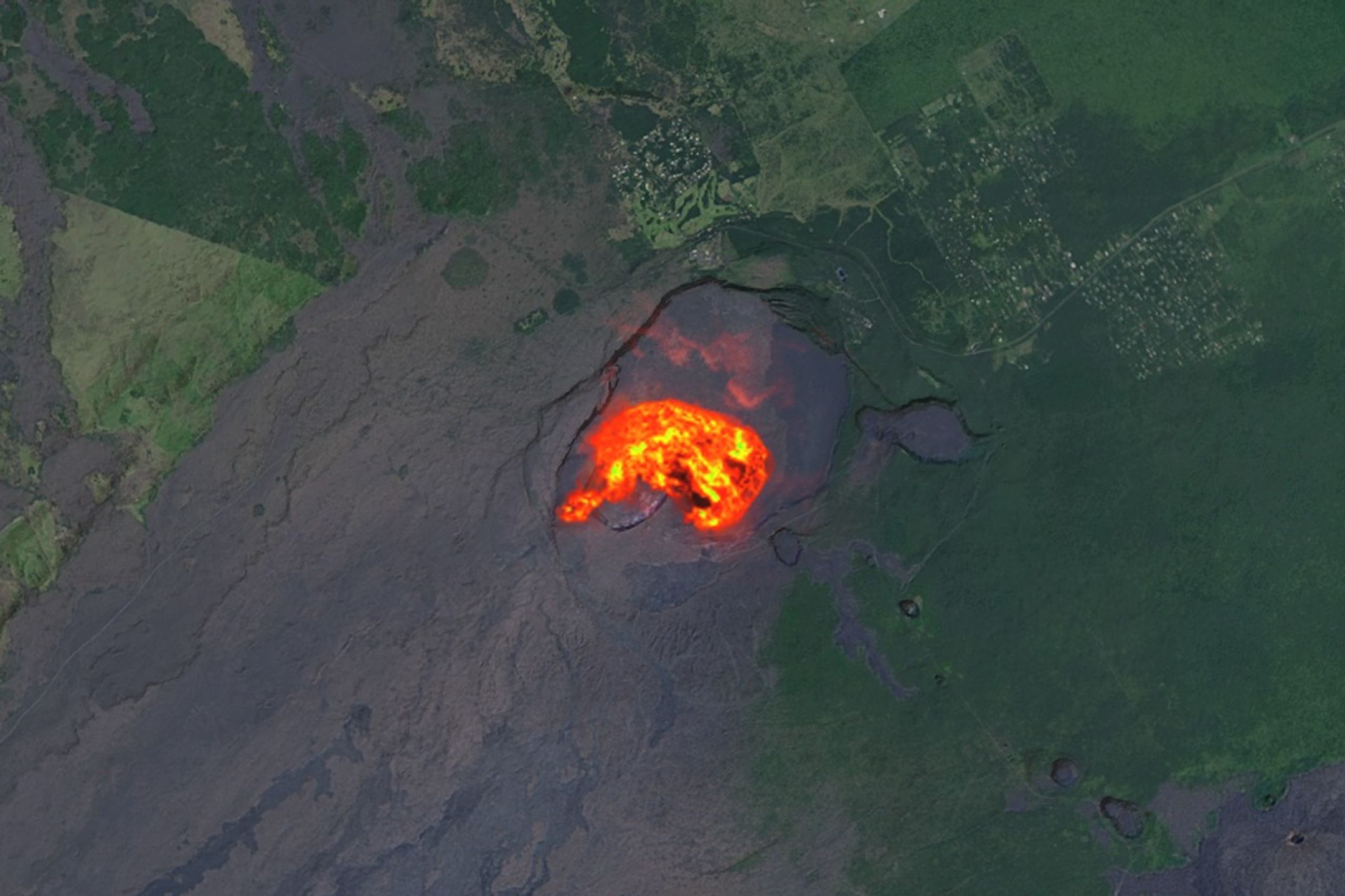
About 4 hours after the fountains stopped, the Landsat 9 satellite passed over the island of Hawaii. This image shows shortwave infrared and near-infrared data, acquired with the satellite’s Operational Land Imager (OLI) at 10:20 p.m. local time on March 10 (08:20 a.m. Universal Time on March 11), revealing heat emanating from still-sizzling lava. This information is overlaid on a composite of daytime Landsat images and a digital elevation model.
According to the Hawaiian Volcano Observatory (HVO), approximately 16 million cubic meters (12 million cubic meters) of lava erupted during the episode, bringing the total eruption volume for all episodes since December 2024 to nearly 325 million cubic meters (250 million cubic meters). During the same period, the depth of lava in the crater increased by approximately 90 meters.
While the lava remained confined to the summit area, other material from the eruption traveled much further. Images captured by satellites orbiting over the area during the day showed a volcanic plume drifting northeast from the vents. Volcanic gases and ash reached a maximum height in the atmosphere of more than 30,000 feet (9,100 meters) above sea level, the HVO said. The aviation color code was raised to red during the eruption and several flights at Hilo Airport were canceled, according to media reports.
Volcanic fragments up to several inches in diameter fell along the northern rim of the caldera and into adjacent communities. The hazards and accumulation of debris caused the temporary closure of Highway 11 and the evacuation of visitors from parts of Hawaii Volcanoes National Park. Smaller particles were carried farther: people reported that Pele’s ashes and hair fell dozens of miles north and east of Kīlauea, including in Hilo, Kea’au and other coastal communities. Volcanic debris is an irritant to eyes, skin and respiratory tract, HVO warned, and it can affect water quality for those using rainwater catchment systems.
NASA Earth Observatory image by Michala Garrison, using Landsat data from United States Geological Survey. Story by Lindsey Doermann.
- NASA Earth Observatory (December 9, 2025) A hot and fiery decade for Kīlauea. Accessed March 19, 2026.
- NASA Earthdata (March 13, 2026) Kilauea eruption in Hawaii. Accessed March 19, 2026.
- US Geological Survey (March 12, 2026) Volcano Watch – Episode 43, new fountain height record and tephra fallout on communities. Accessed March 19, 2026.
- US Geological Survey (March 11, 2026) Hawaiian Volcano Observatory Status Report. Accessed March 19, 2026.
- US Geological Survey (2026) Information on the Kīlauea eruption. Accessed March 19, 2026.


