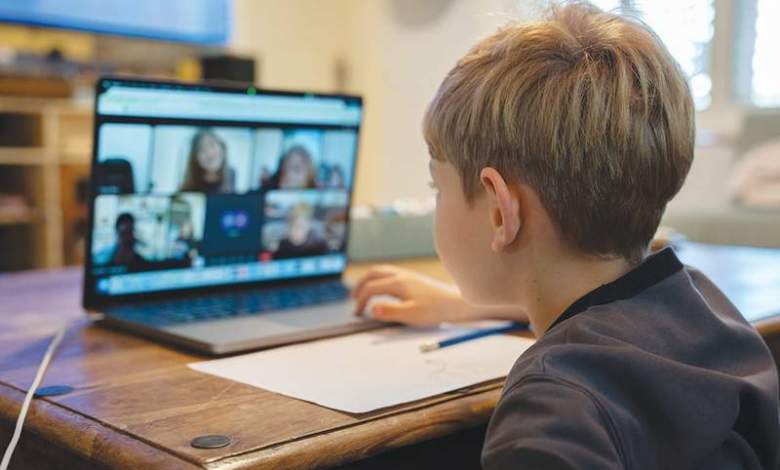
Israeli students juggle Zoom classes, sirens, and exams while navigating life during war with Iran.
After completing a packed semester studying law at Bar-Ilan University, I knew March was almost here. It was going to be a month full of celebrations: anniversaries, family gatherings, and the ultimate party that is Shushan Purim in Jerusalem.
On the Shabbat when the Iran war began, I was in the synagogue reading parashat “Zachor” (the portion in Deuteronomy that outlines the commandment to remember what Amalek did to the Israelites) as Ayatollah Ali Khamenei likely found his end. Within two hours, the day was turned upside down as alerts overloaded my phone’s messaging system and half a dozen sirens forced us to the shelter.
Today, as I write this reflection, it is uncertain when the next warning alert or siren will sound. My small apartment lacks a proper reinforced room (mamad), compelling my wife and me to take cover in a public bomb shelter a block away. Not that this is unique. Statistics show that 60% of Israelis lack a safe room in their apartment, forcing them to rely on other sheltering methods, such as using a building stairwell, a shelter in their building’s basement, or a public shelter outside their residential building.
What was supposed to be a beautiful month and a beautiful break from my university studies has turned into a survival frenzy. Instead of the usual party scene in Jerusalem, Purim became a private affair – Megillat Esther readings out of the public eye and surreal prayers in bomb shelters. Family gatherings and joyous occasions have become bonding sessions in reinforced rooms as guests and relatives huddle together over repeated sirens while trying to enjoy a celebration. Going outside, one must always be vigilant about where to go if a siren sounds. Walks are planned with bomb shelters in mind.
For those who rely on a routine, every day has become unpredictable, yet life must go on. Our phones watch over us with the Orwellian Home Front Command app, knowing where we are at all times, waiting at the ready to give us the call to go to a bomb shelter.

The university administration expressed hope that classes would soon return to the ‘beautiful green grass of Bar-Ilan.’ (credit: FLASH90)
The second week of the war was meant to mark the beginning of my second semester. Instead, the academic year was postponed by a week and eventually resumed through Zoom classes. In a mass email to students, the university administration expressed hope that classes would soon return to the “beautiful green grass of Bar-Ilan.” Yet for many students, the messaging feels uncertain and at times contradictory, leaving them unsure what the coming semester will actually look like.
Any attempts to repeat final exams are on hold. A recent email from the administration has students repeating exams over the Passover break in April. However, certain exams may have been deferred further. One student, “N,” has decided to leave Tel Aviv for a smaller community in the Negev. “At least they don’t have many sirens,” he said. A student group chat debated the pros and cons of leaving the country through Taba, Egypt. “One cannot study under these alerts and sirens. At least somewhere else, we can concentrate,” another student wrote. Other students are attempting to project a “business as usual” vibe, but little is usual as students abandon their Zoom screens to take cover in reinforced rooms and bomb shelters in the middle of lectures.
Additionally, many students, tutors, and lecturers are on reserve duty, with their absence felt by their families and by their university environment. The situation has taken its toll on students across the country. An Israeli Students Union survey of 1,220 students, which included 240 reserve soldiers, found that 82% were unable to study. In contrast, only 6% were able to concentrate, 61% felt fatigued and drained, 55% experienced anxiety, and 59% were unable to attend one or more exams due to the war. The union spoke of a need to adapt to the situation, preserving students’ rights, and the need for transparent communication.
Tips on managing exam stress
According to Dr. Naama de la Fontaine, director of the Trauma Center for Children and Adolescents at Safra Children’s Hospital (part of Sheba Medical Center, Tel Hashomer), who also sees many adult clients in her private clinic, the war has caused many students to attempt to function academically while managing a heavy psychological burden. “We are all dealing with it from different perspectives and developmental standpoints,” she explains. “For young children, parents, and university students, people are juggling many roles. Many students are working, some are parents, and some are serving in the military.”
De la Fontaine emphasizes that the current strain did not simply spring up on students but is built up from a constant, volatile period of tension. “Our systems are already burdened with the effects of the past three years,” she says. “[For] many of us, whether we are fully aware of it or not, our bodies and minds are carrying the impact of ongoing exposure.” As a result, students may experience fatigue, anxiety, and emotional overwhelm as they recall previous trauma “because this situation can deeply trigger previous experiences of stress or trauma.”
One of her key recommendations is self-compassion. Many times, students internalize academic expectations without recognizing the circumstances they are operating in. “If classes are being held and deadlines are expected, we internalize that expectation,” she explains. “We think that if the university placed a demand, this must mean we can meet that demand.”
At the same time, de la Fontaine warns against extreme thinking. “One trap is the all-or-nothing approach,” she says. Students may feel that if they cannot perform exactly as they would in normal times, there is no point in trying. “Either it has to be handed in perfectly, to receive the same grade as in peacetime, or we feel we have failed.” Instead, she encourages students to adjust expectations. “The goal is to do the best we can under the circumstances and not let our performance define our entire self-worth.”
Sleep disruption is another major challenge, particularly for students who are repeatedly woken during the night due to air-raid sirens. Adding to the strain is that many students are living in older apartments with roommates, with no reinforced rooms. As a result, the trauma effect from a simple wake-up call becomes profound as students physically leave their beds for a bomb shelter in a different dwelling. The result is an amplified effect of the sleep disruption. “When students don’t reach deep REM sleep, concentration, memory, and organization are affected,” she explains.
To help counter this, she recommends small practical steps. “Try to get some sleep, even if it’s an hour-long nap during the day,” she says. Creating routines can also help stabilize daily life. “Create anchors throughout the day – meal times, movement, or social interaction.”
Finally, she stresses the importance of connection and purposeful action. “Behavioral activation is key,” she says. “It’s not whether we feel like doing something; we do it, and the emotions follow.” Maintaining connection with others can also restore meaning. “Doing something for someone else helps us maintain a sense of belonging and purpose.”
Despite the feeling of strain, looking outside my window the streets are full of people walking. Shops remain open, people are walking their dogs, and some people are even jogging toward the Mediterranean coastline. When asked how they are, people still reply, “I am doing well” as if the war was an afterthought. This surreal scene may be the ultimate key to pushing through. Uncertainty abounds about university studies, and sleepless nights may continue to plague the home front, but people are still doing what they can to maintain a sense of having a normal life.


