How understanding weather and climate risks depends on supercomputers like NCAR’s

Have you ever wondered how forecasters can predict the weather several days in advance, or how scientists determine how the climate might change under different policies?
The Earth system is a vast network of intertwined processes, ranging from microscopic chemical reactions to towering storms. Ocean currents circulating deep in the Atlantic, forests exchanging carbon with the atmosphere, and human activities changing the composition of the air all have effects that ripple throughout the system. These processes are governed by physical laws, such as the conservation of mass, energy, and momentum.
All of this plays out on such a scale that no human mind can truly comprehend it in its entirety. And yet the system is so sensitive that a small disturbance, given enough time, can shift its trajectory in a radically different direction. This sensitivity is called “chaos,” also known as the “butterfly effect.” The planet is both immense and delicate.
Despite this complexity and scale, scientists are able to simulate and anticipate climate change.
How is this possible? Behind the long-term climate projections that affect our lives lies one of the most remarkable scientific achievements of the modern era: climate models running on supercomputers.
I am a climate data specialist. My colleagues and I are trying to understand extreme weather and long-term climate risks by using virtual versions of Earth inside these machines.
What is a climate model?
Here is the simplest way to imagine a climate model:
Imagine dividing the entire planet into 3D boxes. On the surface, each box can represent an area 50 to 100 kilometers in diameter. Then we stack the boxes up in the atmosphere and down in the oceans to create a 3D grid enveloping the globe.
Each box contains numbers: temperature, wind speed, humidity, sea ice thickness, soil moisture and hundreds of other variables. The model contains mathematical expressions that describe how these variables influence each other: how heat moves, how air rises and falls, how moisture condenses into clouds, how the ocean absorbs and redistributes energy.

We then let the model move forward in time, solving the calculations and updating each variable in each box. There again. And again.
Now increase that. Millions of squares. Hundreds of variables per box. Calculations carried out millions of times to simulate decades, even centuries.
And since the system is chaotic, we don’t run the model just once. We run it several times with slightly different initial conditions – what scientists call an ensemble – to ensure that the result is a true system response to the scenario under consideration, such as warming temperatures due to increased emissions, and not an effect of chaos.
The result is an astronomical number of calculations. Their realization requires computers capable of executing quadrillions of operations per second – what we call supercomputers on a petascale scale. One petaflop is equivalent to 1 quadrillion – 1,000,000,000,000,000 – calculations per second!
From simulation to real-world decisions
These simulations inform decisions that affect daily life: how high to raise homes in flood-prone areas, how to design power grids resilient to prolonged heatwaves, how to manage water resources in droughts.
Urban planners, engineers, emergency managers and policy makers all rely on the information derived from these models.
Dozens of major climate models have been developed around the world by universities, national laboratories and government agencies. Each modeling center builds its own code, formulates its own physical hypotheses, chooses its own grid resolution and operates its own supercomputing systems. Through international efforts such as the Coupled Model Intercomparison Project, modeling centers agree on common experiments: the same greenhouse gas scenarios and volcanic eruptions, for example.
When we hear that extreme precipitation is expected to intensify in a warmer world, or that the Arctic Ocean could become seasonally ice-free within a few decades, these conclusions are not the result of calculations made by a single scientist, a single team of scientists, or even a single model. They emerge from dozens of independently developed models, run on room-sized supercomputers, in pre-agreed and carefully coordinated experiments.

This global collaboration is one of the reasons scientists know so much about climate change. These shared simulations allow scientists around the world to test hypotheses and explore future risks based on model consensus.
It is no surprise that the 2021 Nobel Prize in Physics has recognized pioneers in climate modeling. These models have fundamentally transformed humanity’s ability to understand a complex planet.
There is no other way to answer the “what if” questions about the future climate system. What happens if carbon dioxide doubles? What if emissions fell quickly? What if a major volcanic eruption injected aerosols into the stratosphere? Because the climate system is so complex and forces can move it beyond the scope of historical experience, the past is no longer a reliable guide to the future. Statistical models are therefore not enough.
Artificial intelligence cannot replace this foundation either. AI has made impressive advances in short-term weather forecasting, learning patterns from large historical data sets and producing forecasts with remarkable speed.
But climate projections require extrapolating to conditions the planet has not experienced in modern history – such as higher concentrations of greenhouse gases. AI can today speed up simulations and analyze huge amounts of data, but it cannot replace solving the physical equations that govern the system.
National supercomputing centers are essential
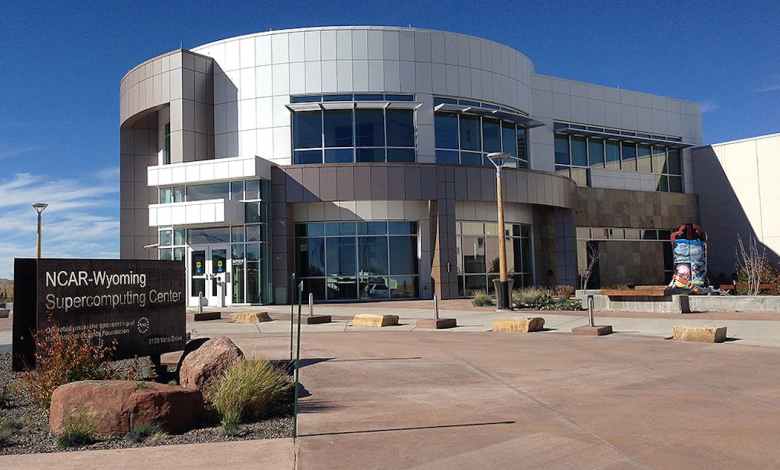
In the United States, major climate modeling efforts have been supported by national laboratories and federal centers, including NASA and the National Center for Atmospheric Research, or NCAR, as well as a few research universities.
At NCAR, scientists developed the Community Earth System Model, a comprehensive climate model that is arguably one of the best models to date and is used by researchers across the country and around the world to study climate change, extreme weather, the effects of climate on wildfires, and atmospheric models. This has helped position the United States at the forefront of climate science and enabled the global research community to address some of the most pressing challenges of our time.
Running large assemblies with this model requires powerful hardware, data storage systems capable of handling petabytes of output, and engineers who keep these systems operational. It’s not about downloading and running a program on a laptop. This is a nationwide scientific endeavor that makes NCAR and its supercomputer essential.
In a warming climate, the stakes are high. The ability to simulate the Earth system on a large scale is one of the most powerful tools humanity has to prepare for future risks.
This article is republished from The Conversation, an independent, nonprofit news organization that brings you trusted facts and analysis to help you make sense of our complex world. It was written by: Antonios Mamalakis, University of Virginia
Learn more:
Antonios Mamalakis does not work for, consult, own shares in, or receive funding from any company or organization that would benefit from this article, and has disclosed no relevant affiliations beyond his academic appointment.


