Jürgen Habermas Has Died. Will Democratic Optimism Die With Him?


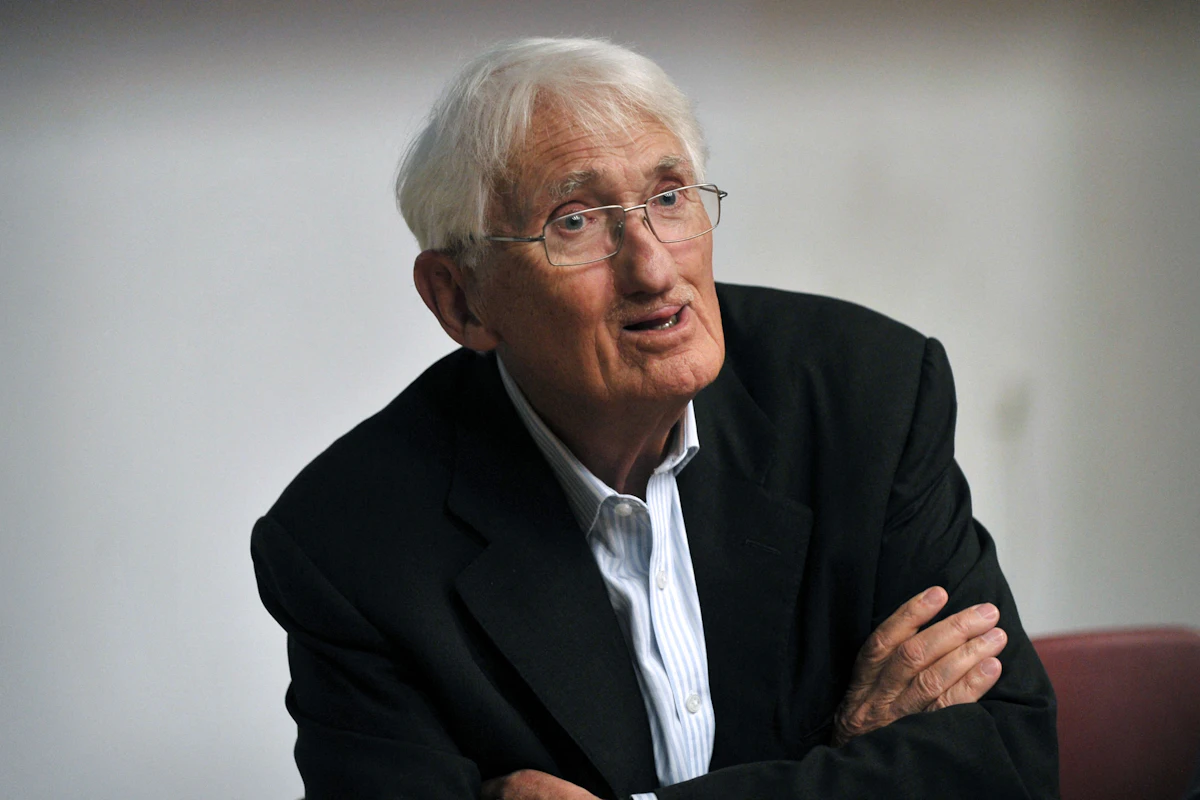
Habermas’s second major work, at least judging by the number of reviews and graduate programs it inspired, is 1981. Theory of communicative action, during which he sought once again to find the appropriate conditions for a truly democratic public space. He did this through the notion of what became known as “deliberative democracy”, which he presented as an alternative to representative democracy, whose “life-world” he believed had been corrupted by systems of colonization and domination run by “director media” supported by powerful, politically oriented corporations. Habermas nevertheless imagined an “ideal discourse situation,” in which ideas could be subjected to an “acid bath of incessant public discourse” and would therefore enable citizens “to exercise collective influence over their social destiny.” In this way, he viewed “rational communication as a chance to redeem democratic society.”
Despite his pessimism that his democratic hopes would ever be realized, Habermas took his assigned role as Germany’s most influential public intellectual extremely seriously. The United States has never seen a philosopher whose views were taken as seriously as those of Habermas in the Federal Republic (i.e., West Germany, during the Cold War era); and its successor, unified Germany, probably never accorded any philosopher the influence and respect that Habermas enjoyed in democratic Germany.
Born in Düsseldorf in 1929, Habermas began life as the son of a Nazi and a member of the Hitler Youth and served in the medical corps, but managed to avoid being drafted into the Wehrmacht in 1944 as the Allies marched through Germany and ultimately ended the war. His first entry into German public discourse came in 1953, when he published a review of the republished lectures of Martin Heidegger, in which Heidegger spoke of the “inner truth and greatness” of the National Socialist movement. One of the most important causes Habermas championed was his battle to insist that Nazism was not a “foreign body” in the fabric of an “essentially healthy culture”, as a number of conservative German historians sought to argue in the 1980s, but rather was capable of drawing on “the darkest heritage of that culture” and remained present in German culture long after the deaths of the supporters of Hitler. In doing so, Habermas succeeded in blunting historians’ attempt to normalize the German past by treating Nazism as a particular and aberrant historical moment, brought about by the rise of Bolshevism and the humiliation of Versailles.


