Watch sperm whale headbutt another for no apparent reason


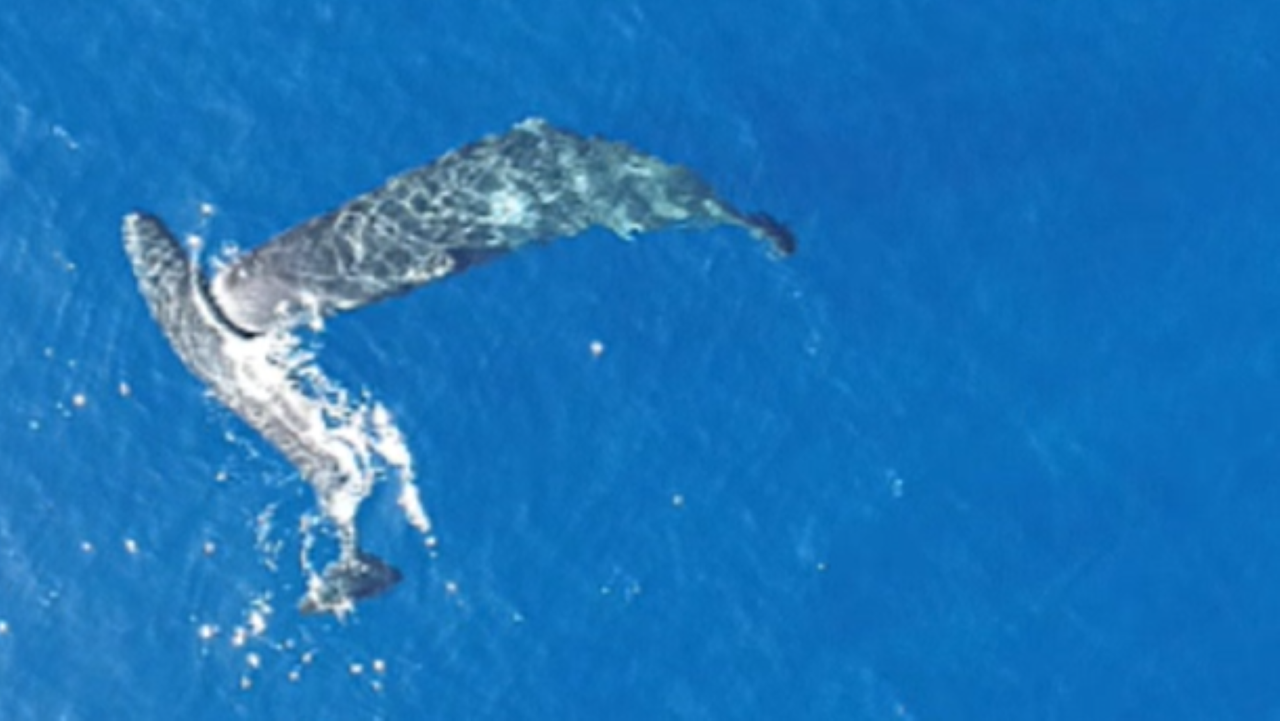
Scientists have captured never-before-seen footage of a sperm whale violently striking another sperm whale unexpectedly.
The researchers filmed the clip with a drone during fieldwork off the Azores and Balearic Islands. This is one of three cases of head-butting between 2020 and 2022 reported by scientists in a new study published Monday, March 23, in the journal Marine Mammal Science.
Article continues below
Sailors and whalers of the 18th and 19th centuries told stories of sperm whales (Macrocephalic Physeter) using their heads to push themselves and hit boats. The most famous anecdote dates back to 1820, when a 27-meter-long whaling ship called Essex allegedly sank after a large male sperm whale headbutted it twice off the coast of the Galapagos Islands, according to the release.
Reports of the sinking of the Essex inspired Herman Melville’s 1851 novel “Moby Dick,” which tells the fictional story of a whaling captain’s obsessive, vengeful quest to find a giant white sperm whale that tore off his leg.
However, until now, scientists have never documented the head-butting behavior of sperm whales.
It’s still unclear exactly why sperm whales headbutt each other, but some researchers believe the behavior comes from competition and physical confrontations between males, according to the release. Other experts argue that head-butting is unlikely to have become a widespread behavior among sperm whales, because using the head as a weapon can damage these whales’ brain structures that are vital for echolocation and social communication.
The footage showed young males participating in headbutting, rather than mature males as previously assumed, raising questions about the role of this behavior in whale pods.
It’s possible that headbutting is common among sperm whales and that researchers are only now seeing them thanks to better, more accessible technology.
“This unique aerial perspective for observing and documenting near-surface behavior is just one of the ways drone technology is transforming the study of wildlife biology,” said Burslem, who was at the University of St Andrews in Scotland when he conducted this research.
“It’s exciting to think about what previously unseen behaviors we might soon discover. [as] how more head-butting observations could help us shed light on the functions this behavior may serve,” he said. “If there are people with similar images, we would be very happy to hear from them.”
Burslem, A., Cerdà, M., Brotons, T., Rendell, L., Silva, M.A. and Prieto, R. 2026. Head-butting behavior between sperm whales documented using unoccupied aerial vehicles. Marine Mammal Science 42, no. 2:e70153. https://doi.org/10.1111/mms.70153.
Animal Quiz: Test yourself with these fun animal questions


