Politicians Who Often Hurl Insults Get 9x The Media Coverage, But Zero Extra Votes Or Donations


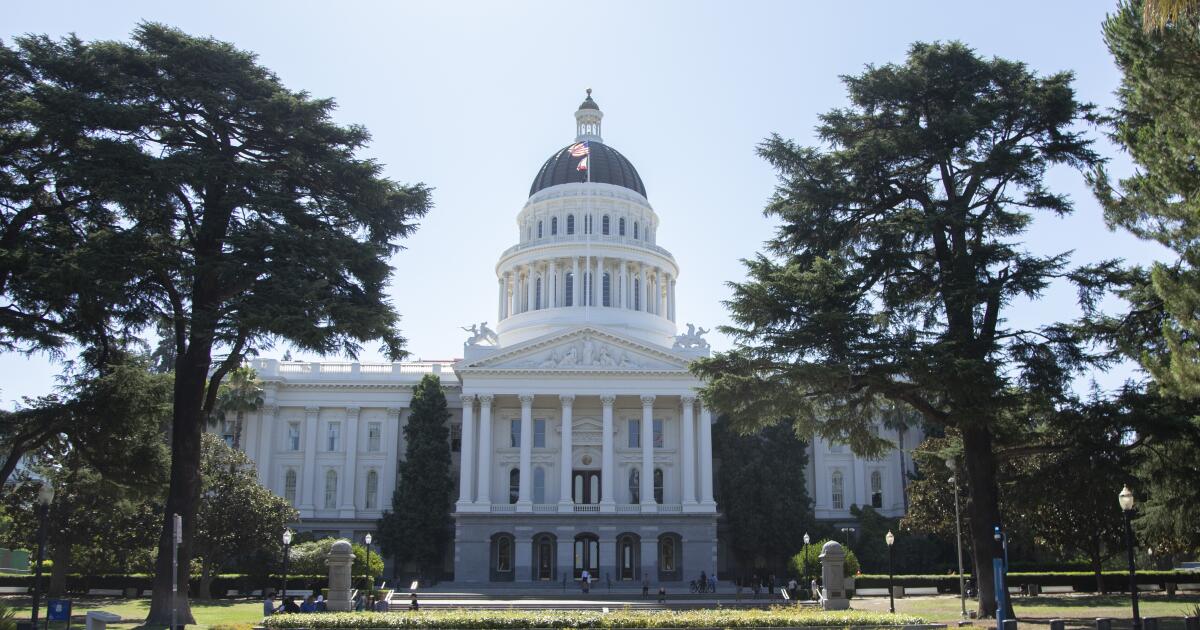
Library of Congress in Washington D.C. (Photo by Ricardo Gomez Angel on Unsplash)
In A Nutshell
- Researchers analyzed more than 2.2 million public statements from the 118th Congress and found that lawmakers who frequently hurl personal insults attract far more media attention than colleagues who focus on policy debate.
- Despite the outsized media attention, personal attacks showed no meaningful association with fundraising totals, election margins, legislative output, or changes in personal wealth.
- The most combative lawmakers were not representing the most politically hostile districts, suggesting they are playing to national media audiences rather than responding to constituent demand.
- Researchers warn that the media’s appetite for conflict may be sustaining norm-breaking rhetoric in Congress even without any electoral or financial reward to back it up.
Can you think of a relative, friend, or coworker who seems to pick fights not because they want to solve anything, but because they want to be noticed? Turn on cable news any evening and the same dynamic plays out in Congress: a handful of lawmakers dominate the screen not by explaining their position on healthcare or immigration but by calling opponents corrupt, stupid, or something worse. What hasn’t been clear is whether the attention these lawmakers attract actually helps them in any measurable way.
Now, new research states it doesn’t. An analysis of more than 2.2 million public statements from the 118th Congress (floor speeches, social media posts, press releases, and newsletters) finds that lawmakers who frequently use personal insults receive disproportionate media attention. Yet for all that publicity, they show no statistically meaningful association with fundraising, election margins once their districts’ partisanship is accounted for, lawmaking, or personal wealth.
The study shows that a member of Congress who devotes roughly 5 percent of their communications to personal attacks gets about the same amount of cable news coverage as a colleague who spends 45 percent of their time on critical policy-focused debate. For further context on how lopsided that is: the 25 members of Congress with the highest rates of personal attacks receive more cable TV mentions than the 75 members with the lowest rates combined.
Sean J. Westwood, a political scientist at Dartmouth College and the study’s corresponding author, conducted the research alongside Marc S. Jacob of the University of Notre Dame and Yphtach Lelkes of the University of Pennsylvania. Published in PNAS Nexus, the research introduces the term “conflict entrepreneurs” for legislators who disproportionately traffic in personal insults, attacks on someone’s character, integrity, or intellect rather than disagreements over policy. For example, calling a president an “idiot” or mocking a colleague’s physical appearance, as opposed to arguing that a tax bill would harm working families.
The paper cites Rep. Marjorie Taylor Greene telling Rep. Jasmine Crockett, “I think your fake eyelashes are messing up what you’re reading,” as one example of the kind of personal attack the study captures. Criticizing a policy is treated differently from attacking a person’s character, and that distinction is central to the study’s approach.
How Did They Measure What Politicians Actually Say?
To sort through more than two million chunks of text, the research team used GPT-4o, a large-language model made by OpenAI, to classify each statement. Was it a personal attack? A policy discussion? A blend of critical policy-focused debate?
Researchers ensured the classification was neutral about whether an accusation happened to be true. A lawmaker calling a colleague “corrupt” was coded as a personal attack regardless of whether evidence supported the claim, because the study was measuring rhetorical style, not fact-checking content.
Broad group-based labels counted too: sweeping statements like “Democrats are communists” or “Republicans are fascists” were treated as personal attacks against group members.
Two political scientists with doctoral degrees independently reviewed a random sample of 500 statements. For personal attacks, the model achieved 97 percent accuracy, 98 percent precision, and 92 percent recall against the human coders’ consensus. For critical debate, accuracy was 81 percent, precision 84 percent, and recall 92 percent, results the paper describes as indicating “strong performance for the tool on this classification task.”
To measure media visibility, the team counted how often each lawmaker’s name appeared in transcripts from CNN, MSNBC, and Fox News, a simple proxy for who breaks through the news cycle, regardless of whether the mention was flattering or hostile.
When the researchers looked at who was being targeted, the picture grew more specific. The study identified 43,560 instances in which a person or group was attacked, and the three presidential candidates in the 2024 cycle alone accounted for a third of them. Much of the insult traffic was aimed upward at nationally famous figures, not sideways at fellow members.
Democratic presidential contenders received roughly four times as many rhetorical assaults as President Donald Trump, a gap the researchers attribute in part to the institutional dynamics of the 118th Congress. Republicans controlled the House while Democrats held the Senate and the presidency, giving opposition-party members greater incentive to attack incumbent figures.
Personal insults are actually fairly rare overall. About 65 percent of legislators used them in less than 1 percent of their communications, and roughly 6 percent of members never used them at all during the period studied.
The researchers caution, however, that these figures should be read as a lower bound: the AI was catching only the most explicit, name-the-target insults in text. Subtler digs, innuendo, memes, and visual content are not captured by the text-based approach, so the actual prevalence of personal attacks may be higher than what the written record alone can detect.
A small group of outliers leaned into personal attacks heavily, sometimes devoting more than 20 percent of their social media posts to tearing into individuals rather than discussing legislation. Personal-attack rates remain low and stable during nonelectoral periods but spike sharply in the months before a general election.
On social media platform X (formerly Twitter), posts containing personal attacks were shared roughly two and a half times more often than posts featuring critical policy-focused debate and received about three times as many likes. The more a lawmaker engaged in personal attacks, the less they talked about policy, and the two were inversely related across both parties and chambers.
Republican members used personal attacks at higher rates than Democrats in both the House and Senate, and more ideologically extreme Republicans were the most likely to deploy them. Democrats showed a more complicated pattern: moderately liberal members were somewhat more likely to attack than either centrist or far-left Democrats. In both parties, the majority of legislators focused on policy.

What Do All Those Cable News Mentions Actually Buy?
Across every outcome the researchers examined, the answer was the same: nothing measurable. Lawmakers who hurled insults raised neither more nor less money than their civil counterparts, whether the donations came from inside or outside their home states.
At first glance, lawmakers who frequently used personal attacks appeared to win elections by wider margins, but that difference was explained by district partisanship. Once the researchers accounted for how strongly a district already leaned toward one party, the apparent electoral advantage vanished. Combative lawmakers tended to represent safe seats where almost anyone from their party would win comfortably.
Inside Congress, lawmakers who frequently used personal attacks sometimes had fewer committee assignments. In the House, they were less likely to land seats on powerful committees, even after accounting for tenure; among senators, no such difference emerged. They introduced and cosponsored no more legislation than anyone else.
Meanwhile, lawmakers who engaged in policy-focused debate were significantly more likely to cosponsor legislation. Substance, not spectacle, correlated with actual lawmaking.
Even personal wealth showed no connection. Visibility gained through personal attacks was not associated with changes in net worth during lawmakers’ time in office. The team acknowledged, however, that longer-term financial payoffs, book deals, media contracts, and speaking fees after leaving Congress, couldn’t be captured in a single year of data.
What Voters Actually Want Versus What They’re Getting
Perhaps the most telling finding concerns the assumption that combative lawmakers are simply giving their voters what they want. Using survey data from 140,000 interviews, the researchers estimated how hostile each congressional district’s residents felt toward the opposing party, then compared that hostility to how often the district’s representative used personal attacks. There was essentially no connection.
Some of the most insulting lawmakers represented districts with relatively moderate electorates. Some of the most hostile districts were represented by members who almost never attacked anyone personally.
The researchers point to two forces that may explain why the behavior persists anyway. First, American politics has become nationalized. Lawmakers increasingly play to audiences far beyond their districts, online followers, cable news viewers, partisan media ecosystems, who may reward confrontation with attention even if that attention doesn’t convert into anything concrete.
Second, research has shown that politicians routinely overestimate how extreme their own voters are. If a lawmaker believes their constituents crave confrontation, they’ll provide it, even when the data says otherwise.
One important caveat: this study is descriptive, not experimental. The researchers documented patterns across a large number of legislators but cannot definitively prove that insults cause media attention or that civility causes legislative productivity. Still, the data cover floor speeches, social media posts, press releases, and newsletters from every member of Congress over a full two-year term.

A New Theory of What Some Lawmakers Want
For decades, political scientists operated under a framework for understanding what motivates members of Congress: they want to get reelected, they want influence inside the chamber, and they want to shape good policy. This research suggests a fourth motivation may be emerging, media celebrity, and that the traditional guardrails of democratic accountability may not apply to lawmakers who are chasing it. Party leaders can withhold committee assignments, and voters can theoretically punish bad behavior at the ballot box, but those levers assume a legislator who cares about governing.
As the paper’s epigraph, a quote from a retired member of Congress, puts it plainly: “The most recent additions to Congress don’t care about policy; they care about getting attention.” The data behind 2.2 million statements suggest that attention is exactly what they get, and that the media rewarded norm-breaking rhetoric during the 118th Congress even when voters didn’t demand it and donors didn’t pay for it.
Paper Notes
Limitations
The authors acknowledge several limitations. The text-only analysis cannot capture implicit attacks, sarcasm, coded language, or visual content like memes and videos, meaning the measurement of personal attacks is likely a lower bound. The classification scheme struggles with boundary cases blending personal and policy rhetoric and does not systematically identify attacks based on identity or indirect targeting of associates. The evidence is descriptive and correlational, not causal, and the use of a commercial LLM presents replicability challenges. The one-year window for net-worth changes cannot assess potential long-term financial gains after leaving office, and the analysis of bill passage is noted as having limited statistical power. Finally, district-level sentiment estimates may obscure the preferences of highly engaged subconstituencies who could be a key audience for conflict rhetoric.
Funding and Disclosures
The study was supported by the Charles Koch Foundation (gift); the Hewlett Foundation (2023-03308-GRA); the Knight Foundation (GR-2022-65104); the Carnegie Corporation of New York (G-PS-24-61068); and the Templeton World Charity Foundation (TWCF-2022-30379). The authors declare no competing interests.
Publication Information
Jacob, Marc S., Yphtach Lelkes, and Sean J. Westwood. “Entrepreneurs of conflict: A descriptive analysis of when and how political elites use divisive rhetoric.” PNAS Nexus, 2026. DOI: 10.1093/pnasnexus/pgag038. The study analyzed a corpus of 2.2 million public statements from members of the 118th US Congress, linking the text to administrative data on media mentions, campaign finance, election returns, and financial disclosures from 2022–2023. Marc S. Jacob is affiliated with the University of Notre Dame, Yphtach Lelkes with the University of Pennsylvania, and Sean J. Westwood with Dartmouth College.