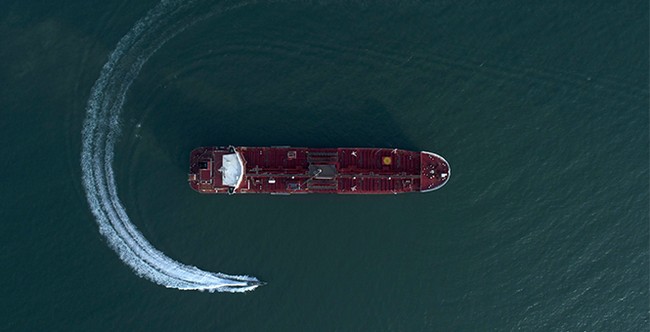
The latest round of fighting between Iran, Israel, and the United States has brought the world’s energy chokepoint back to center stage. President Donald Trump has extended his deadline for Iran to fully reopen the Strait of Hormuz, holding off for now on planned strikes against Iranian power plants while U.S. and Israeli operations hit military and regime targets inside Iran. It is a reminder that in a dangerous region, hesitation can invite escalation, but clear red lines backed by credible force can still prevent a wider catastrophe.
The basic facts are stark. U.S. Central Command says the campaign against Iran is on or ahead of schedule as Israel carries out large-scale strikes on what it calls the infrastructure of the Iranian terrorist regime. Tehran has fired missiles at Israel, Qatar, and other targets, and has threatened to close the Strait of Hormuz entirely, a waterway that carries roughly a fifth of the world’s oil supply. Trump responded with an ultimatum: Reopen the strait or face the destruction of Iran’s power grid, then chose to extend the deadline after what the White House described as constructive talks.
READ MORE: Donald Trump Issues 48-Hour Ultimatum to Iran — Open the Strait of Hormuz or Face Disaster
Trump Calls Off Iran Strikes: Says Mullahs Seeking Resolution After Feeling the Heat
Critics will say this is reckless brinkmanship. In reality, it is the first time in years that Iran is facing a clear price for using its energy leverage and proxy network as weapons. For too long, Western policy treated the regime as a difficult neighbor to be managed rather than a revolutionary actor willing to hit airports, tankers, and civilian infrastructure to gain advantage. When the world’s most important shipping lane is threatened, pretending that “both sides” are equally at fault is not neutrality. It is a gift to the side that fires missiles and mines shipping lanes.
Trump puts off threat to bomb Iran power grid, Iranian agency denies report of talks to end war – Reuters https://t.co/Mzk1Ce9BFg
— AHRC-USA NGO in Consultative Status with ECOSOC-UN (@AHRCUSA) March 23, 2026
That does not mean American power should be used casually. Trump’s public threat to “obliterate” Iranian power plants if the Strait remains closed is a statement with real human and economic consequences. Energy experts already warn the situation is more severe than the oil crises of the 1970s, with markets whipsawing on every report of a new strike. Iran’s own health ministry reports more than 1,500 deaths in the conflict, and strikes on civilian infrastructure have hit hospitals, schools, and aid facilities. This is not a video game. It is war in a densely populated region that powers the global economy.
— Department of State (@StateDept) March 23, 2026
Trump’s approach rests on two simple principles. First, free navigation is not negotiable. If Iran can close the Strait of Hormuz without facing decisive pushback, every rogue actor will learn that threatening global trade is a cost-free tool. Second, allies matter, but alliances do not mean subcontracting U.S. strategy. Trump has coordinated closely with Israel while also cautioning Prime Minister Benjamin Netanyahu to hold back on certain strikes when they risk broader escalation or drag American forces into operations that do not serve U.S. interests.
Trump pauses strikes on energy sites after talks with Tehran
The U.S. president said the contacts were “in depth, detailed, and constructive,” and could lead to a “complete and total resolution” of the conflict https://t.co/MJtynGvyGS— Anewthing2 (@Anewthing26392) March 23, 2026
Extending the deadline for Iran to reopen the waterway was a sober choice, not a retreat. It buys time for diplomacy under the shadow of force, which is the only kind of diplomacy the current regime in Tehran respects. The alternative is letting Iran’s leadership believe it can target U.S. bases, Gulf energy facilities, and Israeli towns without ever putting its own critical infrastructure at risk.
Americans do not want another endless Middle East war. That instinct is healthy. But the fastest way to stumble into exactly that kind of war is to send mixed signals about what we will defend. In this crisis, the United States has a narrow but essential objective: Keep the strait open, protect our people and partners, and make clear that turning trade routes into battlefields will carry a cost higher than any short-term advantage. If Washington sticks to that, deterrence can hold, and this conflict can end on terms that make the next one less likely.
Editor’s Note: For decades, former presidents have been all talk and no action. Now, Donald Trump is eliminating the threat from Iran once and for all.
Help us report the truth about the Trump administration’s decisive actions to keep Americans safe and bring peace to the world. Join RedState VIP and use promo code FIGHT to get 60% off your VIP membership.