Millionaire says he qualified for food stamps via Minnesota SNAP loophole


NEWYou can now listen to Fox News articles!
Ahead of a Tuesday hearing in which Minnesota lawmakers will discuss food stamp fraud, Fox News Digital spoke with a millionaire who said he was able to qualify for food stamps through a loophole — a loophole he hopes will soon be closed as the state grapples with a massive fraud scandal.
Rob Undersander, a retired engineer who volunteers to help seniors navigate the government benefits system, said he learned during his training that eligibility for Minnesota’s Supplemental Nutrition Assistance Program (SNAP) is based only on income and not assets. Since his retirement income was low, he realized he could qualify even though he had significant savings and assets.
To test the system, Undersander applied for benefits in Stearns County in 2016 and was approved within weeks. He later said he collected thousands of dollars in SNAP benefits over more than a year, which he donated to charity, in an effort to draw attention to the problem.
“I strongly support SNAP benefits for people truly in need, but when nearly one in seven Americans receive food assistance in the richest country in the world, with historically low unemployment, something is wrong,” Undersander told Fox News Digital. “One could characterize the current eligibility rules as intentional fraud. And given the current climate of fraud and abuse of taxpayer-funded benefits in Minnesota, I hope there will be a new bipartisan effort to reduce and eliminate both.”
BROOKE ROLLINS, ROBERT KENNEDY JR: WE’RE BRINGING FAMILIES HEALTHIER FOODS IN A CLEAR WAY
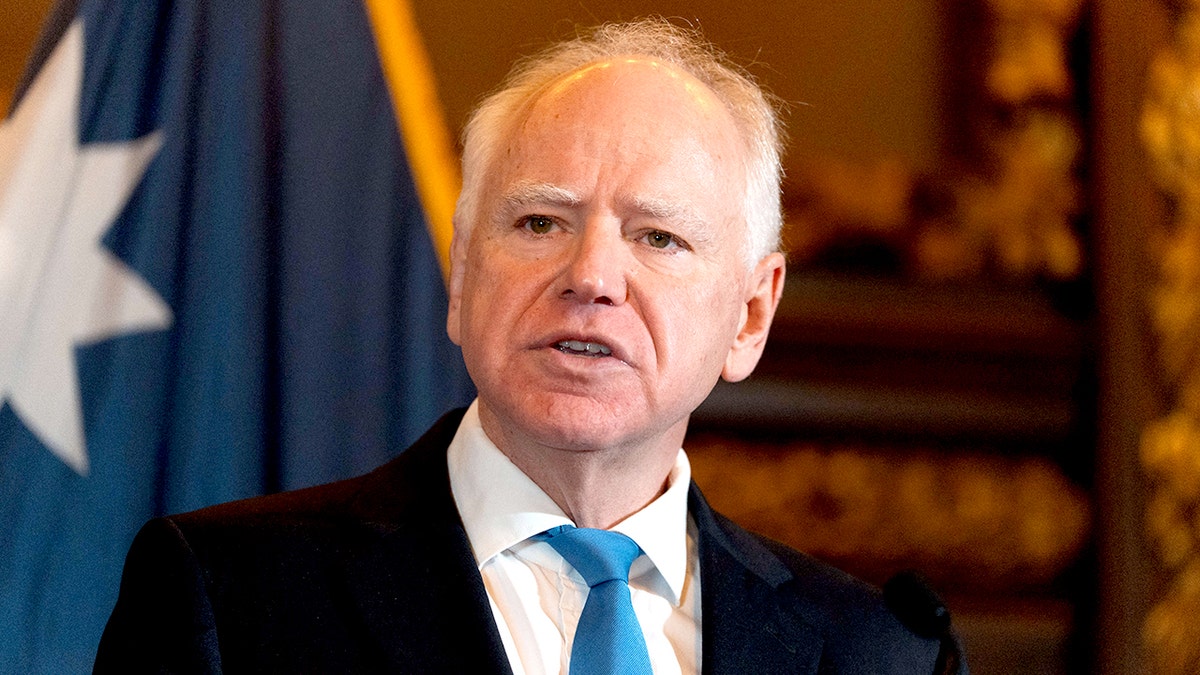
Minnesota Democratic Governor Tim Walz speaks to reporters after announcing he will not seek re-election, at the Minnesota State Capitol in St. Paul, Minnesota, January 5, 2026. (Reuters/Tim Evans)
As Minnesota continues to grapple with an explosive fraud scandal that could reach tens of billions of dollars, Undersander will testify before the Minnesota House of Representatives Public Safety Committee on Thursday during a hearing on a SNAP reform bill introduced by GOP state Rep. Pam Altendorf.
The bill would tighten eligibility rules for food stamp benefits by requiring stricter verification of income and assets before recipients can enroll in SNAP.
In the 10 years since he first exposed the SNAP system’s flaw, Undersander has become a vocal advocate for changes, even testifying before Congress, but says nothing has been done by elected officials.
“I bought lobster and filet mignon on my EBT card,” Undersander said. “Isn’t that crazy?”
Under former President Joe Biden’s administration, federal spending on SNAP reached record levels, reaching $128 billion in 2021 and $127 billion in 2022, largely due to COVID-19 relief measures that expanded access to food assistance,” Fox Business reported in November.
WHAT TO KNOW ABOUT NEW STATE LAWS IN 2026 ON WAGE, SNAP BENEFITS AND THE CLIMATE TAX
Last year, SNAP cost $99.8 billion, with participants receiving an average of $187 in monthly benefits, according to federal data.
In a November press release, Altendorf’s office reported that Minnesota distributed nearly $725 million in benefits in 2020, but that total jumped to nearly $2 billion in 2021, a 174% increase in just one year.
“SNAP is intended to help Minnesotans in need put food on the table, not to subsidize people who already have significant financial resources,” Matt Schmid, Health & Harvest campaign director at the America First Policy Institute, who also testifies Thursday, told Fox News Digital.
“It is unacceptable that under Minnesota’s current system, even millionaires and lottery winners can receive taxpayer-funded benefits. It is a fundamentally flawed system.”
CLICK HERE TO DOWNLOAD THE FOX NEWS APP

The sun shines on the Minnesota State Capitol. (Steve Karnowski/Associated Press)
AFPI experts argue that states can reform the SNAP program and limit budgetary impacts by improving oversight and closing key gaps. They note that the One Big Beautiful Bill requires states to run the program more efficiently or shoulder more of the cost burden, putting states like Minnesota at risk due to high error rates.
They also point out that certain loopholes make SNAP more difficult to administer and contribute to payment errors, and that eliminating broad categorical eligibility would strengthen income and asset verification.
“Reintroducing basic safeguards, such as asset testing, is a common-sense measure to restore integrity, ensure benefits go to those who truly need them, and protect the long-term viability of the program,” Schmid said. “It’s not about cutting aid. It’s about making sure SNAP works as intended.”
The push for stricter SNAP rules comes as Gov. Tim Walz faces ongoing criticism over major fraud scandals in Minnesota’s welfare system, including hundreds of millions of dollars in fraudulent food assistance payments discovered in recent years.
Earlier this year, Fox News Digital reported that a Minnesota woman was sentenced to about a year in federal prison for running a $325,000 SNAP fraud scheme with family members.
Prosecutors said they used false identities and fraudulent documents to obtain EBT cards and maximize benefits, then withdrew and sold the funds for profit. She was also ordered to repay the stolen money.
Fox News Digital reached out to Walz’s office for comment on the legislation and his efforts to combat SNAP fraud.


