Wind and Solar Waste Is Piling Up – RedState


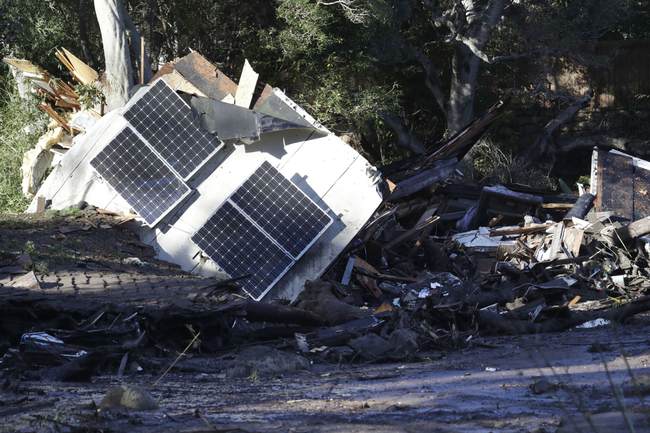
America faces a rapidly worsening waste problem. I’m talking about how to eliminate or address the vast and rapidly growing amount of wind and solar energy waste that the federal government and various states have obsessed over, subsidized, and mandated.
This is not a theoretical problem that would arise in the distant future. This is a concrete problem at the moment.
Many wind turbines and solar panels are nearing the end of their useful life or have already been replaced early, as new, more efficient panels and more powerful turbines become available. Additionally, emergencies generate more waste, such as hail damage in Texas in 2024. More recently, damage in Indiana and Illinois, where large industrial solar installations were destroyed by storms, including hail and tornadoes, took the facilities out of service and created a cleanup problem. Residents and nearby communities have expressed concern about potentially toxic chemicals leaking from the broken panels.
Recycling solar panels is difficult and expensive. It costs $30 to recycle a solar panel, recovering between $3 and $8 worth of minerals, metal and glass. In contrast, it costs about $1 per panel to ship used panels to a landfill, and a little more to ship inefficient used panels for reuse in developing countries overseas, thereby shifting waste problems elsewhere.
For economic reasons, less than one solar panel in ten is recycled. With millions more panels installed each year, the problem is getting worse, as recently recognized by studies published by the London School of Economics in the Harvard Business Review (HBR).
“If early replacements occur as our statistical model predicts, they can produce 50 times more waste in just four years than IRENA predicts,” the HBR article notes. “The industry’s current circular capacity is unfortunately not prepared for the deluge of waste that is likely to occur.
“Although the panels contain small amounts of valuable materials such as silver, they are primarily made of glass, a very low-value material.” HBR continues. “However, the direct cost of recycling represents only part of the end-of-life burden.
RELATED: The Hidden Cost of Renewable Energy: Toxic ‘Green’ Waste Will Reach 1 Million Tons
Climate change: billions spent, and now we see nothing gained
The problem of disposing of solar panels is not only limited to the volume of the waste stream, but also how the panels should be processed.
“Panels are delicate and bulky equipment generally installed on roofs in the residential context. [with] [s]specialized work. . . “It is necessary to detach and remove them, lest they break into a thousand pieces before reaching the truck,” HBR writes. “In addition, some governments may classify solar panels as hazardous waste, due to the small amounts of heavy metals (cadmium, lead, etc.) they contain. [resulting in] . . . costly restrictions: hazardous waste can only be transported at designated times and via selected routes, etc.
As daunting as the current problem of waste from solar panels is, the looming problem of waste from industrial wind power is even worse. Although the metal from lathes and machines can be recycled, it is difficult to do anything useful with the massive blades other than shredding them into small pieces for selected uses, which is very expensive.
It costs between $440,000 and $675,000 per unit to decommission and dispose of each onshore wind turbine, from base to blade. Decommissioning offshore wind turbines is even more expensive, exceeding $1 million per turbine. The value of materials from the towers and gearboxes is approximately $28,000 per unit, well less than a tenth of the dismantling cost. As a result, metal, gears, concrete and other materials often end up in landfills, as do composite blades after being ground at great expense and with significant carbon dioxide emissions from the machines used to transport and grind them.
Five years ago, journalist Duggan Flanakin described the disposal methods and obstacles facing the industry then, which have only increased with the number and size of wind turbines.
“A separate tractor-trailer is required to transport each blade to a landfill, and cutting them requires powerful, specialized equipment,” Flanakin wrote. “With some 8,000 blades each year already removed from service in the United States alone, that’s 32,000 trucks over the next four years; in a few years, these figures will be five times higher.
“Over the next 20 years, the United States alone may have to eliminate 720,000 tons of blade material waste,” Flanakin said. “Yet a 2018 report predicted a 15% decline in U.S. landfill capacity by 2021, with only 15 years of capacity remaining. [meaning] [w]We will have to allow entirely new landfills just to deal with wind turbine waste, on top of the mountains of solar and battery waste.
Not all landfills are certified to handle wind or solar waste, and many have decided to refuse to do so because it requires too much space.
Closing landfills early because there is no more room in the pit or pile is expensive, forcing communities to find new landfills or other ways to dispose of waste. Setting aside so much space in landfills makes less sense for local governments.
This has led wind and solar profiteers to a different “solution”: accumulating decommissioned turbines and solar panels on open land. Thousands of acres are covered in turbines and panels left to decay over time, with unknown environmental impact, on land useful for purposes other than wind and solar landfills. This controversial practice has led a growing number of states and local governments to impose restrictions. on the growing number of unregulated piles of unsightly and chemical waste in the renewable energy sector.
The LSE article and HBR analysis identify the problem, but their solution, requiring wind and solar companies to take back and recycle all their waste, is economically and politically unrealistic. This does not make recycling any cheaper, and the costs incurred by businesses will simply be passed on to taxpayers and the public. This will further exacerbate the energy affordability crisis that Americans are rightly furious about. Making electricity bills even more expensive is not, I suppose, a winning election message for politicians.
Government subsidies and mandates have created the renewable waste problem. The solution is not to make government mandates or subsidies more costly and misguided, but to end wind and solar incentives and mandates, which are responsible for a huge waste stream.
H. Sterling Burnett, Ph.D., ([email protected]) is director of the Arthur B. Robinson Center on Climate and Environmental Policy at The Heartland Institute, a nonpartisan, nonprofit research organization based in Illinois.
Editor’s note: Do you like RedState’s conservative reporting that attacks the radical left and the woke media? Support our work so we can continue to bring you the truth.
Join RedState VIP and use promo code STRUGGLE to benefit from 60% off your VIP subscription!


