White noise vs brown noise: What’s the best sound for sleeping?


A friend recently introduced me to Sleep Sounds, an app designed to make sleeping easier. With dozens of “audio environments” to choose from, I could surrender to the gentle lapping of waves on a Corsican beach one night and the calls of California wildlife the next. But it was the rumble of a German express train that rested me the most.
“All the sounds you experience while you sleep definitely affect your sleep,” says Dr. John Saito, representative of the American Academy of Sleep Medicine. “It’s like the light you experience while you sleep affects your sleep and the air you breathe.”
But which Is the sound, if any, most conducive to capturing the best zzzz’s? Popular science turned to Dr. Saito to find out. It turns out the answer isn’t so simple.
How does sound affect our sleep?
Think about a time when you were sleeping soundly and suddenly heard a loud bang. Suddenly your heart was racing, you were on high alert and you were no longer tired. Your sleep has been disrupted, and significantly so.
Chronic ambient noise – those background sounds that often come from passing traffic, planes and trains – can also disrupt rest, even if we don’t realize it.
“Your brain doesn’t turn off like a computer,” says Saito, and continues to process stimuli throughout the night. Such noises can increase stress hormones like cortisol and send your body into fight-or-flight mode, increasing your heart rate and blood pressure.
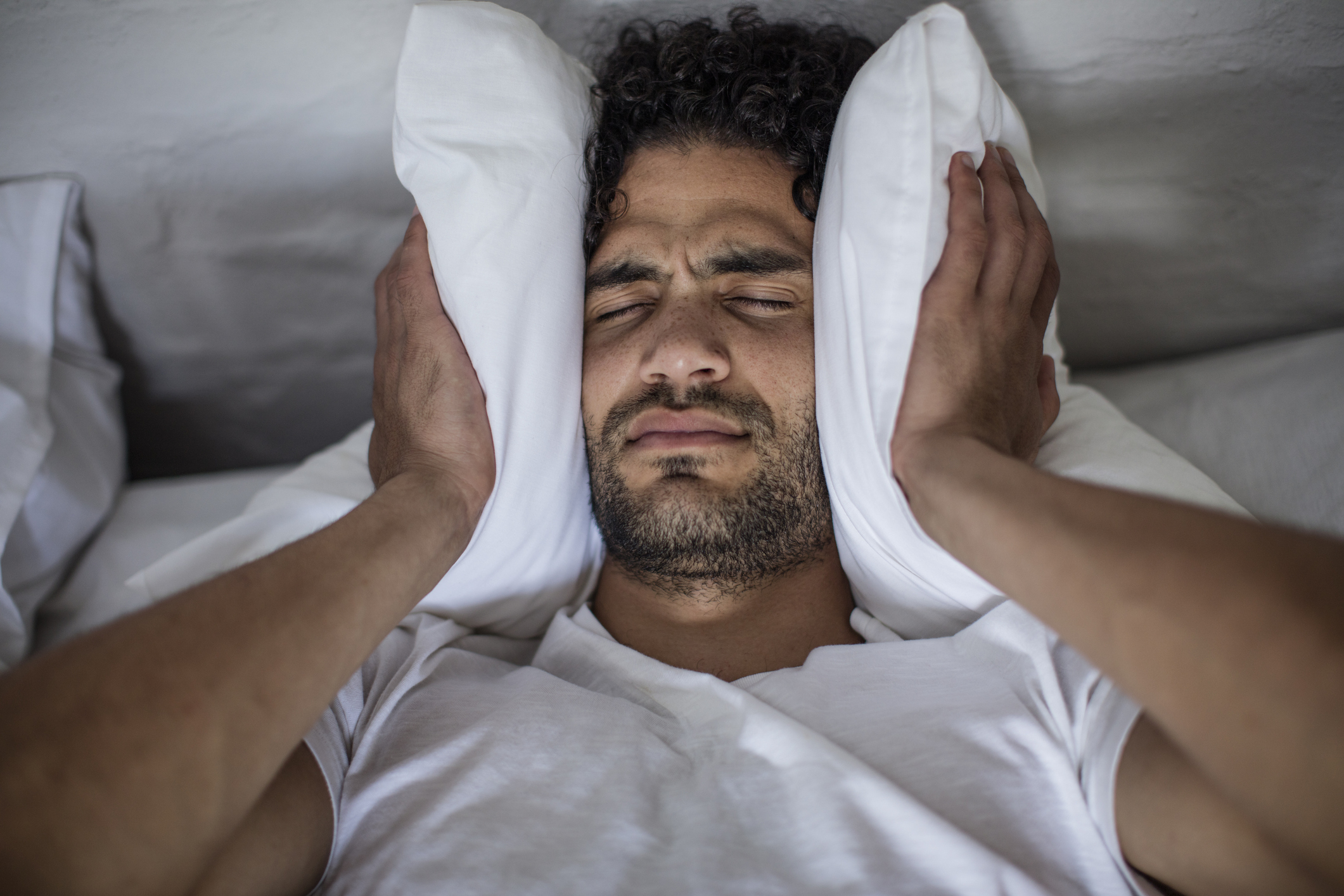
“Every time you are awakened from your sleep state, you create a stressor to your system and your normal pattern of restorative sleep. This disrupts the brain and causes a change in your physiology,” he says. Physiology is how the parts of your body work together to keep you alive.
But not all sounds affect all people while they sleep.
What determines whether you are a deep or light sleeper?
According to Saito, knowing which sounds affect us requires some understanding of sleep architecture, which is the basic structure of our individual sleep patterns. Sleep architecture maps how a person moves through different stages of sleep, such as light sleep and dreaming (REM), as well as how sound affects a person during each of these different stages.
“For people with extremely active brains, the slightest noise can disrupt their sleep patterns,” says Saito. Then there are those “deep sleepers” whose brains filter out every noise. “There could be a fire alarm and they’ll still sleep like the dead,” says Saito.
Deep sleepers often produce more “sleep spindles.” These are short bursts of brain activity that help block out outside noise. In many cases, the number of sleep spindles a person can generate (and therefore whether a person sleeps deeply or not) is inherited. But extreme exhaustion (we’re looking at you, parents!) can also lead to deep sleep.
What is the difference between white, brown and pink noise?
There are many ways people perceive the different sounds they hear while sleeping, Saito says. “It really depends on the individual. So when patients ask me if they should have a white noise machine, I say ‘what speaks to you the most?’ It’s not a particular sound that suits everyone.
White noise is a specific type of broadband sound that contains all audio frequencies in equal measure (think of the sound of a ceiling fan or a low “hum”). Many people use it to mask noises that can often be intrusive, such as creaking doors or loud televisions. Still, Saito says, “it can be noise-canceling for some people and a distraction for others. It just depends on the person.” It is also just one of many “noise colors” that get their name from the way they distribute power across different sound frequencies. Basically the speed at which a sound source vibrates. Noise colors can be high pitched sounds (rapidly vibrating), low pitched sounds (slowly vibrating), or a combination.
For example, brown noise is a low-frequency bass sound like thunder or heavy rain, while green noise focuses on mid-range frequencies such as ocean waves or a stream. Pink noise is considered balanced and coherent (think of a distant waterfall), but not as average as green noise. It has more power in its lower frequencies, but with fewer high frequencies than white noise, which sounds similar to that of a fan or radiator.
Related Stories “Ask Us Anything”
So, what is the best noise for sleeping and what is the worst?
Pink noise and other colors of broadband noise, which are sounds containing all audible frequencies (like the static you hear when you change the radio channel) rather than a specific tone, have long been considered good for sleep. But recent studies suggest they may actually reduce overall REM sleep and harm a person’s sleep quality. Ultimately, “the best sound for sleeping depends on your personal preferences, as well as your sleeping environment and the nature of your sleep problems,” says Saito.
However, certain sounds are particularly detrimental to a good night’s sleep. “If you fall asleep with thrash metal music in your ear,” Saito says, “it’s probably not a good idea. » Another non-right? Televisions. “Falling asleep to something playing on TV is particularly bad,” he says, “because not only do you have noise pollution, you also have light pollution.”
The fact is that a person may think that what they are doing is restorative. “Their trained behavior might say, ‘I can’t fall asleep without having the TV on and playing,'” says Saito. “But even when you sleep, your brain remains active. It continues to receive and process both sound and light,” which negatively impacts the quality of your rest.
Why the Best Sleep Sound May Be No Sleep Sound
In the days of human survival, our hearing helped us detect predators. “We’re sort of listening for all these noises that could affect our survival,” says Saito, “any noise, any rustling… really anything that could signal danger.” Preferably, there would be no signs of danger, which suggests that the best noise may be no noise at all. “That’s usually ideal,” says Saito, “a completely quiet, completely dark sleeping environment.”
Earplugs, thick rugs, and soundproof curtains can all help reduce sound rather than increase it, and can all help improve the overall quality of your nap.
But whether it’s the sound of an air conditioner running or a recording of seabirds chirping that lulls you into a deeper sleep? Well, that really depends on you. In Ask us anythingPopular Science answers your wildest and most burning questions, from everyday things you’ve always wondered to bizarre things you never thought to ask. Do you have something you always wanted to know? Ask us.

The best new PopSci 2025 releases