Israel has clear objectives south of Litani River, but will face difficult choices further north

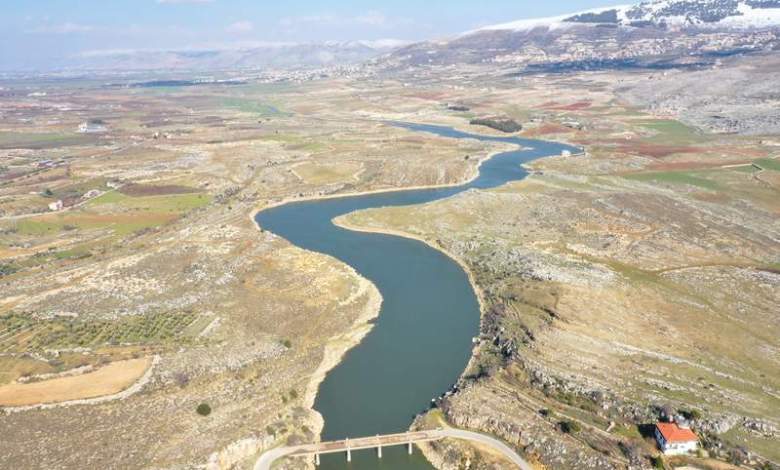
The current campaign in southern Lebanon aims to neutralize the most immediate threats – cross-border infiltration and anti-tank missile fire – while containing Hezbollah’s long-range fire.
Where there are terrorists and rockets, there will be no houses and no people, Defense Minister Israel Katz said this week, coining a concise term for a new Israeli security doctrine along its borders.
Katz was referring to southern Lebanon and said the model followed is the one the IDF used in Rafah and Beit Hanun in Gaza: raze towns and evacuate residents to establish a defensive zone and repel the threat against Israeli border communities.
But there is a fundamental difference between the current situation in Lebanon and that in Gaza.
In addition to razing Beit Hanun and Rafah and creating a buffer zone over approximately 50% of Gaza, where Israel now controls territory, Hamas maintains only a limited capacity of rockets that it can fire at Israel. Moreover, it knows that if it fires the rockets it still has, Israel will step in and hunt down both the launchers and the remaining manufacturing capabilities.
So not only are Israeli communities on the border safe from massacre-style penetration and anti-tank missile fire on October 7, but there is also no real threat – at least for the moment – from high-trajectory fire.

The plight of northern Israel
It is not the same in the North.
Since March 2, when Hezbollah began firing rockets into Israel in retaliation for IAF strikes against Iran, Israel has launched a major operation in southern Lebanon – an operation that included blowing up five bridges across the Litani River to prevent Hezbollah from moving men and equipment to the south of the country.
Israel demolished homes near the border – what Katz called “line of contact villages” – and effectively eliminated the threat of anti-tank missile fire on Israeli communities in the North, a real danger ahead of Operation Northern Arrow in 2024.
Yet Israelis in the north continue to suffer – not from direct fire from anti-tank missiles or snipers, but from drones and medium-range rockets launched from north of the Litani.
The fact that the terrorist organization managed to strike the North relentlessly for three weeks shows that Israel’s assumption – that Hezbollah was seriously weakened by 2024 – was exaggerated.
Yes, its leaders were beheaded. Yes, much of its missile arsenal has been destroyed – estimates put it at around 80%. Yes, its infrastructure in southern Lebanon – tunnels, warehouses and fortified positions – has been hit hard. But with what remains, Hezbollah is still capable of causing considerable harm to Israel.
So the question Israel faces is how to eliminate the threat that comes from the north of the Litani. Does this move ground forces north of the river? Is this the 1982 Peace for Galilee operation all over again?
What this highlights is that the challenge Israel now faces is fundamentally different from the one it faced in the South. This is no longer a buffer zone problem. This is a problem of fire coming from deeper and deeper into Lebanon.
Clearing the territory up to Litani can repel close-range threats and prevent infiltration. But once rockets and drones are launched from further north, territorial control south of the Litani is no longer enough.
This refers to a broader reality: there is no specific military solution. Israel can reduce fire – sometimes significantly – but eliminating it completely requires more than airstrikes or even ground maneuvers.
PART of the answer lies in sustained intelligence-led operations north of the river – targeting launch teams, mobile systems and storage sites. This depends in part on the willingness – and ability – of the Lebanese state to impose a monopoly on arms. And some of it lies further afield in disrupting Iranian pipelines that allow Hezbollah to rearm.
Because ultimately, rocket fire will continue as long as Hezbollah can rearm. If Iran is significantly weakened, this equation could begin to change.
For now, Israel’s main strategic objective remains Iran. IAF assets, intelligence capabilities, and operational focus are still heavily directed toward Iran. The number of planes, pilots and sorties Israel can support each day is not unlimited, and as long as the campaign against Iran continues, Israel does not throw its full weight behind Lebanon. This reality shapes what happens on the ground.
Current campaign not enough to make northern Israel safe again
The current campaign in southern Lebanon is designed to neutralize the most immediate threats – cross-border infiltration and anti-tank missile fire – while containing, rather than eliminating, the longer-range fire now coming from deeper and deeper into Lebanon.
But this is only a partial solution, as Northerners can attest.
If and when the war with Iran ends, it is reasonable to assume that Israel will be able to devote more attention and resources to Lebanon. This could mean a more sustained and aggressive effort to track down launch capabilities north of the Litani, or even a decision to expand ground operations.
There is, however, another variable in this equation: the hope that the Lebanese government will take advantage of a weakened Iran and Hezbollah to reassert its control over the country and take concrete steps to rein in the terrorist organization and prevent attacks on Israel from its territory.
However, at present, it would be unwise to rely too much on this hope.
On Tuesday, apparently on orders from President Joseph Aoun, Lebanon declared the Iranian ambassador persona non grata and gave him until Sunday to leave the country. Hezbollah, for its part, signaled that the ambassador would not go.
This constitutes a clear and revealing test.
If the Lebanese government – against Hezbollah’s wishes – cannot force the departure of a single diplomat, then it is difficult to see how it could realistically confront Hezbollah and prevent it from firing on Israel.
Conversely, if he acts, it could signal a shift, however modest, in the balance of power in Lebanon. This would of course be the most lasting solution: not Israeli forces plunging ever deeper into Lebanon, but the Lebanese state gradually regaining control of its own territory.
But hoping for that to happen is not a strategy. And for Israel, the dilemma remains serious.
It can continue to contain the threat through limited ground operations, targeted strikes and active defense – while accepting that a certain level of fire will continue.
Or it could intensify, expanding the campaign northward with the aim of more decisively suppressing Hezbollah’s remaining capabilities – at the cost of a much wider war in Lebanon.
Katz’s formulation could define the doctrine south of the Litani. In the north, however, the choices are much less clear – and much more fateful.


