Covid and flu shots in limbo as Trump administration mulls appeal over vaccine panel


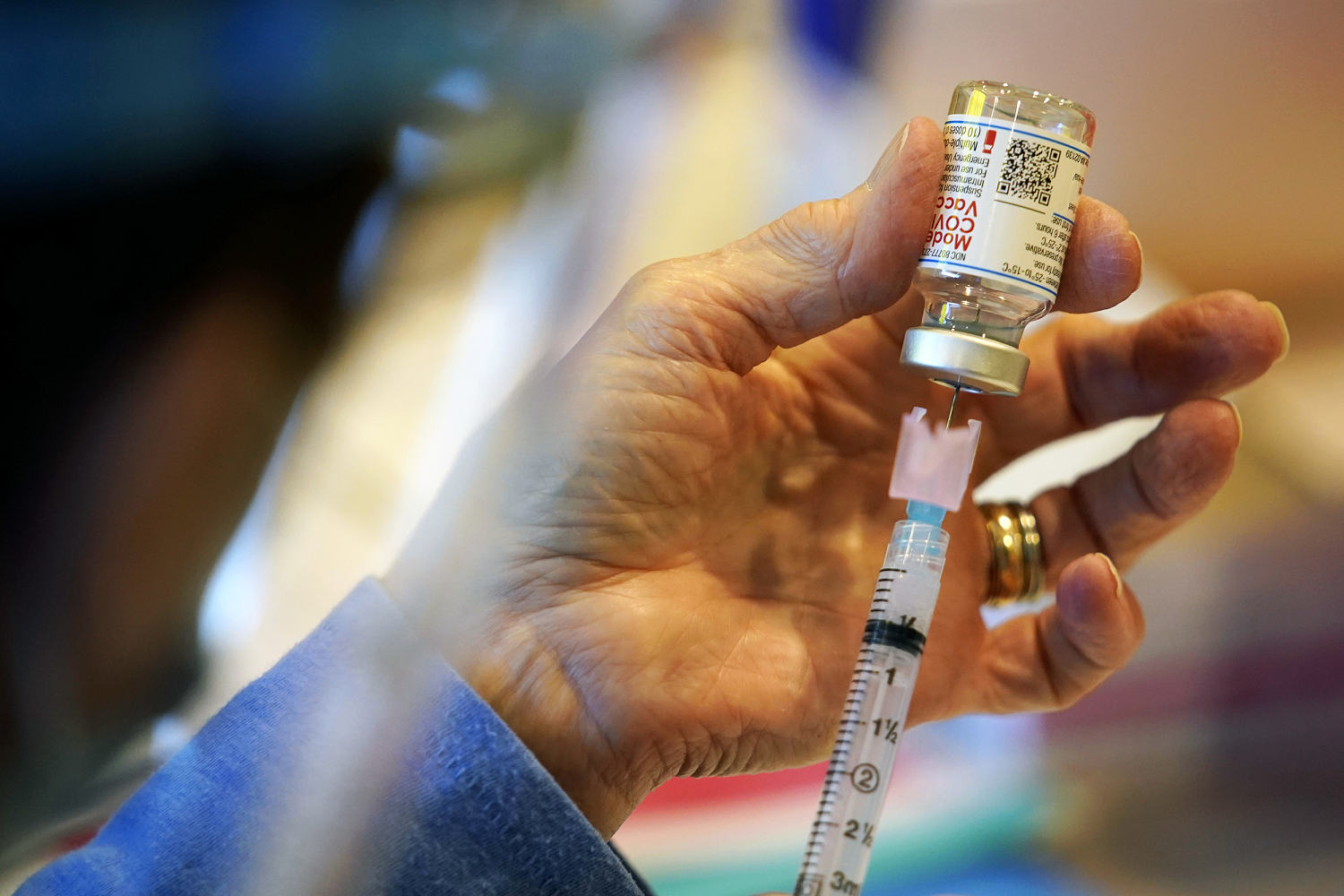
More than a week after a federal judge blocked Health and Human Services Secretary Robert F. Kennedy Jr.’s review of the nation’s childhood immunization schedule and the creation of a key vaccine advisory committee, the Justice Department has yet to appeal the decision — and may not do so.
The Ministry of Justice has 60 days to appeal the decision, before May 15. An HHS official with knowledge of the situation said no final decision has been made on the agency’s next steps regarding the lawsuit.
It’s the latest example of uncertainty under Kennedy’s leadership. The Centers for Disease Control and Prevention has been without a director for months, and no sign of a new candidate waiting in the wings. And confirmation of his pick for the next surgeon general, Casey Means, appears to be stalled in the Senate.
Meanwhile, the work that would normally be underway among independent vaccine experts tasked with making recommendations to the federal government has stalled indefinitely. Meetings planned on this fall’s flu and Covid vaccines, for example, are in limbo.
“To my knowledge, all the work has been halted, which puts us in a huge recommendation deficit,” said Dr. Jason Goldman, president of the American College of Physicians. “It’s just horrible to see the damage that’s been done.”
Over the past year, Kennedy has made two major moves in terms of how vaccines are analyzed and ultimately recommended in this country.
In June of last year, he abruptly fired members of the Advisory Committee on Immunization Practices (ACIP), a group of independent vaccine experts that advises the CDC. Kennedy set aside the usual lengthy selection process for these members, instead installing a hand-picked group of mostly vaccine skeptics. The new group made a series of controversial recommendations, including reversing long-standing advice to give all newborns a shot to protect against hepatitis B.
Then, in January, Kennedy, without formal input from his ACIP group, made sweeping changes to the childhood vaccination schedule, reducing the number of diseases recommended to be vaccinated against from 18 to 11. This change removed recommendations that all babies should be protected against hepatitis A, hepatitis B, RSV, dengue fever and two types of bacterial meningitis.
“From a doctor’s perspective, we’ve been in limbo for a year,” said Dr. Amy Middleman, an adolescent medicine specialist at UH Rainbow Babies & Children’s in Cleveland. Middleman also serves as the ACIP liaison to the Society for Adolescent Health and Medicine. “We haven’t had a process to review the evidence. We haven’t had experts review the evidence in a public forum.”
The American Academy of Pediatrics and other medical groups sued the Department of Health and Human Services, arguing that Kennedy’s schedule changes and ACIP overhaul violated federal law.
On March 16, a federal judge agreed in a ruling that suspended all decisions made by ACIP under Kennedy, ruling that the health secretary had replaced the committee “illegally.” The nominations of most ACIP members (13 out of 19) were invalidated.
One of those members was Dr. Robert Malone, a Kennedy ally and staunch opponent of Covid vaccines. He denounced the decision on social media, falsely claiming that ACIP had been disbanded. He later corrected his statement about
What happens next?
If the Justice Department appeals, it could also file a motion for emergency relief, requiring the First Circuit Court of Appeals to act quickly in deciding whether to stay the March 16 ruling.
Lawrence Gostin, director of the O’Neill Institute for National and Global Health Law at Georgetown University, said the administration’s next move, legally speaking, would be tricky. President Donald Trump “doesn’t want HHS to discourage vaccinations, at least until the midterms,” he said.
Indeed, “the decision to appeal is also a political decision,” said Dorit Reiss, a law professor at the University of California, San Francisco.
As head of the Department of Health and Human Services, Kennedy still wields power on vaccines because no CDC director or advisory group is making recommendations. “One of the benefits for him is that the ruling gives him a ‘get out of jail free card’ for not consulting with ACIP at this time,” Reiss said.
Timing is key.
A meeting planned for this month in which members were to discuss Covid vaccines has been postponed with no indication it will be rescheduled. The committee is expected to meet again at the end of June. There is no agenda yet for this meeting. Summer meetings typically involve official recommendations for fall vaccines, such as those for flu and Covid.
If the vaccine panel does not meet, it is possible that any recommendations regarding these vaccines will come directly from Kennedy. Although the shots are available to the general public, the recommendations help determine which shots are covered by insurance.
Goldman, who also serves as a liaison between the American College of Physicians and ACIP, said that if and when the group moves forward, there will be a huge backlog of work. It often takes a year or more, he said, for the group to gather and analyze vaccine information and then present it to the full committee.
“There will be so much delay,” Goldman said, “it will take an awful lot of time to get out of the water.”


