Pete Hegseth Is Scapegoating Career Soldiers for His Own Failures


Trapped in a disastrous war, the Secretary of Defense steps up the purge of the military.
Two prominent government officials were fired Thursday, a civilian and a military commander. Donald Trump has removed Attorney General Pam Bondi, long an object of presidential displeasure because of her politically clumsy handling of the Jeffrey Epstein affair (which only served to embarrass the president) and her failure (despite the president’s wishes and his own servility) to fully arm the Justice Department against Trump’s partisan enemies. Bondi’s firing is symptomatic of Trump’s growing frustration with his inability to implement his agenda. This follows the ouster of Homeland Security Secretary Kristi Noem last month, and Trump may not be done wielding the axe. Policy reports that Commerce Secretary Howard Lutnick and Labor Secretary Lori Chavez-DeRemer could also be on the chopping block, with Trump eager to find replacements while the Republican Party still controls the Senate.
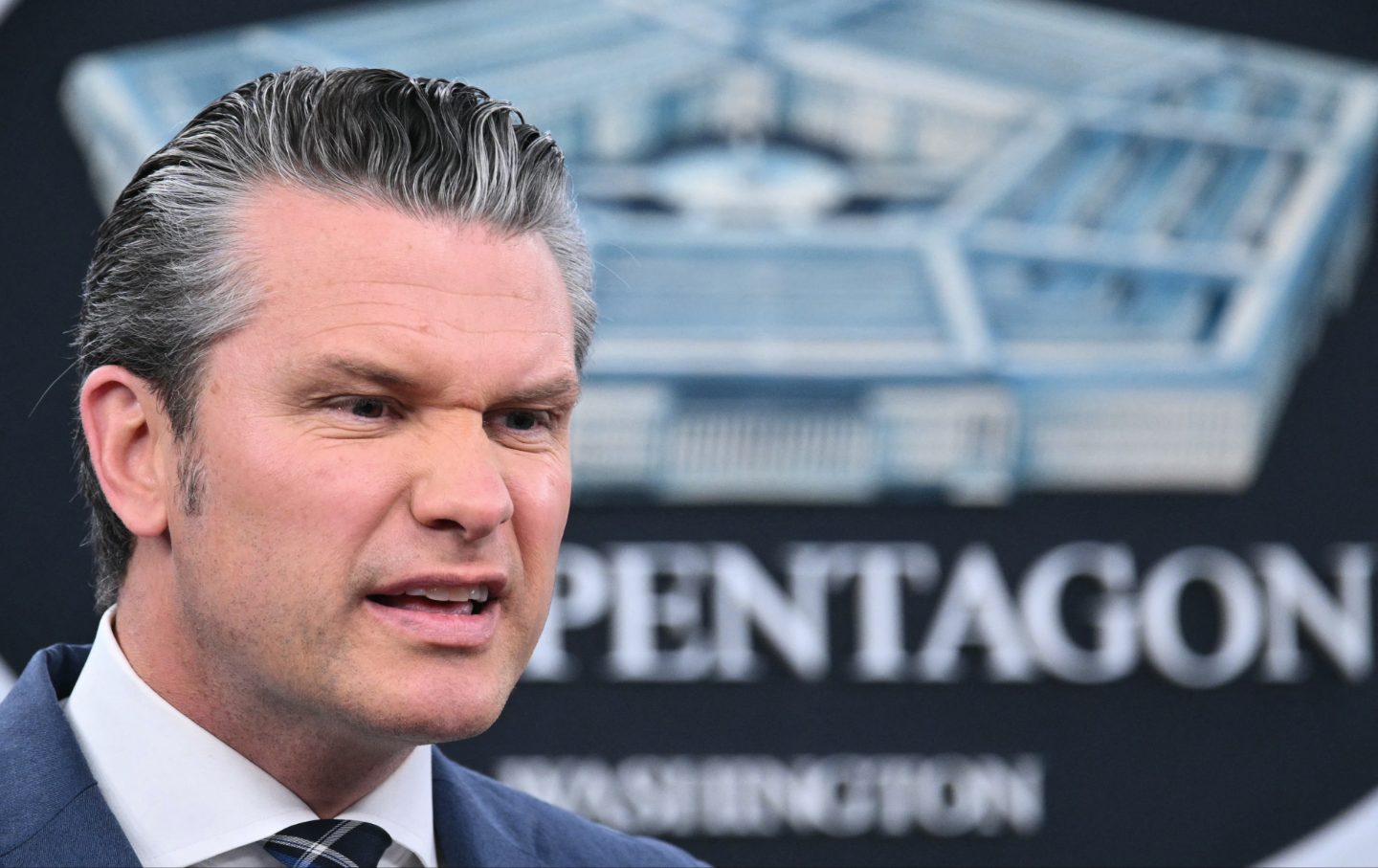
But the political purge in Trump’s cabinet is less significant than what’s happening at the Pentagon, where Defense Secretary Pete Hegseth is stepping up his campaign to get rid of officers who disagree with him. As Axios reported in August: “Decades of experience have been erased at the highest levels of the U.S. military, the result of retirements and dismissals during the first year of the second Trump administration. » And on Thursday, Hegseth added to this brain drain, firing three generals, including Gen. Randy George, the highest-ranking general in the military. The news site Military.com called it “one of the most significant wartime leadership shakeups in active U.S. combat operations in recent years.”
These measures take place against the backdrop of a turbulent military campaign in Iran. Trump and Hegseth seemed to think the war would be a breeze that would take only a few days to conclude. In fact, the war lasted more than a month, and in a Wednesday night speech that appeared alarmingly detached from reality, Trump offered no plausible explanation for how it might end, although he predicted two or three more weeks of fighting.
But if the Iranian debacle was a factor behind these shots, it was not the only factor either. In truth, Hegseth’s entire tenure as Secretary of Defense was marked by an ideologically motivated campaign of high-level firings and refusal to promote deserving candidates. A right-wing zealot who first made his mark as a Fox News host, Hegseth firmly believes that the military has been infested by what he calls “woke” ideology, which he has combatted by firing officers he suspects of being excessively liberal or biased toward hiring DEI.
Among those purged under Hegseth were Lt. Gen. Jeffrey Kruse, Gen. Charles “CQ” Brown Jr., Gen. Tim Haugh, Admiral Lisa Franchetti, Admiral Linda Fagan, Gen. James Slife, Vice Admiral Nancy Lacore, Vice Admiral Shoshana Chatfield, and Admiral Jamie Sands.
The officers Hegseth targets are typically women, people of color or trans people. On Thursday, NBC reported that “Hegseth took steps to block or delay the promotions of more than a dozen senior Black and female officers across all four branches of the military, some of whom are believed to have been targeted because of their race, gender or perceived affiliation with Biden administration policies or officials.” »
Current number

An additional political factor in Randy George’s case is that Hegseth is engaged in a feud with Secretary of the Army Daniel P. Driscoll (who would be a top candidate to replace Hegseth if he himself were fired). George is known to be an ally of Driscoll. George and Driscoll refused Hegseth’s orders to remove four officers (two black men and two women) from a promotion list.
Beyond these internal Pentagon policies, Hegseth has good reason to fear finding himself on fragile ground. Recent leaks from the Pentagon have portrayed him as an unprepared leader who went into the Iran war with the false belief that it would be a quick and easy victory.
In its latest cover story, Time reported,
Key Trump officials, including Defense Secretary Pete Hegseth, were surprised by the barrage of retaliatory attacks launched by Tehran against U.S. and Israeli targets in the region, including in countries long considered off-limits: Kuwait, Bahrain, Saudi Arabia, the United Arab Emirates and Qatar, a state that had both harbored Iran’s terrorist proxies and served as a conduit for backdoor diplomacy between the United States and the Hamas. This response shattered the assumption that Tehran would limit itself to performative retaliation. In internal deliberations before the war broke out, Hegseth had pointed to Iran’s muted response to Trump’s past attacks as evidence that calibrated force could impose costs on Tehran without triggering a wider war.
An anonymous source said Time that Hegseth “was caught off guard. There is no doubt about it.” The same source added: “He expected the Iranians to retaliate in some way. When they started attacking virtually the entire region, it kind of hit him: ‘Whoa, we’re really in trouble now.’
Leaks of this type should disturb Hegseth. If the war continues to go badly and hamper the American economy, he will become an easy victim for Trump. Hegseth would follow in the footsteps of Defense Secretary Donald Rumseld, who fell on his sword in 2006 when the Iraq War turned into a political catastrophe. In addition to his long-standing vendetta against career soldiers, Hegseth is intensifying his purge as a preemptive strike. He wants to undermine his potential replacements and make them scapegoats, before becoming the scapegoat.


