The HP iPod? 7 forgotten Apple products you didn’t even know existed


50 years of Apple

We’re celebrating Apple’s 50th anniversary with a week of content about the tech giant. It covers everything from our writers’ personal memories to the best and worst Apple gadgets as voted for by you, and you can read it all on our 50 Years of Apple page.
Apple may be behind some of the most famous and successful products in human history, but not everything the company touches turns to gold.
While billions of iPhones and millions of iPods and iPads have been sold, there is a gallery of Apple creations that had far less impact and ended up being relegated to the footnotes of tech history.
You may have heard about them in hushed tones, while others barely exist on the fringes of the internet, but chances are you’ve never seen one in the flesh. How much do you remember?
Article continues below
1. Apple Silenttype (1980)

Apple’s image has changed so much since the iPod’s launch that it’s hard to imagine it making something as prosaic as a printer, but the Silentype wasn’t an Apple invention at all.
It’s become a bit of a cliché that Apple just takes existing products and presents them in a more attractive way, but that’s literally what happened with the Silentype.
At the time, most printers were big, loud, and expensive, but a company called Trendcom had a much smaller, quieter, and more affordable thermal printer. Apple took the Trendcom 200, made some internal changes that shifted some of the work to the software inside the Apple II, and slapped an Apple logo on the front.
The company stopped making printers in the late ’90s when Steve Jobs returned and started moving toward more glamorous products, which is why people have forgotten about the Silentype and its successors, but it was an early example of Apple’s “think differently” philosophy in action.
2. Apple PowerCD (1993)

The PowerCD looked a bit like a supercharged Sony Discman, but much less successful.
Essentially just a rebadged Philips CDF-100, the back of the box promised three distinct uses. Plug it into a Mac and it will function as an external CD-ROM drive; connect it to your TV and you can use it to view your vacation photos from a disc on the big screen; or plug in a pair of headphones or speakers and it can play music CDs.
The PowerCD could also run on six AA batteries, which technically meant you could take it out, but with its bulky frame and sharp corners, you had to wear clown pants for it to be considered pocketable.
However, his lack of unique focus seemed to make him a tough sell, and he suffered from being a jack of all trades but master of none. A few years later, production was discontinued.
3. Apple QuickTake 100 (1994)

In the early ’90s, Apple wasn’t the world-conquering tech giant it is today, so launching into an entirely new product was a brave move. The QuickTake 100 was one of the first digital cameras for Joe Public and if it doesn’t seem very typical Apple to you, that’s because Kodak was responsible for the design of the binoculars and projector.
With a 0.3 MP CCD sensor and only enough storage for eight photos at the highest resolution (640 x 480), the convenience offered by the QuickTake didn’t make up for the lack of quality compared to a traditional film camera.
Yet Apple released three different models in the QuickTake line before Steve Jobs killed it in 1997. Work on the iPod project began soon after, which marked the beginning of the long road to the iPhone – a product that arguably contributed to the downfall of the compact camera more than any other, although the indestructible compact is still making a comeback.
Did you also know that Apple’s forgotten camera secretly resides in your iPhone today? A feature called QuickTake is built into the phone’s shutter button and lets you quickly shoot videos and a burst of photos.
4. Apple Bandai Pippin (1996)
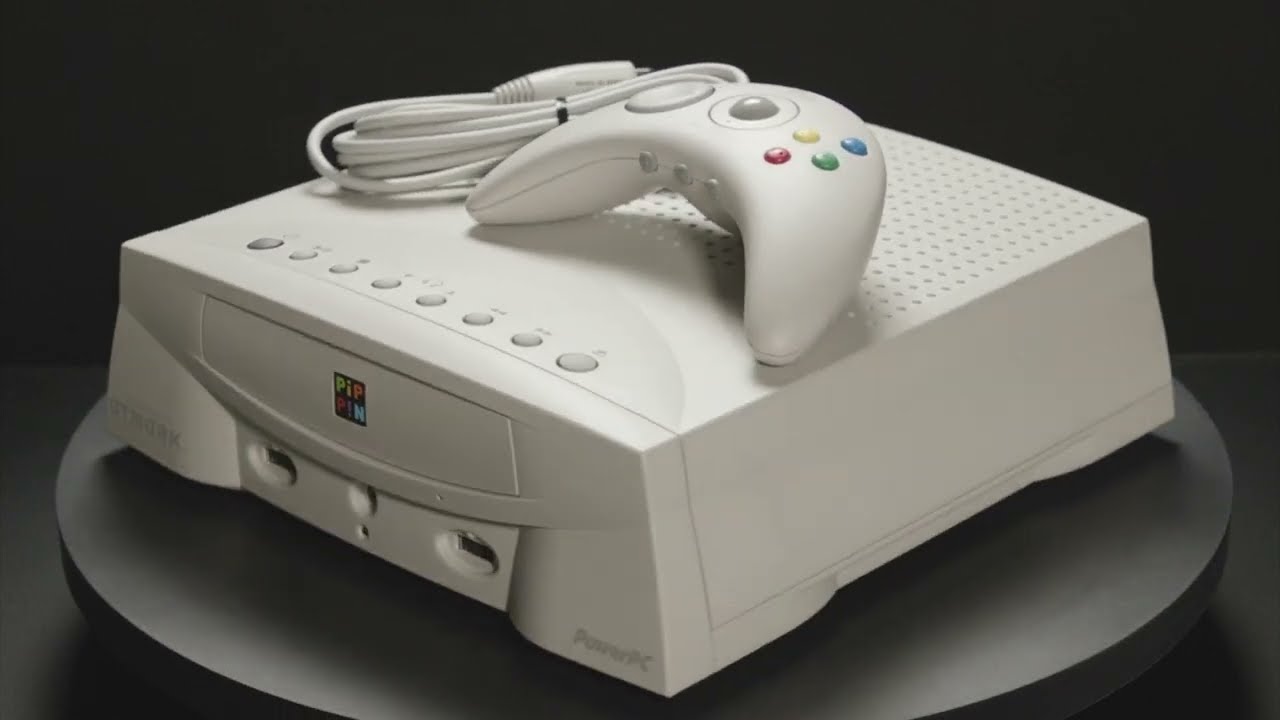
Look on it
Another Apple product in the mid-90s, before Steve Jobs came back to steady the ship, the Pippin was designed by Apple but actually released by Japanese toy giant Bandai (of Tamagotchi fame).
Based on a Macintosh Classic II, Apple tweaked the fundamental hardware and Bandai packed it into a very ’90s chassis. In some ways, the Pippin was ahead of its time, with Internet connectivity and a wireless controller called the Applejack.
But with competition from the Nintendo N64 and Sony’s original Playstation, as well as a significantly higher asking price than both and fewer games to play, the Pippin still faced an uphill battle.
It is said that only 42,000 Pippins were sold worldwide, mainly to Japan. So it’s no surprise that Bandai was the first and last company to license its technology from Apple, and even less surprising that most people don’t even know it ever existed.
5. Apple eMate 300 (1997)
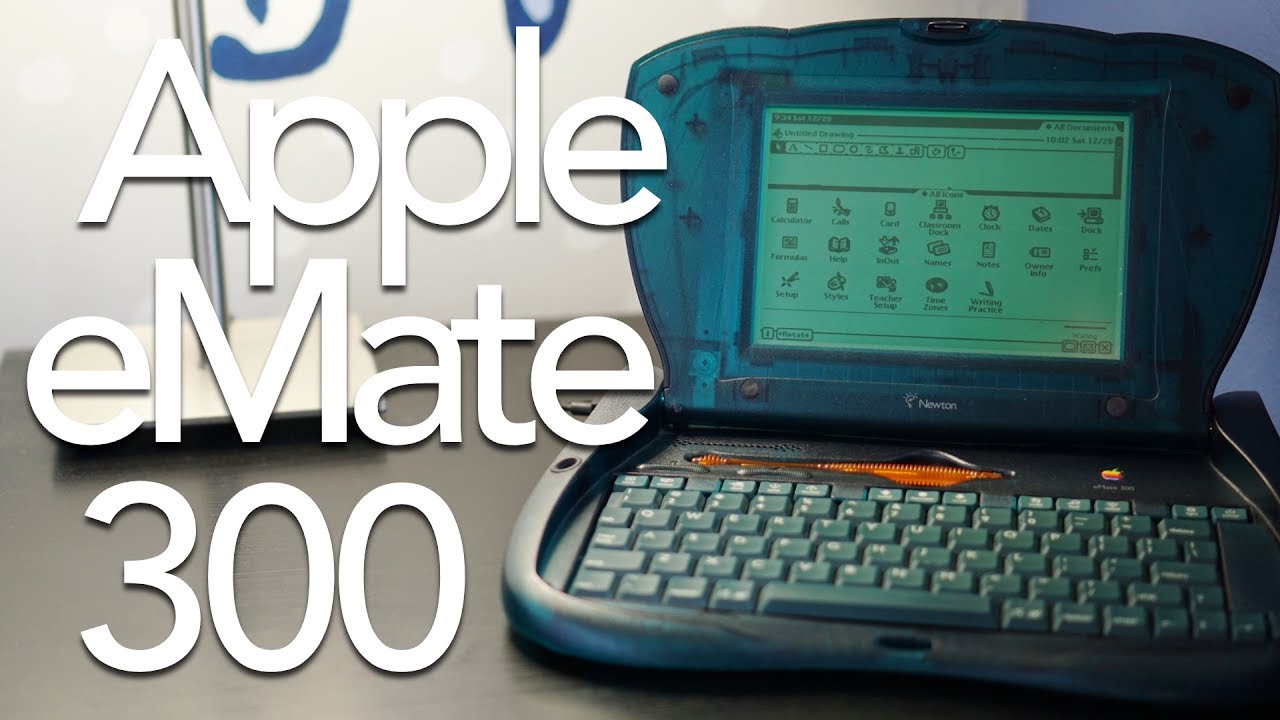
Look on it
Rumors of a touchscreen MacBook have been circulating for ages and might finally come to fruition this year, but did you know that Apple has already made some sort of touchscreen laptop?
More than a decade before the release of the first keyboard accessory for the iPad, Apple released the eMate 300, a cross between a PDA (it’s a personal digital assistant, not a public display of affection) and a laptop designed by Jony Ive. It had a 6.8-inch grayscale screen, ran the same operating system as the Newton, and could last 28 hours on a single charge. Those were the days, huh?
The eMate 300 lasted less than a year, another casualty of Jobs’ great purge, but you may recognize its translucent shell from the iMac G3, which came out a year later and had a huge influence on tech aesthetics, helping to turn around Apple’s fortunes.
5. Apple iPod+HP (2004)

You’d have to live under a Microsoft Zune for 25 years not to know what an iPod was, but did you know that it was briefly possible to buy one with a Hewlett-Packard logo on it?
HP was known for making boring PCs, printers, scanners, and other office stuff, but at CES in 2004, CEO Carly Fiorina announced that the company would release a line of branded iPods with a proprietary blue finish.
In exchange, HP would pre-install iTunes on all of its desktop and laptop computers. The blue version was never released, although you could download and print your own “tattoos” from the HP website. No, we didn’t do that either.
The partnership was short-lived, with HP announcing it was ending just 18 months later, but while reaction to U2’s 2014 album Songs of innocence being added to all iTunes libraries, many people would probably rather own an HP-branded iPod than one with the names of Bono and co emblazoned on the back.
6. Apple iPod Hi-Fi (2006)

There’s an old urban myth in the UK that you’re never more than two meters from a rat – and back in 2006 it felt like the same could be said about iPod docks.
Apple released one in February of that year and promised to “redefine the home stereo system”, with Steve Jobs even saying he was ditching his current stereo in favor of one.
The iPod Hi-Fi was certainly striking to look at, even if someone points out that it looks like a milk crate, it’s hard to shake that image. However, as our three star review pointed out, there was “no chance that any sane person would mistake this for a budget hi-fi or mini system.”
It was discontinued about 18 months later, and Apple didn’t make another speaker until the HomePod in 2018.
7. Apple Macintosh TV (1993)

The ugliest Apple product ever made? The Macintosh TV certainly has a strong case for this title – this monstrosity was actually a 14-inch Sony Trinitron CRT mixed with a Performa 520 and it was the first Mac capable of displaying a TV/VCR signal.
Unfortunately, the Macintosh television had a number of drawbacks that explain why only about 10,000 were made during its five-month lifespan. First, you couldn’t sneakily watch TV in another window while you worked. Unfortunately, you couldn’t record the shows or movies you were watching either, as it only came with a CD-ROM drive and its 160MB hard drive.
So it was another case where Apple’s ambitions outpaced the technology of the time, but at least it laid the groundwork for the Apple TV – and as the first black Mac, it’s also the distant ancestor of the iconic matte black MacBook that lived from 2006 to 2008.
Follow TechRadar on Google News And add us as your favorite source to get our news, reviews and expert opinions in your feeds. Make sure to click the Follow button!
And of course you can also follow TechRadar on YouTube And TikTok for news, reviews, unboxings in video form and receive regular updates from us on WhatsApp Also.


