As the going gets tough in South Sudan, some artisans offer cheap footwear made from rubber tires

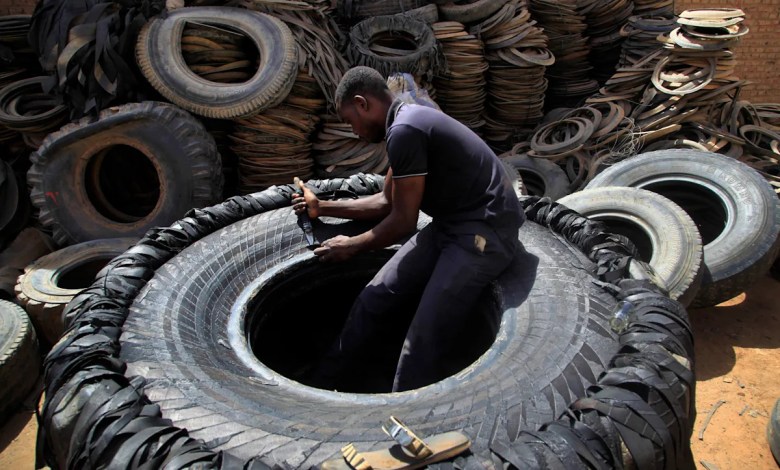
Wau, Sudan du Sud (AP) – From Rwanda to Kenya, shoe fashion from thrown tires has long been a brand of local ingenuity.
In South Sudan, however, the creative work of these craftsmen is now fueled by an economic crisis that has left the government about to go bankrupt and many people find it difficult to put food on the table.
As South Sudan oil income has decreased, the government for months has not been able to pay civil servants in time. The cash crisis affects everyone, from soldiers to teachers, stressing the range of economic difficulties across the country, and many are looking for ways to continue.
Some want cheap shoes, finding them not in supermarkets but in open markets where flip flops and sandals are shaped from worn tires generally thrown like garbage.
Demand increases with the cost of living
In Wau, about 650 kilometers (400 miles) from the South Sudanese capital of Juba, the shoemaker Emmanuel Achuil works in the shade of a tarpaulin on the main live market of the city.
His hands blackened in grappling with rubber, Achuil uses a blade to sculpt pieces of thrown tires. Colorful straps are dispersed around him like pieces of a puzzle.
Achuil, which is five to 10 pairs per week, has told AP that in recent months, he has seen an increase in demand that he and others say they are directly linked to the increase in the cost of living here. They say that shoes made from rubber remains have found a firm place in the local markets, confirmed in the ubiquitous displays of these shoes even on the markets open in Juba.
Two years ago, Achuil received five to seven customers per month. Now he waits up to 20 of them, he said. Achuil shoes can bring up to 15,000 pounds South Sudanese per pair, or about $ 4, depending on the size and quality of the finish. In addition to their affordability, rough pairs are rented for their sustainability.
“Even when things get bad – no food, there is no shortage of work – I don’t miss this work,” said Achuil. “People always need shoes, especially cheap shoes.”
Akol Majok Ring, a cattle goalkeeper from the state of the Warrap, said that he had discovered these sandals in March and immediately bought a pair for himself because “they are good for grazing cattle”.
“When you move with cattle all day, these sandals are perfect,” he said. “They are durable and well suited to employment.”
Food insecurity and inflation affect millions
The South-Sudanese pound has been under pressure since 2023, losing a large part of its value against the dollar because oil exports are interrupted sporadically by the civil war in neighboring Sudan.
The economy has been down for five consecutive years, hampered by the violence resulting mainly from the political competition between President Salva Kiir and his assistant Riek Machar, who is currently under house arrest for alleged subversion.
Generalized hyperinflation and food insecurity affect almost 80% of the 11 million people in South Sudan, the same number of people living below the poverty line, according to the World Bank.
South Sudan depends on oil revenues to comply with 90% of the government’s annual budget, but damage earlier this year in oil oil by Sudan left the South South-Sudanese authorities briefly unable to export a gross.
The government announced earlier in June that exports were to resume after the pipeline repairs.
Many government employees are actually without salary, and unemployment is widespread while the prices of basic goods soar. Leather shoes in stores may seem a luxury in these circumstances.
“Tire soles last longer,” said Deng Akol Athuai, who has been buying for Achuil for years. “I buy a pair, and it lasts me a year or more. They are strong, especially to walk on rugged roads. ”
Shoemaker hopes to expand your business and train others
Gabriel Bataku, a 26 -year -old man who is unemployed in Wau, said artisans they “solve real problems. They just need recognition and support. ”
Achuil has been in shoes since 1996. He is not officially trained. He obtained his skills as a breech who looks at the older men in their workshops when they put themselves in their activities.
At that time, the tires thrown was much easier to find, recovered garages or from people throwing them.
But now, he said, “more people do this job, so competition for materials is high.”
He deplored the lack of formal support, of the government and others, who left craftsmen who find it difficult to access the tools of their profession. He wants access to better equipment.
Despite the difficulties, he dreams of opening an appropriate workshop where he would cause others. He also hopes to be able to extend his business to other cities in South Sudan.
“If I had better cutting tools and a way to develop, I could train young people,” he said. “Many are inactive here in Wau. This skill could help them survive.”
___
To find out more about Africa and development: https://apnews.com/hub/africa-pulse
The Associated Press receives financial support for global health and development in Africa from the Gates Foundation. The AP is solely responsible for all content. Find the AP standards to work with philanthropies, a list of supporters and coverage areas financed at AP.ORG.