Why satellite company’s withholding of Iran imagery has this expert worried

When you purchase through links on our articles, Future and its syndication partners may earn a commission.

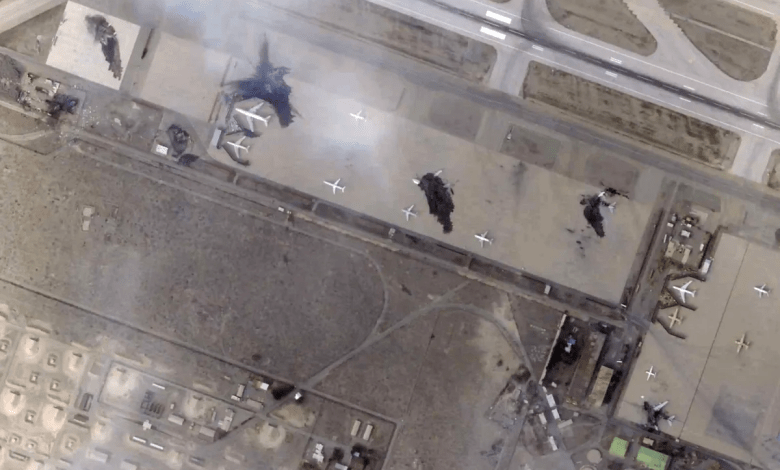
A satellite image of Mehrabad International Airport in Tehran, Iran, following airstrikes. Damage as well as a variety of aircraft and runways can be seen. | Credit: Planet Labs PBC/AP
Earth observation company Planet Labs keeps its satellite images of Iran indefinitely.
In response to a request from the U.S. government, Planet Labs has made the decision to indefinitely not share photos from Iran as well as the largest conflict region in the Middle East, the California-based company shared in an April 5 emailed statement to its customers. The move follows a 14-day delay in Middle East imagery that the company initiated last month in an effort to prevent attacks against the United States and its allies. according to Reuters.
Not everyone is a fan of the decision.

Damage caused by an earthquake in central Kahramanmaraş, Turkey, was captured by satellites operated by San Francisco-based Planet on February 7, 2023. | Credit: Planète
“It seems like it’s a way to influence the American public’s ability to understand what’s going on, rather than having an impact on the battlefield,” Victoria Samson, chief director of space security and stability for the nonprofit Secure World Foundation, told Space.com.
Planet Labs operates a large fleet of satellites in low earth orbit which capture images of our planet, which are then sold to government agencies or businesses. Although the U.S. government is one of the company’s largest clients, it is not the only one, and Planet Labs has a history of working internationally. The company even describes itself as a “mission-driven public benefit corporation whose founding purpose is to use space to support life on Earth.”
Indeed, satellite images like those captured by Planet Labs are used for a variety of purposes, not just defense planning.
“It’s unfortunate given that their work is being used, not only by the military, but also by other actors trying to track the flow of refugees and see where there is damage, and for agricultural reasons,” Samson said, adding that the withholding of footage raises concerns from a public safety perspective.
In addition to the many non-military purposes that satellite images serve, they also allow the public to see with their own eyes what is happening in a given region and the true extent of damage inflicted in war, as well as the consequences of other actions.
Samson cited a specific case from early in the war in which satellite imagery – particularly photos from Planet Labs – played an important role. At the beginning of March, there was initial confusion about the scale of the strikes carried out against an Iranian school. Satellite images from Planet Labs revealed the extent of the damage and shed light on the number of lives lost in the attack.
Throughout its history, Planet Labs has already shared important images freely. For example, the company released photos that helped first responders deal with natural disasters, as well as images. revealing details on Russia’s current invasion of Ukraine.
This is not the first time that satellite images have been inaccessible to the public. For example, photos of sensitive military sites or government installations are often blurry on apps like Google Maps. However, Samson said, Planet Labs’ move appears to be the first time such a large region has been restricted to satellite viewing.
“It will probably set a precedent that I think will not be good for overall transparency,” she said.
Planet Labs also indicated in the April 5 statement that it would withhold all footage dating back to March 9 and that this retention would continue until the end of the conflict. There is, however, a small exception to this ban. Planet Labs will release images on a case-by-case basis if an urgent need arises, the company said in the release. The decisions follow the official start of the war, which began on February 28 when the United States and Israel attacked Iran.
Planet Labs is one of a variety of companies that provide satellite imaging services, and some others could make similar moves. For example, Vantor, formerly known as Maxar Intelligence, said Espace.com that it has “implemented controls over parts of the Middle East,” although the company added that those controls “were not put in place in response to a specific request from the U.S. government.” At present, it is unclear which other companies also restrict access to satellite images.
Space.com reached out to Planet Labs for comment, but the company did not respond before publication deadline.


