Smoke Shrouds Northern Thailand – NASA Science


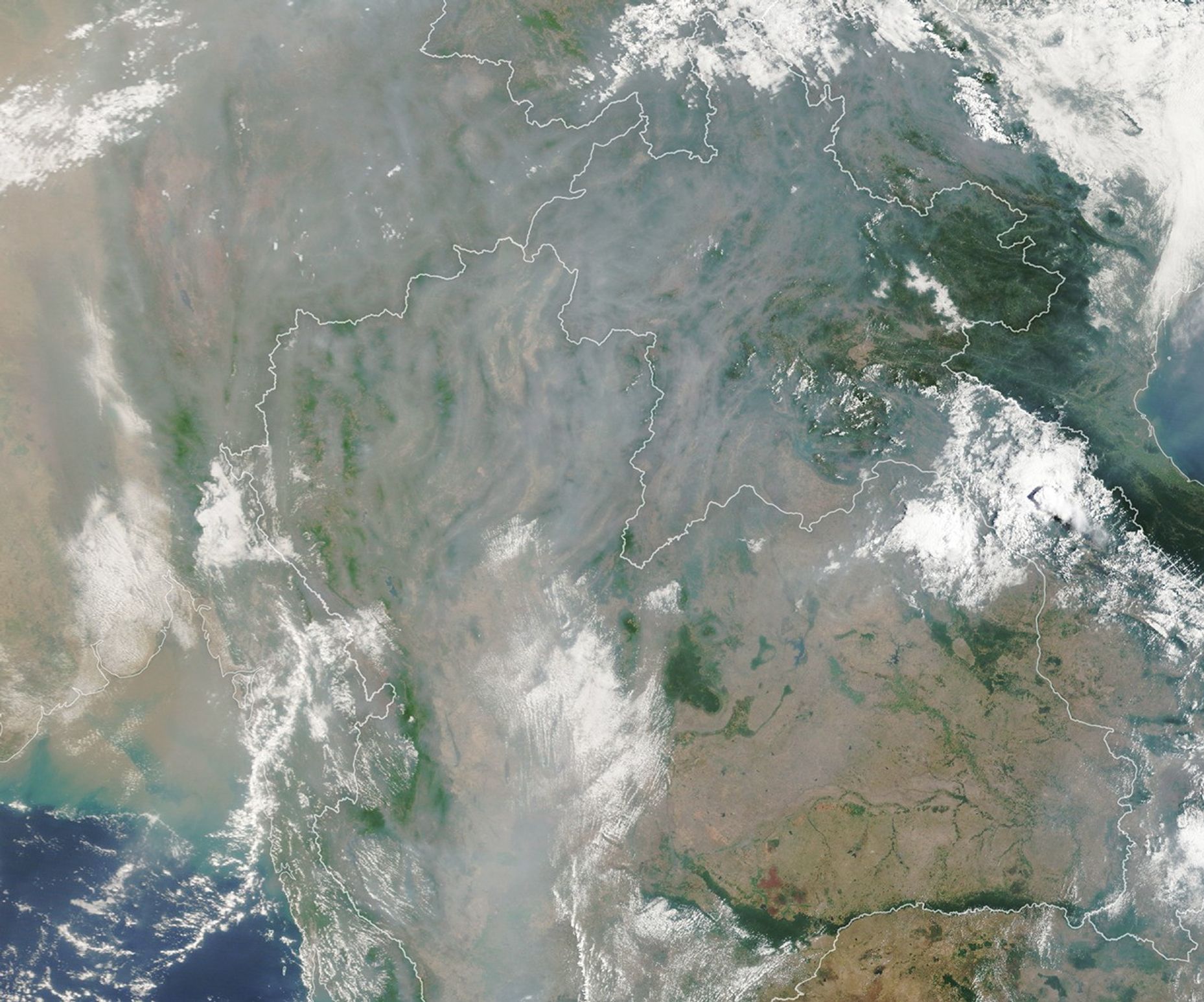
Chiang Mai, Thailand’s second largest city, lies within a network of narrow valleys in the country’s northern highlands. Although the historic town is known for its panoramic views of the surrounding mountains, clear skies have become less common. In recent decades, smoke has increasingly darkened the sky during the dry season, particularly in March and April.
A NASA satellite captured this smoky view of the city and surrounding region on April 22, 2026, when haze partially obscured valleys and ridges usually visible in clearer conditions. Most of the smoke likely comes from small agricultural and forestry fires set to burn crop debris or maintain forest ecosystems. In 2026, satellite sensors detected a small number of fires throughout January, but fire detections became more numerous and widespread in February, March, and April. Fire activity typically peaks in March and declines in May as seasonal rainfall increases.
Research indicates that smoke from biomass burning is a major contributor to poor air quality in northern Thailand during the dry season. According to one estimate, around 70% of fine particulate matter (PM)2.5) in Chiang Mai in April comes from biomass combustion. Vehicles, power plants and industry, as well as the burning of charcoal for cooking and heating, are major contributors to the region’s hazy skies. Geography also plays a key role; the surrounding mountains block air circulation and promote temperature inversions that trap both local pollution and haze from the wider valley region.
On the same day the satellite image was captured, ground-based air quality sensors recorded “unhealthy” and “very unhealthy” levels of particulate matter.2.5 air pollution throughout Chiang Mai and the region, according to data from the World Air Quality Index project. Prolonged exposure to high levels of air pollution can contribute to respiratory and cardiovascular diseases and other health problems.
Reports suggest that the haze is affecting the tourism industry and has contributed to a decrease in the number of international travelers coming to Chiang Mai. After more than a month of persistent fog, the number of tourists arriving in Pai town, a popular backpacker destination northwest of Chiang Mai, has fallen by 90 percent, according to a local newspaper.
Unusually hot and dry conditions have hit the region in recent weeks, according to meteorologists from the ASEAN Specialized Meteorological Center (ASMC). On March 27, the group said there was a “high risk” of severe cross-border haze in the region and raised its alert level to three, the highest on the scale.
In late March, the group noted that dry conditions were expected to persist in most parts of the Mekong subregion, with prevailing winds expected to blow mainly from the south or southwest. “Under these conditions,” ASMC noted, “the hot spot and smoke haze situation could further worsen.”
NASA Earth Observatory image by Lauren Dauphin, using NASA MODIS data ÉOSDIS LANCE And GIBS/Worldview. Story by Adam Voiland.
- ASMC (2026) Regional haze situation. Accessed April 22, 2026.
- Bangkok Post (April 17, 2026) Pai tourism suffers as haze grips the North. Accessed April 22, 2026.
- NASA Earthdata (April 10, 2026) Stagnant skies in Southeast Asia. Accessed April 22, 2026.
- NASA Earth Observatory (April 8, 2024) Hazy Skies in a Growing City. Accessed April 22, 2026.
- NASA Earth Observatory (April 1, 2024) Dealing with seasonal haze in Thailand. Accessed April 22, 2026.
- The Nation (April 18, 2026) Northern wildfire wave pushes Thailand’s hotspots to 2026 record high. Accessed April 22, 2026.
- Pani, S., et al. (2020) Black carbon over an urban atmosphere in the northern peninsula of Southeast Asia: characteristics, source distribution and associated health risks. Environmental pollution, 259, 113871.
- Pirard, C. & Charoenpanwutikul, A. (2023) Comprehensive review of the annual haze event in northern Thailand. ArXiv Earth Preprint.
- Orion (February 12, 2025) Where there is smoke. Accessed April 22, 2026.