Titanium Court mashes together genres and cultural references to tell a strange, funny tale

I would like love to tell you all about my favorite game of the year so far. But that would be doing a great disservice to Titanium Court. I’m not even sure could Explain everything, anyway.
Titanium Court is a racing-based game with elements of constant progression, so it’s technically a roguelite. However, you can’t really break Titanium Court as you can with Balatro. There are many ways to win a game, but you must follow the rules. Gradually learning what these are – and how the game suddenly changes them – is a big part of what makes this so effective.
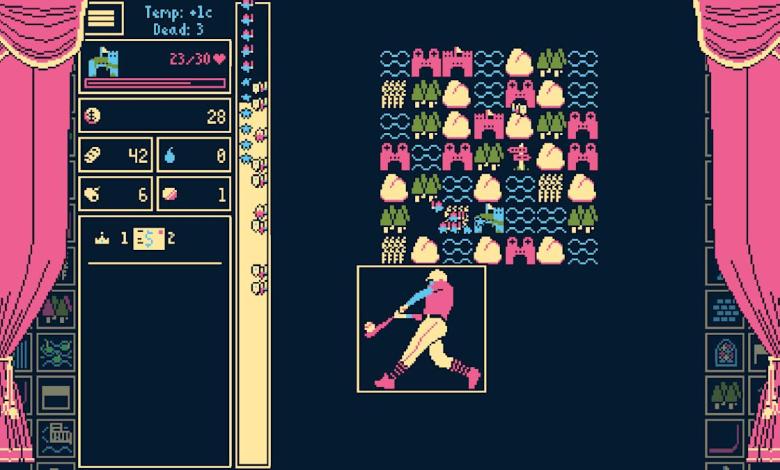
I can at least break down the main gameplay loop for you. There are two stages to each battle in each game, that is, a “war”. The first is a match three segment (think candy Crush Saga), in which you gather resources by aligning wheat fields, rivers, hills and forests. At the same time, you set up the terrain and position your own tile (the titular terrain) for the second step. For example, water will completely stop infantrymen, so you can position yourself behind a barricade of rivers to block them. But you’ll have to be careful, because a chain reaction of matches can wipe out your carefully constructed defense.
At the same time, you will move around enemy fortresses. You can line up three or more matching enemy bases to eliminate them, but you don’t get any resources from them. Additionally, you can only make a limited number of moves during this phase. So this creates an interesting risk-reward conundrum. A timeline shows you which enemies will attack and when so you can plan accordingly.
The second phase is where the tower defense element actually takes effect. You’ll use what you’ve collected to recruit soldiers to attack enemies or defend your base, add workers who will gather more resources, and perhaps launch magical attacks. You can trade in shops and markets as long as you haven’t cleared them from the grid, as they are tied to terrain tiles. When you’re ready to fight, you press a play button and the battle happens automatically.
Nothing is as simple as it may seem at first, because this is a game that will disturb you. I was chastised for trying to buy my way to victory by trading too much, with the game calling this approach “boring” and closing the store doors for the round. Perfectly correct. I laughed the first time this happened. When I thought I was being clever by using the introspective power of self-reflection (you’ll see) to win a boss fight, I was quickly shut down.
Between the wars, you’ll explore the titular court as a newly anointed queen, trying to figure out what’s happening on Earth and, ultimately, how to get home. Here, Titanium Court turns into a mix of old-school adventure game and bizarre visual novel. This is where a lot of the magic lies and where you gradually discover the story and even how to play the game.

AP Thomson/Travel companion
Developer AP Thomson’s writing is clever and funny. I lost count of the number of jokes I laughed out loud at. His story takes you in surprisingly unexpected directions. It looks like a great performance and Thomson is the master of ceremonies. It’s a confidently written experience that offers further proof of why absolutely no one needs a generative AI gaming platform that seeks to “kill the scripted RPG.”
Titanium Court won the prestigious Seumas McNally Grand Prix at the Independent Games Festival Awards earlier this year and it’s not hard to see why. Thomson and his collaborators have concocted something truly special here.
It’s a game with dragons and ballet, baseball and bike races, shower thoughts and wormholes. There are road signs in a world where fairies believe cars are figments of your imagination. He refers Catania, the Civilization series, Jenga And A Midsummer Night’s Dream. This confuses capitalism and social inequalities. I’ll let you discover the details of the job system, which completely changes the way you play the game, yourself. I haven’t been this engrossed in a game since Ball x Pit. It surprises and delights almost every moment.
Titanium Court certainly won’t please everyone (there’s so much to read!) and I’m going to stop here before telling you too much about it. You can get a taste by checking out a Steam demo available for PC and Mac. The full game arrived today. It usually costs $15, but it’s 20% off until May 7.


