How New Mexico is ‘building a forest’ by solving a seedling shortage


Recovery from the Hermit’s Peak-Calf Canyon Fire has been daunting. Residents are still waiting for disaster relief payments, even as floods sweep across the ash and blight scar, contaminating drinking water downstream. And then there is the forest itself: it desperately needs new trees but lacks the necessary seedlings.
Wildfires have burned 7 million acres in New Mexico since 2000, and millions of seedlings are needed to replant burned areas. The Hermit’s Peak-Calf Canyon fire, the largest in state history, requires 17.6 million seedlings alone. Trees play a vital role in restabilizing burned hillsides and protecting drinking water sources below. But current reforestation facilities do not have the capacity to meet demand, creating a serious shortage. Experts estimate it would take 50 years to replant the Hermit’s Peak-Calf Canyon burn scar at the current rate.
That’s where the New Mexico Reforestation Center comes in. Conceived in 2022 as a collaboration between the state Division of Forestry, the University of New Mexico, New Mexico State University and New Mexico Highlands University, the center is now poised to break ground on an “absolutely massive” greenhouse that will expand existing infrastructure in the northwest part of the state, director Jennifer Auchter told High Country News..
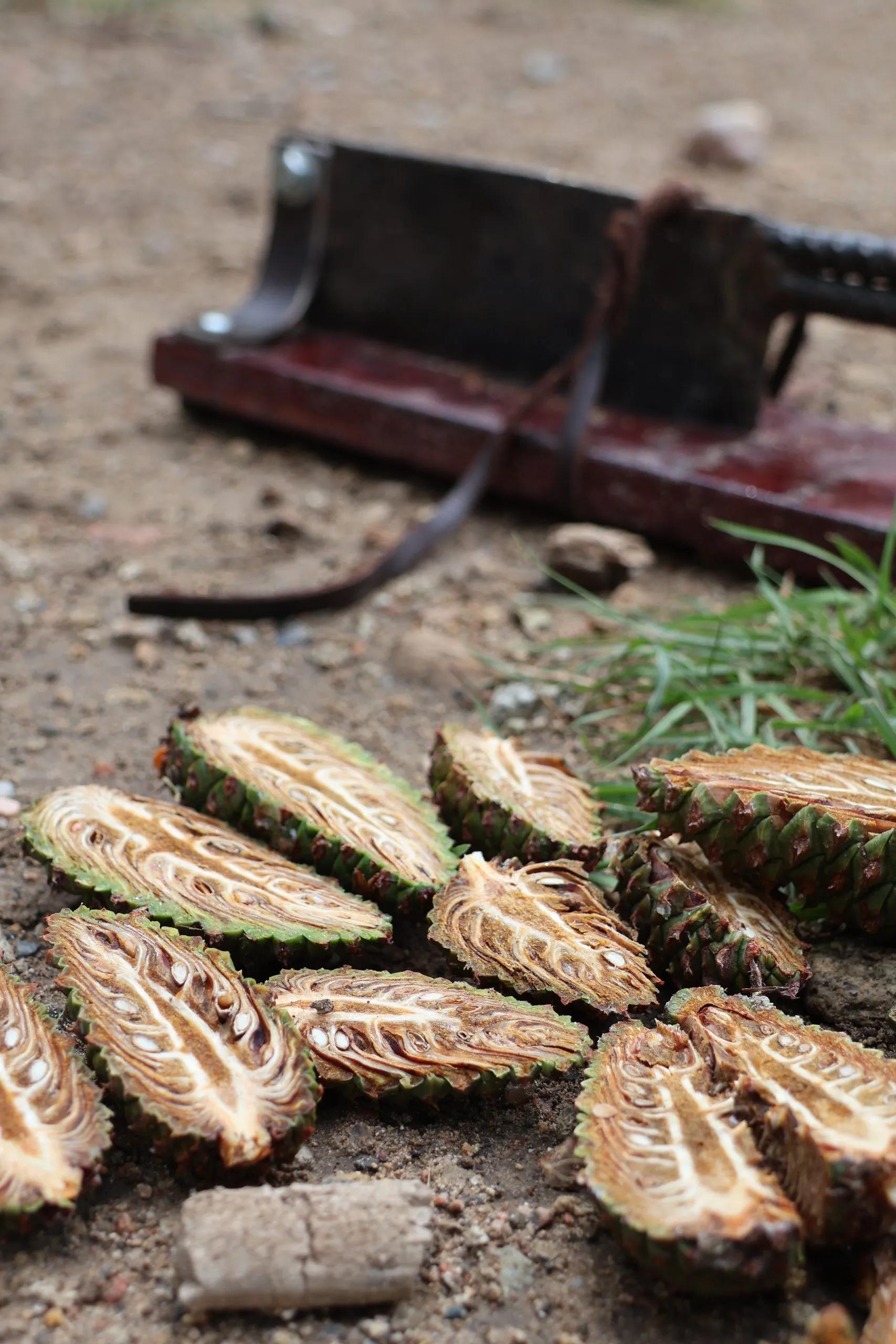
The greenhouses, which will eventually reach a total area of 155,000 square feet, are a critical part of the seed-to-seedling-to-tree post-fire reforestation pipeline that involves processing more than 1,500 pounds of native seeds for future plantings while looking for ways to help seedlings survive an even hotter, drier future. (The business has a distinctly New Mexican flavor: Auchter said a recycled chile roaster is used to extract seeds from cones and pods in the existing seed processing facility.)
High Country News met with Auchter in mid-April as she prepared for the greenhouse’s groundbreaking to explain how the center will more than triple the state’s current seedling production capacity and why a “right tree, right place” approach is important to modern reforestation success.
This conversation has been edited for length and clarity.
Q. Why is it so important to replant a forest after a forest fire?
A. This is my favorite part of the whole story. My background is in earth sciences, watershed management, river systems, and that sort of thing. So I think about it from a “forest as water infrastructure” perspective, particularly in New Mexico and the Southwest. Here, it is the snow cover in winter that feeds our rivers and streams. People have tried to quantify this in different ways, but about 70% of all the water we use comes from a forest, whether it’s snowpack or precipitation captured by streams.
The likelihood of a forest actually regenerating (after a high-severity wildfire) is unlikely in our lifetime. This could take decades or even centuries. For us, because of our water infrastructure here, we really need to conserve the forests, if only to have a water source.

Q. What are New Mexico’s current reforestation needs, given several large wildfires in recent years?
A. The state’s current burn scars require 385 million trees, and that doesn’t include future wildfires. This is just the existing backlog.
Q. How many plants can current operations in New Mexico currently grow? Tell us about the gap that the New Mexico Reforestation Center seeks to fill.
A. We say 300,000, but we don’t usually reach that number. This is typically 250,000 seedlings per year, and these are grown at the John T. Harrington Forestry Research Center, which is a fairly small and fairly old nursery.
Most of our tree seedlings are purchased from Idaho growers. It’s not great, but they don’t come from exactly the right climate, they don’t come from exactly the right altitude, and then when they travel over land, they don’t do as well planting. They’re a little shocked when they get here.
Q. What type of research has been conducted to help the New Mexico Reforestation Center and its replanting efforts succeed?
A. The University of New Mexico is responsible for doing much of the research on modeling: predicting seedling survival based on site and projected climate. So when we select sites and plant trees, we’re actually doing it for the climate of 2100, not the climate of today. We want to make sure these trees survive for the long term. Then, once the facility is installed, they will also conduct surveillance with drones, as well as on-the-ground monitoring.
Q. How else do researchers try to ensure that seedlings can survive in hotter, drier conditions?
A. Researchers at New Mexico State University are performing drought conditioning, which allows plants to be irrigated less. These are ponderosa pines and some other species that are under drought stress and are seedlings, so when they plant them, they’re ready for that dry environment. There’s one other thing they do specifically for the survival of aspen seedlings in a post-fire environment: plant the seedling next to a log, for example, and try to give it just a little shade during the first few months and years of establishment. They see a higher survival rate for seedlings planted in shaded areas.
Much research is underway to try to optimize this on a larger scale. Once we go from 300,000 plants to 5 million plants, ideally, at that point, we will have sorted out the best methods that are most effective throughout the entire reforestation process, from seed to seedling to planting.
Courtesy of New Mexico Reforestation Center / Josh Sloan
Q. Have you looked to other states for inspiration when it comes to reforestation? What have you learned?
A. The Pacific Northwest is truly excellent when it comes to reforestation. At least initially, I think there was an idea that we would model reforestation in the Southwest after reforestation in the Pacific Northwest. But we just need our own regionally appropriate methods, regionally appropriate stock – seedling genetics – all of that is really important.
Q. How will the new forestry center benefit the wider region?
A. We anticipate that, particularly in other areas of the Four Corners States, our plantings will be appropriate. For example, northern Arizona, Flagstaff, it’s similar altitude, similar species. This could also be the case for parts of Colorado. So I think we’ll probably focus on New Mexico first, but we hope to be able to supply more seedlings in the longer term, once we start reforesting our own burn scars.
There is no formal type of resource platform or collaboration for the Southwest. There are lots of groups working here – NGOs, government agencies, universities – and lots of people doing lots of different things, but they are generally quite disparate. We envision the NMRC bringing these people together.
Q. What is the important part of the reforestation process that is sometimes overlooked?
A. I think it’s important to shine a light on the whole process of reforestation. The seed collection work that New Mexico Highlands University is doing is kind of that hidden part, right? Greenhouses and seedlings are flashy, and it’s easy to take photos and cover them, but the work of collecting seeds is tedious, time-consuming, and requires a massive workforce development approach. It’s rough, it’s hard.
Q. What do you wish more people knew about reforestation?
A. I’ve heard many times, “Wow, that’s an expensive greenhouse.” » It’s really not just a greenhouse. There is so much more to building a forest. It’s quite a daunting action to bring this to the forefront in every way possible, bringing awareness to how many people have touched the seed or seedling or planted it from the time the seed is harvested to the time it actually grows.
Q. What kind of long-term impact can reforestation have on a community after a fire, and how do you go about achieving that in New Mexico?
A. I’m going to use an example that we just finished last week. We invited 48 students from all grades from a charter school near Mora to the seed collection center, and we asked the children, who experienced wildfires, to create a work of art that was something special to them. Throughout this workshop, while creating this art, some of our forestry experts talked to us about the process of reforestation and all that it entails. The goal is really to get kids involved locally at a younger age, so that as they go to school next year, those same kids will come back and be able to see maybe some of the seeds they worked with are now in pots as seedlings, and maybe in three years they can go see that tree planted in the forest. Keeping them engaged throughout the reforestation timeline, to make them understand how important conservation is. Because once it leaves, it takes a long time to bring it back.