Do not open until July 4, 2276: U.S. buries a ‘zombie-proof’ time capsule


It’s been 250 years since the United States decided it no longer wanted to be part of Great Britain. To celebrate this momentous anniversary, known as the semi-fiftieth anniversary, the nonprofit America250 has planned numerous events, including one very timely one.
An approximately 2,000-pound time capsule will be buried in Philadelphia’s Independence National Historical Park on July 4, 2026. The capsule is intended to save a snapshot of today’s America for another 250 years. While the process of burying random objects underground for a few centuries may seem simple, designing and manufacturing a storage container that can withstand whatever nature might throw at it over the next 25 decades is quite a feat.
The team includes engineers from the National Institute of Standards and Technology (NIST) and preservation experts from the Library of Congress, who are coordinating with the National Park Service for the event in the nation’s premier capital. NIST also designed and built protective cases containing an original copy of the Declaration of Independence and other founding documents of America.
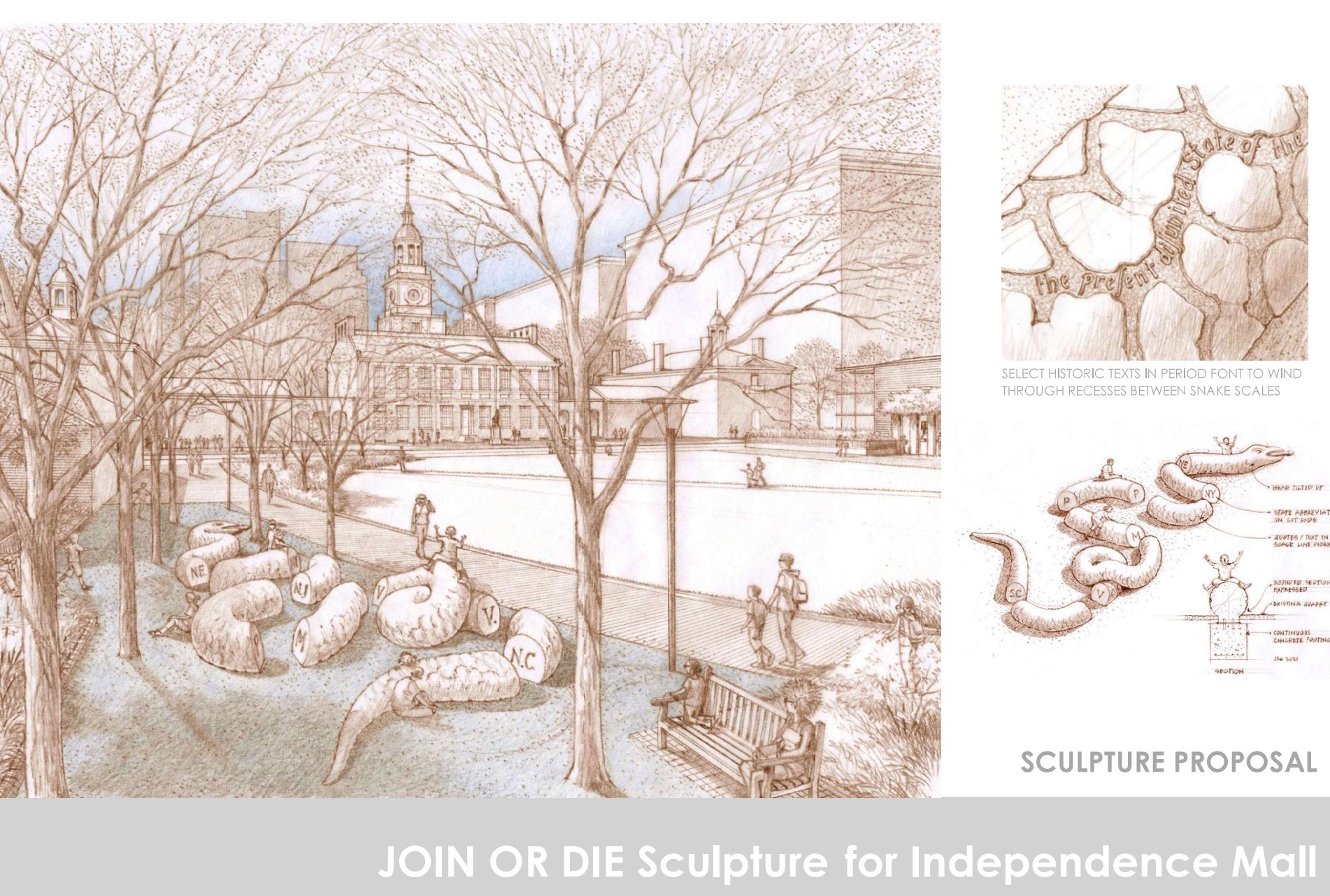
However, NIST engineer and time capsule designer Jay Nanninga tells Popular science that the original plan didn’t involve burying the time capsule at all. The initial idea was to incorporate the time capsule into an upcoming monument at Independence National Historical Park called the Join or Die Sculpture, inspired by Benjamin Franklin’s 1754 cartoon of the same name. The sculpture will consist of a giant segmented snake symbolizing the original 13 colonies and is expected to be completed this fall. America250 (the organization organizing the anniversary celebrations) wanted to incorporate the time capsule into its granite structure.
The company that carved the granite, however, abandoned the idea because carving out a slot for the capsule would make the granite too weak. The project therefore evolved towards the burying of the time capsule.
Water is not welcome in a time capsule
The team’s granite problem was resolved, but new problems soon emerged in Nanninga, including water. Needless to say, the capsule “has to stay dry,” which he says “was the cause of everything else.”
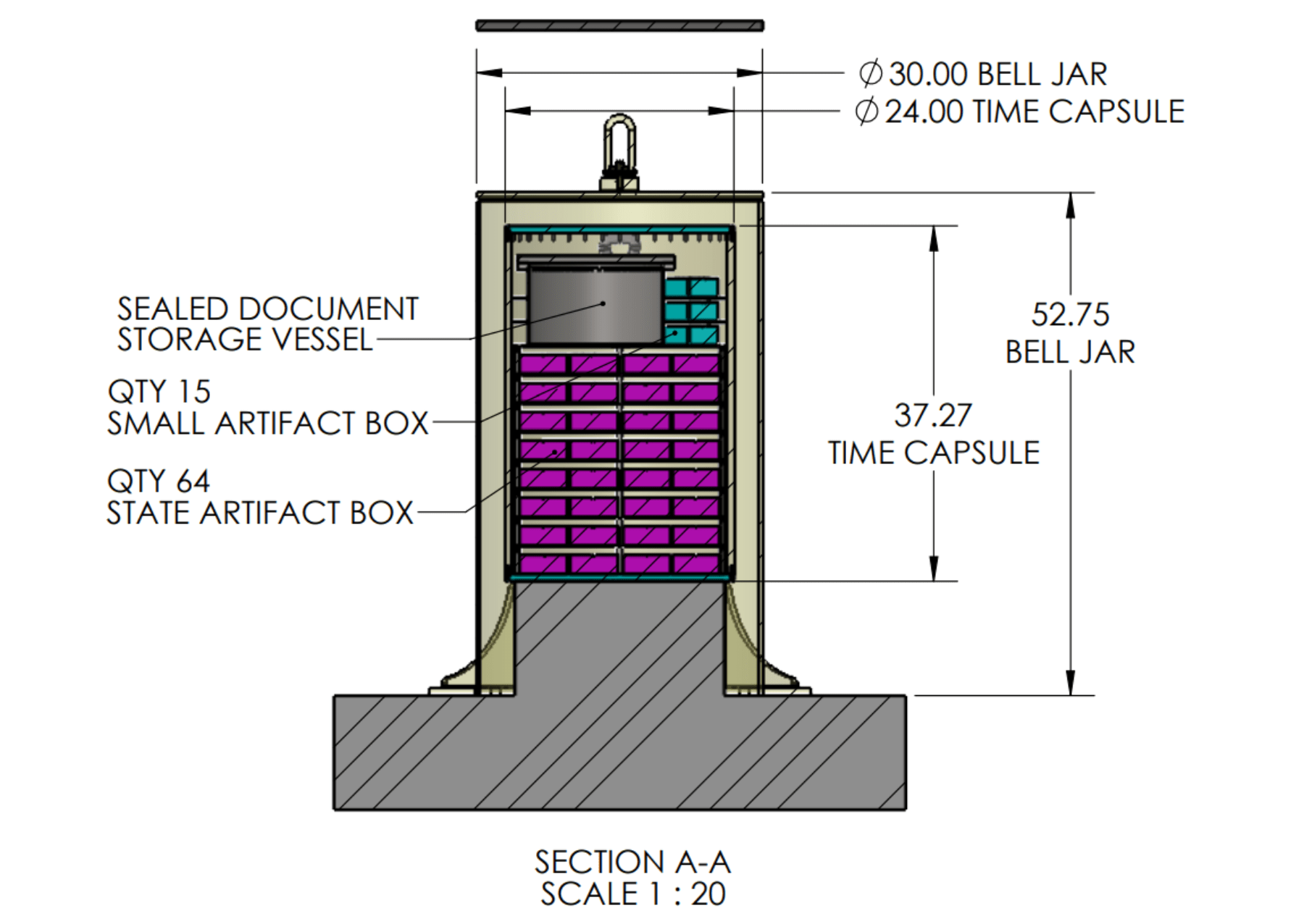
To keep the time capsule water-free, the capsule mainly consists of two sections: a tube-shaped container containing the capsule’s precious cargo and a larger bell-shaped device to seal it with an air pocket. The pot works the same way as pushing a bucket upside down into a pool of water. Or from a pop culture perspective, like Jack Sparrow and Will Turner walking underwater breathing air trapped in an upside-down rowboat in Pirates of the Caribbean: The Curse of the Black Pearl.
“We’re going to harness the amount of force that’s coming back to try to push the bucket out of the water,” he explains. “If the ground is saturated with water, the pressure that builds up in the bell will prevent the water from filling the time capsule.”
As such, the time capsule should withstand even heavy flooding. As in other worst-case scenarios, the capsule is expected to be out of range of wildfires and the seismic risk level in Pennsylvania is extremely low. Even if a seismic event were to occur, Nanninga believes the capsule and its contents would be fine. Finally, he jokes that “zombies would have a challenge because stainless steel is no fun to eat.”
Get in shape
In terms of form, Nanninga was given vague parameters for the design. Initially, he proposed a few options: a cylinder, a box and even a star. “I thought the star was super cool,” he laughed. “I really, really wanted to use my star.”
Although this star design would have been symbolic, it proved too complicated, so they opted for the cylinder instead. This shape is the most cost-effective and efficient option from a manufacturing perspective: the team simply needed standard industrial pipe to create the cylinder instead of having to build the structure from scratch. In addition, a solid pipe is less likely to leak than a rectangular container whose different sides are welded together.
Nanninga also needed a plan on how to seal the capsule once all the items were stored inside. Welding seemed to be the obvious answer, and he planned for the circumference of the seal to be larger than the actual time capsule, like sealing the brim of a top hat. This way, the heat and possible splashes from the metal or sealant will not damage any of the artifacts.
But even with this precaution, the rest of the team was nervous about this sealing process. Instead, the time capsule will be closed with a seal that crushes the Indium wire into a groove between the steel cover and the body. Under pressure, indium wire can self-weld at room temperature, a process called “cold welding.” The wire will fill the groove, its two ends will weld together and the joint will form a complete circle.
“We just continue to adapt”
Making all these changes on the fly was one of the most difficult aspects for Nanninga, who has been working on the design for at least a year and a half.
“The original idea was something completely different, and something completely different happened several times throughout all of this,” said Michael Berilla, Nanninga’s colleague and head of NIST’s Manufacturing Technologies Office. Popular science. “You get to a place where you feel comfortable and good, and then someone says, ‘oh, wait, that’s not going to work.’ And so I think that’s true resilience in engineering, that we continue to adapt.
Berilla’s job in all of this is to make sure that people with the right skills are involved in the project and that they have everything they need. This process is also known as “herding cats,” he jokes. Some other curveballs include changes to the items that will be stored in the time capsule. Nanninga had to modify the internal design of the capsule several times to accommodate changes in space. Design is also heavily influenced by how the materials from which objects are made will age and potentially interact with each other. This is where the preservation expertise of the Library of Congress comes in handy.
The collection will represent America’s current leaders, institutions and communities in the form of letters and other artifacts. It will include objects from all 50 states and six territories, each of the three branches of the federal government and the America250 Commission. For example, Utah will be represented by coins, pins, and historic building pieces. The full list will be announced in mid-June.
Paper items will be sealed in a separate compartment from non-paper items, which will be in containers distributed around the paper compartment. None of the items can be made from plastic, as they give off gases. Electronics are also out of the question, and of course there is a size limit.
When completed, the empty time capsule and bell will together weigh 2,000 pounds, measure 53 inches tall and be buried 10 feet underground. The contents will not be seen again until 2276, when future generations will celebrate the country’s 500th anniversary.
“In most of my projects, I’m looking for inspiration or lessons for my three young children, to show them how to take on a challenge that’s never been done before, make sure it’s done absolutely right, not give up, and understand that you really can accomplish anything you set your mind to,” says Berilla. “This is what I aspire to and it is for this reason that I found a very warm place in my heart for this project.”
Related historical stories

The best new PopSci 2025 releases


