Why Barbara Kopple’s Labor Films Remain As Urgent as Ever


As his Oscar-winning labor documentaries return to theaters, Kopple reflects on union fighting, gig work, and his latest film about unions.

Barbara Kopple on January 23, 2026 in Park City, Utah
(Mat Hayward/Getty Images for IMDb)
This May 1 weekend, perhaps the only holiday movie release weekend that Disney doesn’t yet own, Janus Films will bring back director Barbara Kopple’s two Oscar-winning documentaries about the American labor movement, Harlan County, United States (1975) and American dream (1990). They appear as a 17-city double bill for the 50th anniversary of the former and a recently restored 4k print of the latter by Criterion. They respectively tell the story of two strikes: a 1973-1974 miners’ strike in Harlan County, Kentucky, and a 1985-1986 meatpackers’ strike at a Hormel plant in Austin, Minnesota. The miners won their strike. The meatpackers did not, and more than half of the plant’s workers lost their jobs.
Kopple, now 80, has been documenting the American left since 1972, when she participated in the collective doc Winter Soldier(1972), which featured Vietnam veterans (like John Kerry) recounting the atrocities they witnessed or participated in. Since then, his films have covered the military, work, sports, entertainment and even this magazine – in Hot guy! : 150 years of the nation. His prescience Johnny Cash and Tricky Dick (2018) and Dixie Chicks: Shut Up and Sing(2006), about how the far right attempts to censor and silence progressive artists, still rings true today, as the Trumps once again target Jimmy Kimmel and Stephen Colbert enters his final month before cancellation on CBS.
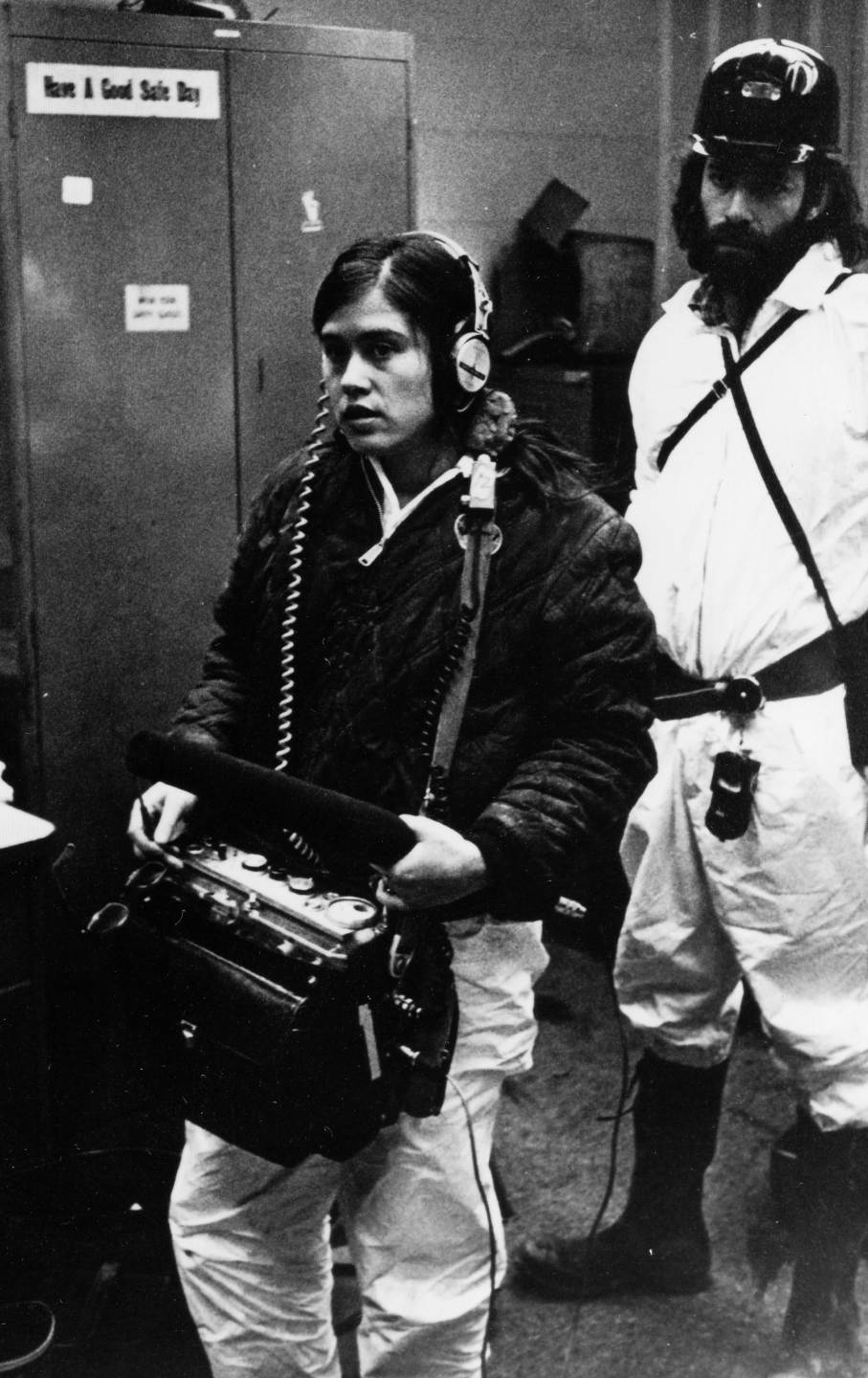
Kopple shot her films in the cinema vérité style, crossing the purely observational line of traditional documentary to get closer to handheld cameras, using natural lighting, and finding herself an integral part of the story when scabs physically attacked and shot her crew in Harlan County while she was filming on the line with workers. The style has been parodied in everything from It’s Spinal Tap! has The officebut in the hands of a master like Kopple, it still resonates powerfully.
I spoke with Kopple earlier this week about the re-release of his first two films about American labor, and about a third currently in post-production about gig workers.
—Ben Schwartz
Ben Schwartz: Harlan was released in 1975 and American dream in 1990. What does the labor movement look like to you today?
Barbara Kopple: Similar. I am now making my third union film. We’re in editing, and it’s a movie about UPS and the Teamsters. Amazon voted to bring in the Teamsters. This is the delivery menthe people who bring you your noodle soup when you’re sick, on bikes and motorbikes. UPS has had a union for 100 years, but they still don’t stay one. They’re always trying to do things and fire people and hurt people. So you always have to be committed. And Amazon too: they are all independent workers. There are thousands and thousands of them. They wear uniforms, drive trucks, work in their warehouses and yet they have nothing. They have no advantage. They’re paid, you know, minimum, not even minimum wage. And if something happens to them, they have to pay their own hospital bills. And they usually don’t come from here. It was their dream to come here. They’re sort of at the lowest level, because they have to buy their bikes, their clothes. And now they have to fear being deported. We’re in editing, but we always go out and film if something happens.
B.S.: In Harlan County And American dreamyou start with sequences of workers going down into the mines where they can’t even stand, then meat packers slaughtering pigs. If you opened the new film like this, what would you show?
BK: Guys on bikes? Its danger. They receive an application. They are constantly monitored on their phones. If they stop for a moment, they might get in trouble. They’re on the street, in the snow, in heavy rain, everything. It’s a very, very hard life, and the companies, DoorDash and others, just want them to go faster and faster.
B.S.: Why do you open films this way?
BK: Because I want people to have a sense of who they are and what they have to go through and to give them the kind of respect they deserve. So when you hear them talk, you understand a lot of what they’re going through.
B.S.: When you arrived in Harlan County, what were your preconceptions about what you were going to do?
BK: I had no idea what I was getting myself into.
B.S.: Harlan was violent.
BK: I knew a little about the history, that it was called Bloody Harlan County in the 1930s. The first day I was there, the women on the picket lines didn’t really trust us. They didn’t know who we were and they gave us fake names like Florence Nightingale, Martha Washington, right? Betsy Ross. Then the next day they said, “OK, come to the picket line, be there at 4 p.m. am.” At that time we were staying in a small motel on Pine Mountain, a very steep mountain. There were no guardrails on it. It was raining really hard the day before and another car drove right in front of us and we flipped. We got out of the car, everyone was fine, and we carried all our gear through the rain and everything to the picket line. That’s when they opened up to us and we lived with the miners for a long time.
B.S.: Were you shot yourself?
BK: We were beaten the morning when they shot us with semi-automatic rifles. I went first, because the guy was heading towards the crew and I wanted to protect them. And if you slow down the movie, you can see me with my little headphones and my hair back and whatever, walking towards them. And they were kicking me. And they got me, but it didn’t hurt because I had an Auger [hard plastic sound recording case] from here to here, and I had a long fish rod with a micro 415 on it, and I was swinging it. [Where we were staying,] they had no indoor plumbing, so you had to use an outdoor toilet. And I remember going to the bathroom with a .357 Magnum. The morning I was shot, I called my parents and said, “Hey, you know, we were machine-gunned this morning by semi-automatic rifles. » And my mother said, “I won’t let you be here another minute. You come home right away.” And I said, “I’m just kidding, Mom.” And she said, “Well, don’t fool me like that.” » I said, “I’m sorry. I’m sorry.” And I didn’t say anything about it until they saw the film at the New York Film Festival.
B.S.: When you cover an event like this, you have no way of knowing how it will end.
BK: Where to start. I mean, anything.
B.S.: You are like a prospector looking for gold. In American dream [in Austin, Minnesota]you had so many topics and so many people you learned about at the same time. When does the story start to come together for you? During filming? Edition?
BK: First, you gather the materials. American dream was very different. We started in a place called Worthington, Minnesota, where an Armor factory was about to close. And we were filming with a couple on their porch, a husband and wife, and the wife saying, “We’re not going to have any friends, and I’m going to miss everyone and going to church,” and all that stuff. And the husband said, “But we have in our contract that we can go to another Armor factory. And then the phone rang, and he went in and he got it, and he came out, and he burst into tears, and he said, “All the Armor factories are closing. We can’t go anywhere.” And other people would come in and say things like, “We never did anything wrong. I even went to work when I was sick. We never wanted for anything. We hardly took any vacations. Why are they doing this to us?” And it really was a feeling of hopelessness. People piled things into their trucks. They thought there might be work in Texas. It was like The Grapes of Wrathwatching them leave.
I heard on the radio that in Austin, Minnesota, people were fighting and saying, “We’re not going to take this anymore.” » We were very lucky because we had access to everything. I mean, there were four scenarios. There was Jim Guyatt, president of the local. His salary and that of the people he cared for was $10.69, and it was reduced to $8. He hired a great guy, Ray Rogers, who did corporate campaigns. His strategy was to get as much press and media as possible, go where the money is, and get the unions to get their money out of First Bank, in this case. And then there is Lewis Anderson [a national vice president of United Food and Commercial Workers]. He was trying to help 25 different establishments, and they were working for nothing, for $6.50 an hour, $7.50 an hour. He was trying to raise them. And Anderson says, “You know, you’re not going to win this one, you’re just not going to win, you’re going to be out of work.” “And then there was the company, of course, which – if there was a villain in the movie, it was the company – because they had made about $30 million in profit that year and they just wanted to stay competitive. [Five hunded and fifty workers out of 700–800 did lose their jobs].
B.S.: In Harlan and Austin, what lessons did you learn about filmmaking?
BK: I understood what life and death were. These people were willing to give up everything for what they believed in.
From the illegal war against Iran to the inhumane fuel blockade against Cuba, from AI weapons to crypto corruption, we live in a time of staggering chaos, cruelty and violence.
Unlike other publications that reproduce the opinions of authoritarians, billionaires and corporations, The nation publishes stories that hold the powerful accountable and center communities too often denied voice in national media – stories like the one you just read.
Every day, our journalism weeds out lies and distortions, contextualizes developments that are reshaping politics around the world, and advances progressive ideas that fuel our movements and incite change in the halls of power.
This independent journalism is only possible with the support of our readers. If you would like more urgent coverage like this, please donate to The nation Today.


