Is Your Dog Secretly Judging You?


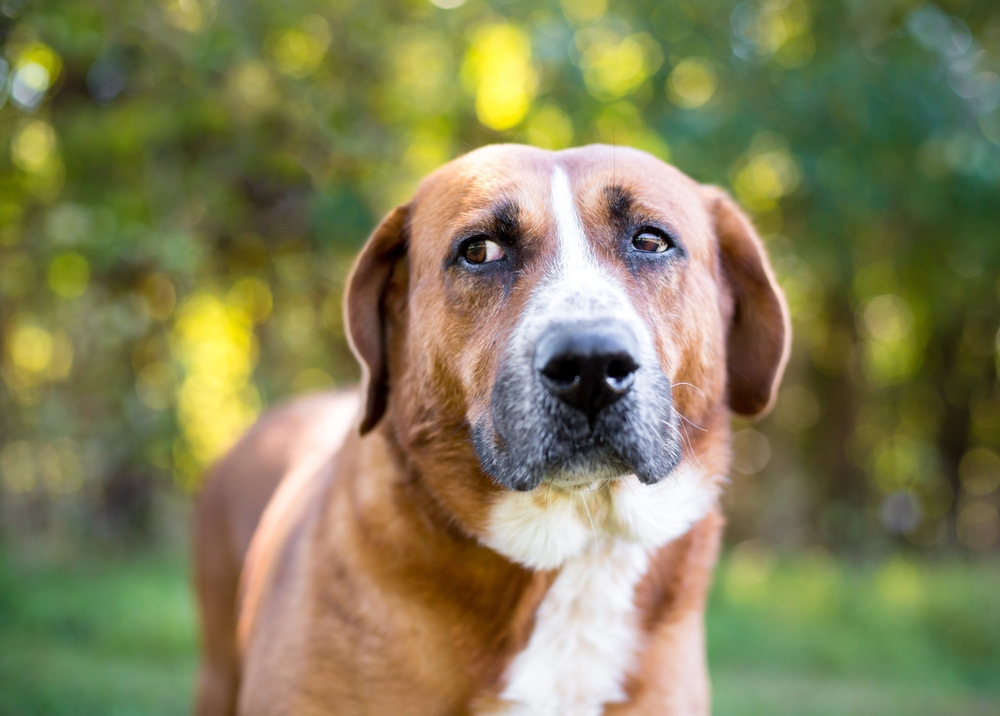
The dogs have won the title of “best friend of the man”, but are they unwavering or do they judge you secretly?
A team of scientists writing Animal cognition Tests to discover it by studying whether or not the listening dogs revealed a preference between two human volunteers – one that displayed generous behavior and another which acted selfishly. The results were not clear.
Listening to dogs behavior
The experience involved 40 company dogs divided into three categories (young people, adults and seniors) and two groups (listening and control). The listening group watched one of the two “demonstrators” dogs – Jasper, a 11 -year -old male labradoodle, or Emmi, a 4 -year -old woman – interact with two volunteers, a generous volunteer who offered treats and a selfish volunteer who hid them.
Meanwhile, a witness group observed the same behavior with an “imaginary dog”. After looking at the demonstration, dogs were lucky to interact with the volunteers themselves while the researchers were monitoring their behavior, specifically looking for panels such as the jump and the approach which showed that they favored a volunteer compared to the other.
While the team expected the dogs to show a bias towards the generous voluntary, the results were surprisingly not stated. Indeed, only three dogs showed a notable preference for one of the two volunteers after having started directly with them, two choosing the generous partner and a choice of the selfish partner. In all other cases, their behavior towards volunteers was no different from what would be expected of chance.
Find out more: Dogs dream, and it is most likely their toys, food and your
Do dogs judge humans?
In short, the study does not provide any direct evidence that dogs throw a judgment on humans for their behavior – but there is no direct evidence that dogs make not Throwing humans for their behavior.
Researchers attribute this lack of evidence to methodological challenges and, more specifically, the decision to use a test with two choices. The team also suggests that future research includes dogs with different life experiences, including free dogs, assistance dogs and police dogs. While pets tend to be well maintained and receive friendly responses from humans, those confronted with different circumstances may be more sensitive to human actions – and more likely to make a judgment accordingly.
“It is clear that the reputation formation can be more complex than we thought before, even for animals like dogs who cooperate closely with humans,” said the researcher corresponding to the Faculty of Kyoto A press release.
Connection to generosity and kindness
This is not the first study investigating the ability of our canine friends to judge our behavior – and the results were also mixed. Although some have not been able to show a connection, others suggest that dogs are really more likely to choose humans displaying features such as generosity, competence and kindness.
For example, an audience published in 2017 revealed that adult dogs living with families and in shelters preferred humans who have demonstrated generous behavior when puppies have not done so – suggesting that experience can be an important actor. Another noted that the dogs tested were much more likely to approach the winners of a rope game.
For the moment, the answer does not seem conclusive. What can take less the owners of animals by surprise is that the previous studies suggest that cats are completely confused by the shady behavior of humans, not approaching volunteers either or less frequently, whether they have been useful or useless for their owners or if they seemed friendly or aggressive.
Find out more: How do dogs tell the hour?
Article Sources
Our writers at Discovermagazine.com Use studies evaluated by high quality peers and sources for our articles, and our publishers examine scientific precision and editorial standards. Review the sources used below for this article:
Rosie McCall is an independent writer living in London. She has covered scientific and health subjects for publications, including Iflscience, Newsweek and Health.