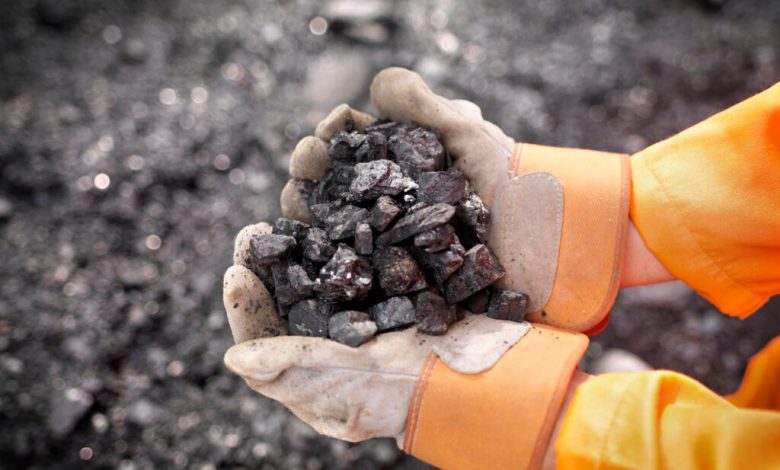
“I am an energy guy from an energy state and will continue to support our coal producers as long as the Good Lord gives me the breath to do it.” — Sen. Jim Justice (speech to West Virginia Coal Association)
We all agree, Jim Justice is an “energy guy” — but that does not mean that he is seeking to help West Virginians with their energy costs. In fact, West Virginians pay more in utility bills than many other states — and these rates are going up. Per data from the West Virginia Public Service Commission, “The state’s average household electricity rate per kilowatt-hour has surged 73%, natural gas has increased 51% per 1,000 cubic feet and water has risen 45% per 1,000 gallons from 2015 to 2025.”
Further, Justice and his family have made an outrageous amount of money from coal. One source listed him as the wealthiest U.S. senator, with a worth of $664 million. And not everyone is pleased with that fact. Per Taysha DeVaughan of Southern Appalachian Mountain Stewards, “We are so sick of this Justice family’s mines wrecking our mountains, waters and communities.”
I can relate.
I worked for various for-profit corporations for decades. I ended my career as a corporate senior vice president, working with major health care systems around the nation, including Charleston Area Medical Center.
But my first job after graduating college was working for the poverty program in the South. Later, I was a consultant for the Feds, evaluating the poverty program’s Community Action Agencies in various states, including mountainous eastern Kentucky (Pineville, Pikesville, etc.) along the West Virginia line. Back then, those city streets were lined up with men suffering from black lung directly caused by the mining industry.
Getting 87% of its electrical power from coal, West Virginia relies on coal more than any other state. Renewable sources (wind and hydroelectric) are a meager 7%. This course is costing residents “tens of millions of dollars more in electric rates because of economic losses at the companies’ coal-fired power plants.”
Further, there are health consequences. Per National Institutes of Health scientists, in West Virginia “residential proximity to heavy coal production was associated with poorer health status and with higher risk for cardiopulmonary disease, chronic lung disease, hypertension, and kidney disease.” But it has been a major employer, a fact that I understand.
My wife was born and grew up in rural Georgia. The only large employers in her county of about 10,000 people were the Kaolin (chalk) mines. When I first visited the county, I was amazed to see all of the cars covered in white chalk. But I was not surprised that my childhood asthma suddenly returned every time that we visited her parents who lived on a farm owned by her grandparents.
By the 1960s, her grandfather was too old to actively farm. When a local lawyer representing a Kaolin mine, someone he knew well from church, came to him offering a mining lease, he was interested. Without any family input or legal review, he leased the land — for the phenomenal sum of $1,500 a year for 50 years with no escalation clause.
For many decades, I heard from my wife’s family about how there would be a big pay-off for all of them when their land was mined by the corporation. Towards the end of the lease, their land was finally mined. Because of a clause in the lease, no payments were ever made by the mining corporation to my wife’s family. Not one penny, even though 100 acres were mined. I was told by a lawyer that if the lease had been written correctly, the family should have easily received seven figures.
Given my corporate background, I was the only one not surprised. Corporate boards are required by law to protect their shareholder interests, not to care about others. And that means maximizing long-term profits. In the words of one source, “The board has a fiduciary duty to see that senior managers run the company in the long-term interest of its owners.”
Numerous columns have been written about West Virginia’s over-dependence on coal. The question that remains is when will the public pressure politicians to do something about it?
SUBSCRIBE: GET THE MORNING HEADLINES DELIVERED TO YOUR INBOX


