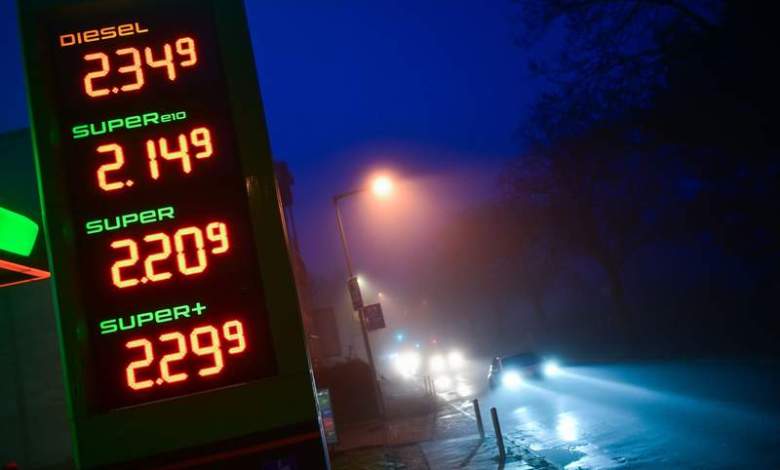

The surge in German energy prices caused by the war in Iran is similar in scale to previous crises, but less severe than after Russia’s invasion of Ukraine in 2022, official data showed on Thursday.
Following the start of the war in the Middle East on February 28, German motorists paid an average of 17.3% more in March for premium petrol and 29.7% more for diesel than one year earlier, the Federal Statistical Office said
Overall, fuel prices were 20% higher than in March 2025, while consumer prices for light heating oil rose by 44.4%.
By comparison, consumers at German petrol stations in March 2022 paid on average 42% more for premium petrol and 63% more for diesel compared to the previous year, with overall fuel prices 46.8% higher and light heating oil surging by 144.4%.
Oil prices have surged worldwide due to the blockade of the Strait of Hormuz, a key waterway for the global energy trade. However, the Wiesbaden-based agency said the rise has been less pronounced than in 2022 due to the higher baseline level of energy prices.
Over the past decades, there have been several sharp rises in energy prices during periods of global instability.
Fuel prices jumped by 32% within a year during the first oil crisis of 1973-74, and by 28% in the second crisis of 1979-80.
During the global financial crash in 2008-2009, prices fluctuated sharply on global markets, while the coronavirus pandemic initially caused prices to plummet before they recovered from mid-2020 onwards.


