Lotus drops its pure EV strategy as it teases hybrid V8 supercar


Lotus is moving away from plans focused on electric vehicles, but it’s still betting that electrification will help it stand out in the performance car space. The company has revealed a new Focus 2030 roadmap that includes a teaser for a V8 hybrid supercar, the Type 135.
The new strategy will include a mix of pure-combustion, plug-in hybrid (PHEV) and electric vehicles that Lotus says will stay true to the company’s roots of lightweight, driver-focused cars. The Type 135 (pictured above) is billed as Lotus’ “first ever” supercar and is expected to produce more than 986 horsepower when it arrives in 2028.
More details will come later this year, Lotus says.
X-Hybrid technology
Emira will remain in production

The British brand, owned by Geely, expects its personalized hybrid technology, dubbed X-Hybrid, to play a “central role”. The platform is built around a 900-volt architecture with up to 939 hp, an electric-only range of up to 217 miles, and the ability to charge a 70 kWh battery from 20% to 80% in nine minutes.
Lotus recently began delivering a PHEV version of its Eletre SUV (the Eletre X) to China with plans for a European release in the fall. The company expects its sales to hover around a mix of 60% PHEV and 40% EV in the near term, and is now pursuing a “customer-led transition” to EVs, which is when buyers think they are ready.
However, it is also keeping its petrol-powered Emira sports car in production, despite plans to phase it out in 2027 in favor of a hybrid model. This is the result of both a commitment to manufacturing cars in Lotus’ home country of Britain and “sustained consumer demand” for petrol sports cars. An update on the next Emira, said to be the “most powerful and lightest” version, is expected in the coming weeks.
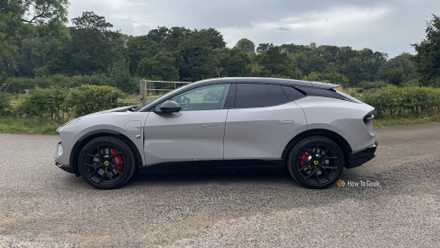
I spent 10 days with an electric SUV from a British sports car brand
10 days in a British sports car brand’s EV SUV taught me that it’s fast, fun and surprisingly easy to live with.
Why Lotus is returning to combustion engines for its cars
The tough electric vehicle market and its own financial challenges are to blame

Like other manufacturers, Lotus is struggling with a tough U.S. electric vehicle market, where the end of the federal tax credit has led to a sharp decline in sales. Automakers like Ford, GM and VW have scaled back their ambitions for electric cars in the country, although they still see the technology as the future. Lotus’ move to mixed powertrains could help it attract U.S. customers in the near term.
Lotus also describes Focus 2030 as part of an attempt to regain “financial discipline”. The brand’s deliveries fell 46% in 2025 compared to the previous year. Although cost cuts helped soften the blow, the group still recorded a net loss of $464 million. The company needs to rebuild its sales, which means making cars it is likely to sell.
The place of the hybrid supercar
In North America, these are more likely to be combustion engine cars (although the Etre EV is launching in Canada). Lotus is responding to strong demand for “new energy vehicles” in China, but is considering a wider range attractive to Europe, Asia-Pacific and the Middle East. With this in mind, the Type 135 supercar defines Lotus’ new approach: it’s a hybrid that could help reestablish the brand worldwide.
Source: Lotus


