SpaceX prepares to launch Starship V3, the tallest and most powerful rocket ever built


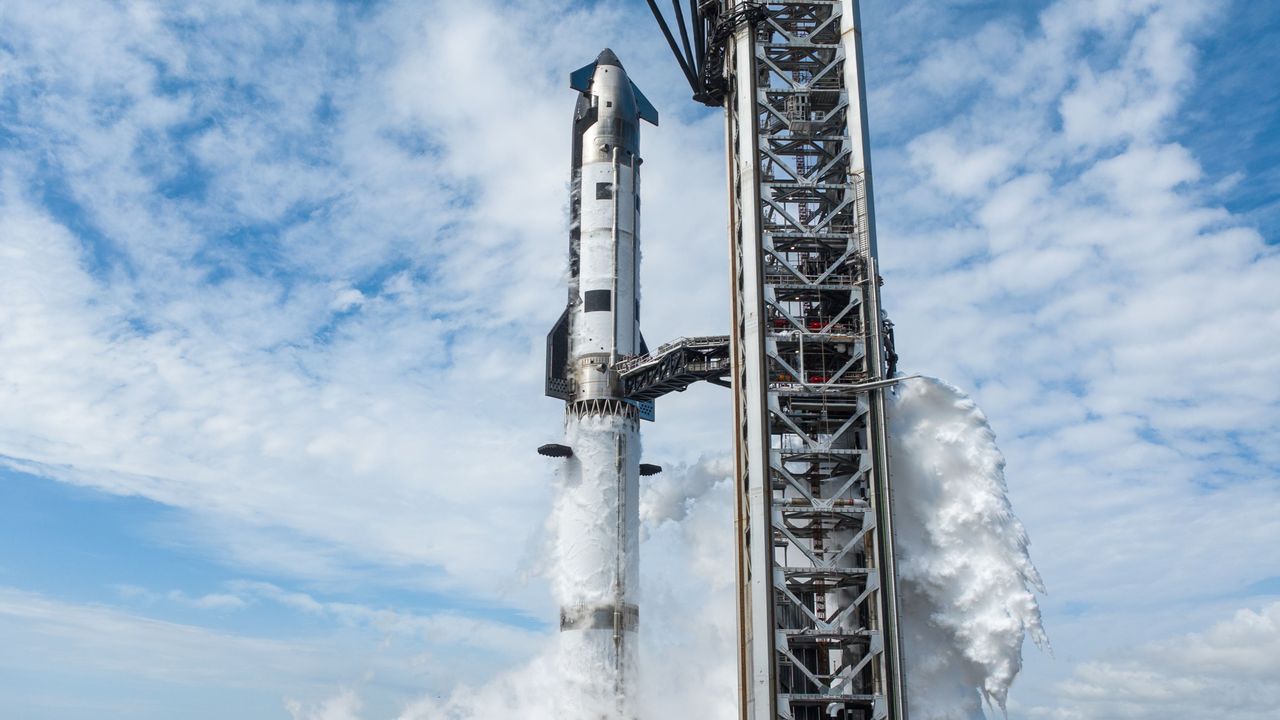
SpaceX will launch its next-generation Starship – the tallest and most powerful rocket ever built – as early as Tuesday, May 19, the company announced.
The Starship V3’s maiden voyage into space will be a major test for SpaceX, which wants to send humans to the Moon for NASA in 2028 and hopes to avoid the kind of spectacular explosions that have disrupted some previous Starship tests.
SpaceX has had its share of setbacks with Starship. Last year, Starship’s seventh and eighth test flights saw Flaming debris rains from the sky. The ninth did not achieve its goal and a spaceship exploded on the launch pad during a routine test before the 10th. However, Starship ended up having a 10th successful flight in August 2025, despite some damage, and its 11th round, in October, took place without incident.
The latest Starship, consisting of a Starship spacecraft and a Super Heavy rocket, is 407 feet (124 meters), taller than a football field, long and about 85 feet (26 m) taller than the NASA Space Launch System that carried the spacecraft. Artemis II Mission in orbit. It benefits from a series of improvements over its predecessor, including new Raptor 3 engines, and it will take off from a newly designed launch pad, according to a report. statement from SpaceX.
What will happen during the flight of Starship V3?
If everything goes as planned, the next test flight will last just over an hour. The spacecraft is supposed to ascend on a suborbital trajectory. The spacecraft will detach from the Super Heavy booster, which will turn around and return to Earth for a splashdown in the Gulf of Mexico. SpaceX is known for returning its rockets to the ground. But as this is the first test flight of a “significantly redesigned vehicle”, the company will not attempt its landing site “catch“.
After abandoning the Super Heavy booster, the Starship spacecraft is expected to deploy 22 Starlink simulator satellites. These dummy satellites will be similar to the next generation of Starlink satellites. Two of them will also scan the Starship’s heat shield, which SpaceX deliberately compromised.
“For the Starship entrance, a single heat shield tile was intentionally removed to measure differences in aerodynamic loading on adjacent tiles when a tile is missing,” a SpaceX spokesperson wrote in the release.
Finally, a successful test flight would see the spacecraft practice re-igniting a Raptor engine in space, before descending for a controlled landing in the ocean. (SpaceX did not specify where.)
Starship modifications
The third version of the Super Heavy booster features a variety of innovative features, including new grid fins at the bottom of the booster for added stability during landing, and a completely redesigned fuel transfer tube to allow all 33 new engines to ignite at the same time. The Raptor 3 engines themselves are said to provide more thrust than previous models.
Starship V3 also benefits from new features. For example, the spacecraft features a redesigned propulsion system that allows for a new method of engine starting, a higher fuel tank volume and an improved feedback control system for steering, according to EspaceX. Finally, changes to Starship’s launch pad include increased storage capacity for propellant and more pumps so the rocket can be filled faster.
The company said these changes “aim to unlock critical vehicle functions, including full and rapid reuse, propellant transfer in space, deployment of Starlink satellites and orbital data centers, and the ability to send people and cargo to the Moon and Mars.”
What does this mean for the Moon?
NASA is counting on commercial partners to help bring humans back to the Moon. This includes a commercial lunar lander that NASA needs to transport astronauts to the lunar surface on the upcoming Artemis IV mission. SpaceX has developed a moon landing variant of its Starship for this work, but the company faces competition from its rival Blue Origin and its Blue Moon Lander.
from NASA plan to return to the moon It’s a bit complicated, but basically the space agency aims to send astronauts to the Moon aboard its Orion spacecraft, as tested by the historic Artemis II Missionbefore encountering a commercial lander in lunar orbit. The commercial lander will then take the astronauts to the surface and launch them back to Orion for the return trip. Next year, NASA will test docking Orion with one or both commercial lander options in low Earth orbit.
NASA is clear that the lander’s readiness will determine which commercial provider can take astronauts to the lunar surface in 2028. Of course, that assumes NASA is also ready by then. The Artemis program is behind schedule and over budget and, at the time of writing, does not have a suitable spacesuit for a moon landing, which he expects from another commercial service provider.