The Hantavirus Isn’t the Biggest Threat We’re Facing


The government’s destruction of our pandemic preparedness is.
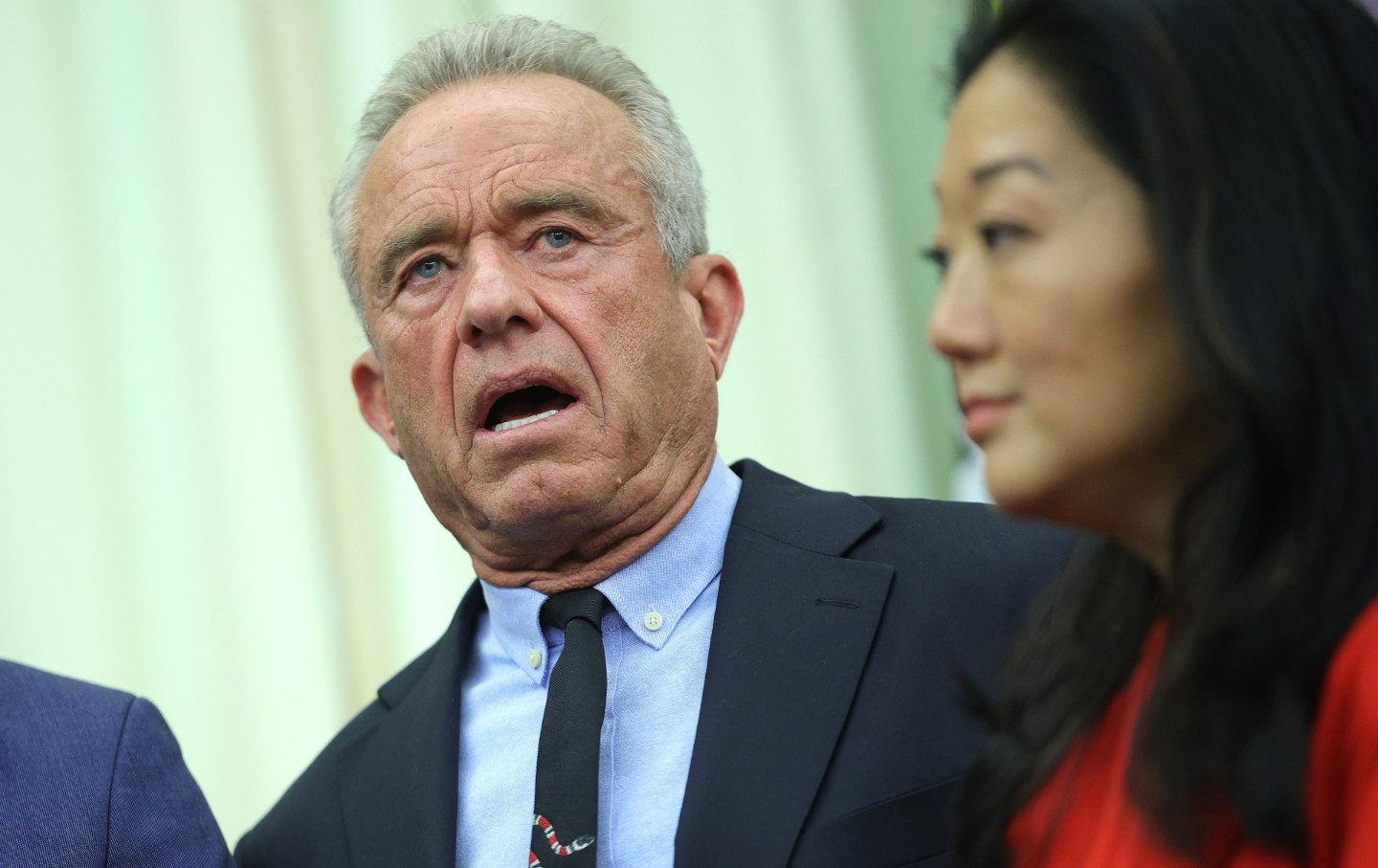
Health and Human Services Secretary Robert F. Kennedy Jr. answers a question about hantavirus in the Oval Office on May 11, 2026.
(Kevin Dietsch/Getty Images)
First, the good news: If you’re in the United States, you won’t get hantavirus. At least you won’t catch the strain of the pathogen that’s been making headlines lately.
This strain is known as the “Andes” variant, so named because it was previously confined to South America. I repeat: it is not coming for us. We have our own strain of hantavirus, made in the United States, called the “Sin Numéro” virus. It is transmitted by inhalation of aerosolized rodent droppings, urine or saliva and has caused fewer than 1,000 cases since its identification in 1993, with the greatest number of cases being in the South West. If you live in New Mexico, Arizona, or Colorado, the risk of contracting the virus while cleaning a shed or garage is low but non-trivial. Put on an N-95 mask and wash your hands if you’re concerned. Otherwise? Everything will be fine.
Although the Andes virus is known to spread through human-to-human contact, people exposed in the United States during the outbreak on the MV cruise ship Hondius have been sequestered for now at the Administration for Strategic Preparedness and Response Regional Center for Emerging Special Pathogens at the University of Nebraska Medical Center/Nebraska Medicine in Omaha or at the Serious Communicable Disease Unit at Emory University in Atlanta. Once assessed, they will undergo a 42-day monitoring period in isolation. If they can self-isolate at home, this will be permitted. Will we see some more cases? Perhaps even beyond those currently confined? Perhaps, but still, the Andes have mitigating characteristics that distinguish them from influenza or SARS-CoV-2, and close and prolonged personal contact is necessary for transmission. Overall, large-scale outbreaks are now unlikely given the control measures in place.
That’s the good news. Now let’s move on to the less good news.
This is a dry run for any new or known pathogen with pandemic potential. And today, the people who would be tasked with managing such a pandemic are the worst people possible: from Robert F. Kennedy Jr. at Health and Human Services to Jay Bhattacharya at the National Institutes of Health and the Centers for Disease Control and Prevention, to Russell Vought at the White House.
Together, these men vacated the White House Office of Pandemic Preparedness and Response Policy; closed 10 emerging infectious disease research centers intended to study zoonotic pathogens that jump from animals to humans, such as hantaviruses; gutted the STOP Spillover Project, a USAID-funded network that tracked “threatening animal viruses in seven countries”; suspend research at the Integrated Research Center in Frederick, Maryland, which studies high-risk pathogens; left key CDC positions with acting directors, including the Division of High-Consequence Pathogens; stopping research on mRNA vaccines, which is one of the platforms being considered for a hantavirus vaccine; refocused infectious disease research from novel pathogens at the NIH to more common infections; proposed cutting funding for state and local preparedness grants to health departments and hospitals across the country; canned full-time cruise ship inspectors and port health workers from the CDC; and we left the World Health Organization, leaving ourselves to fly alone, without a key source of international collaboration and coordinated planning.
Current number

This list is astonishing in its exhaustiveness and its dangerousness. If you wanted to make Americans easy targets in the face of any new pandemic, these guys checked all the boxes next to the to-do list items to ensure our collective vulnerability is maximized. So remember, RFK Jr. is a proponent of terrain theory, the idea that it’s your environment that makes you sick, not infectious diseases, and that only those who are weak have anything to fear from viruses like SARS-CoV-2. Jay Bhattacharya, meanwhile, is an economist who made his name downplaying the threat of Covid-19 based on his own flawed study, railed against infectious disease containment measures, and barely made it through an interview with CNN’s Jake Tapper about hantavirus last week. And Russ Vought, the administration’s Reverend Jim Jones, is determined to create an apocalyptic vision of the United States collapsing into superpower suicide from which its Christian nationalist state will rise up, causing the rest of us collateral damage on the road to domination. For those who were dissatisfied with our national leadership during Covid and who championed Trump’s dream team as heralds a new era in American public health and biomedicine, well, how’s that going for all of you?
So while there is much discussion about the risk of the Andes virus, and everyone now has an opinion on this relatively rare infection and its potential to spread, the real story is the collapse of pandemic preparedness in this country – the entire public health and scientific infrastructure that has disappeared, the purge of the talent, experience and expertise that was supposed to keep us safe. A new epidemic is clickbait: everyone wants in and a piece of the action. The ones that really interest me are the researchers, clinicians, and epidemiologists working on hantaviruses and emerging diseases—many of whom have had their grants from NIH, USAID, and other federal agencies cut. Hantavirus is not the coming scourge, but there surely will be one in the future. We have never been more exposed and vulnerable than we are today when this moment arrives. This is what should scare you to your core.
From the illegal war against Iran to the inhumane fuel blockade against Cuba, from AI weapons to crypto corruption, we live in a time of staggering chaos, cruelty and violence.
Unlike other publications that reproduce the opinions of authoritarians, billionaires and corporations, The Nation publishes stories that hold the powerful accountable and center communities too often denied voice in national media – stories like the one you just read.
Every day, our journalism weeds out lies and distortions, contextualizes developments that are reshaping politics around the world, and advances progressive ideas that fuel our movements and incite change in the halls of power.
This independent journalism is only possible with the support of our readers. If you would like more urgent coverage like this, please donate to The Nation Today.


