A new dinosaur dubbed the ‘Last Titan of Thailand’ weighed more than 9 elephants


Shortly before an asteroid crashed into Earth and wiped out most of the dinosaurs, a long-necked dinosaur the size of nine adult Asian elephants may have been near a windy river, peacefully eating plants. The bones of Nagatitan chaiyaphumensis (alias Nagatitan) would lie there for millions of years, until paleontologists digging near a pond in northeastern Thailand found them. This newly discovered herbivore is the largest ever discovered in Southeast Asia and is described in a study published today in the journal Scientific reports.
Paleontologists found that of Nagatitan of the spine, ribs, pelvis and legs about 10 years ago. Its front leg bone alone was as long as a human’s and the team believes that Nagatitan weighed 27 tons (or approximately 5,950 pounds) and was 88.5 feet long. It was a member of the sauropod dinosaur family, long-necked and long-tailed herbivores, which includes Brontosaurus.
“Our dinosaur is big by most people’s standards: it probably weighed at least 10 tons more than Dippy the Diplodocus (Diplodocus carnegii)”, Thitiwoot (Perth) Sethapanichsakul, study co-author and doctoral student from Thailand studying at University College London, said in a statement. “However, it is still overshadowed by sauropods like Patagotitan (60 tonnes) or Ruyangosaurus (50 tons).
The first part of its genus name “Naga” refers to a mythological aquatic serpent in Thai and Southeast Asian folklore, while “Titan” refers to the giants of Greek mythology. Its species name chaiyaphumensis means “from Chaiyaphum”, the Thai province where the fossils were first discovered.
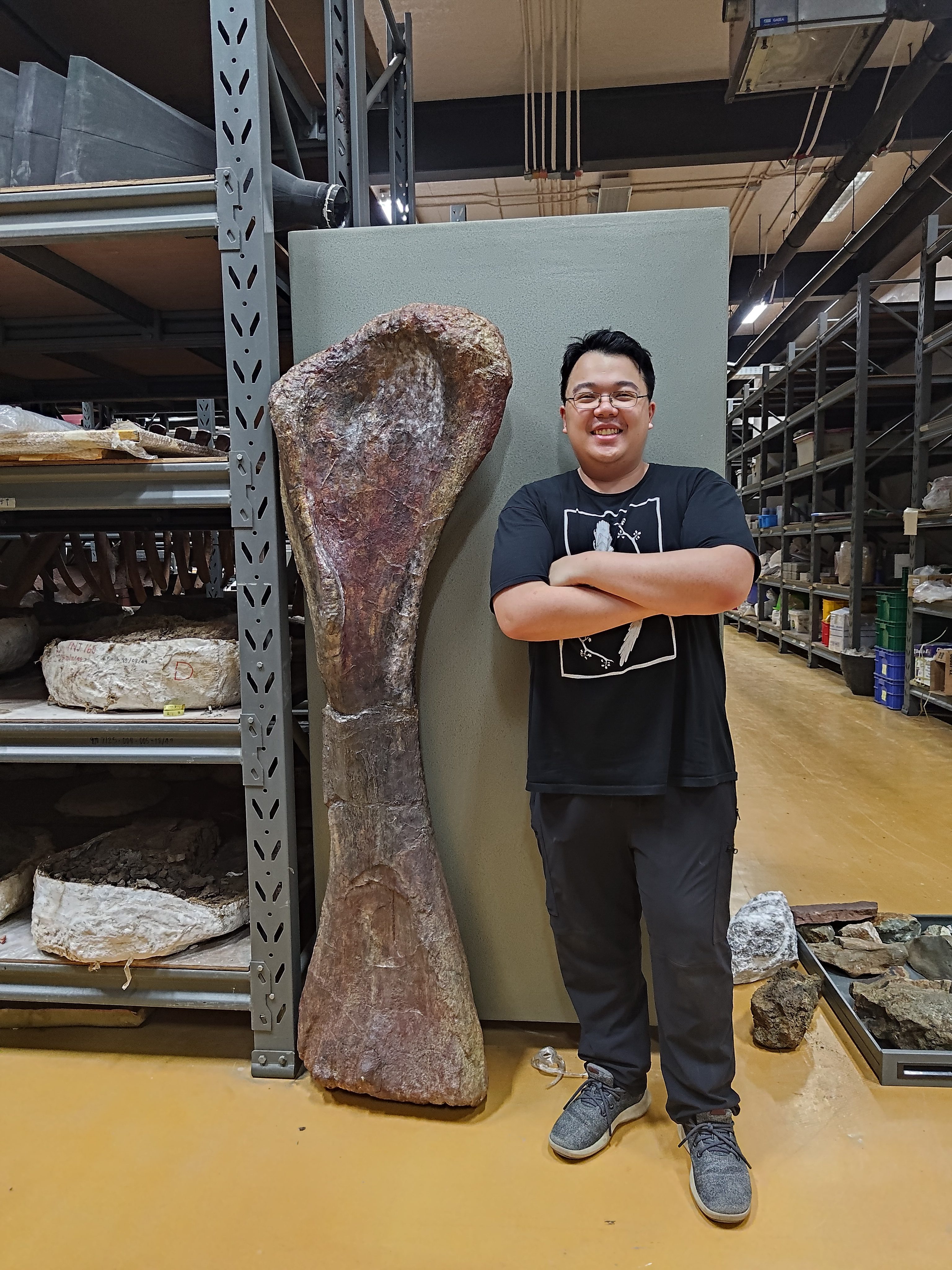
“We are referring to Nagatitan as “the last titan” of Thailand. Indeed, it was discovered in the youngest dinosaur-bearing rock formation in Thailand,” said Sethapanichsakul. “It is unlikely that the younger rocks deposited towards the end of the dinosaur age contain dinosaur remains because the area had by then become a shallow sea. So this may be the last or most recent large sauropod that we will find in Southeast Asia.
Nagatitan lived between 100 and 120 million years ago at the beginning of the Cretaceous period. At that time, northeastern Thailand would have been arid to semi-arid, perfect for sauropods. These gentle giants used the surface of their long necks and tails to release heat and regulate their body temperature.
The bones were also found in what may have been a winding river system, which would have been home to fish, crocodiles and even freshwater sharks. Nagatitan would have lived with smaller herbivorous dinosaurs, including iguanodontians, some cousins of Triceratops called ceratopsians, as well as large carnivores and flying pterosaurs.
Interestingly, the team discovered that Nagatitan belongs to a smaller group of sauropods called Euhelopodidae, which have only been found in Asia. It stands out from other species in this group due to a combination of unique features on its spine, pelvis and legs. Nagatitan is also the 14th dinosaur to be named in Thailand and a life-size reconstruction is now on display at Asiatique’s Thainosaur Museum in Bangkok.
“I was always a dinosaur kid,” Sethapanichsakul said. “This study not only establishes a new species, but also fulfills a childhood promise of naming a dinosaur.”

The best new PopSci 2025 releases