4 takeaways from Tuesday’s primary night in half a dozen states : NPR

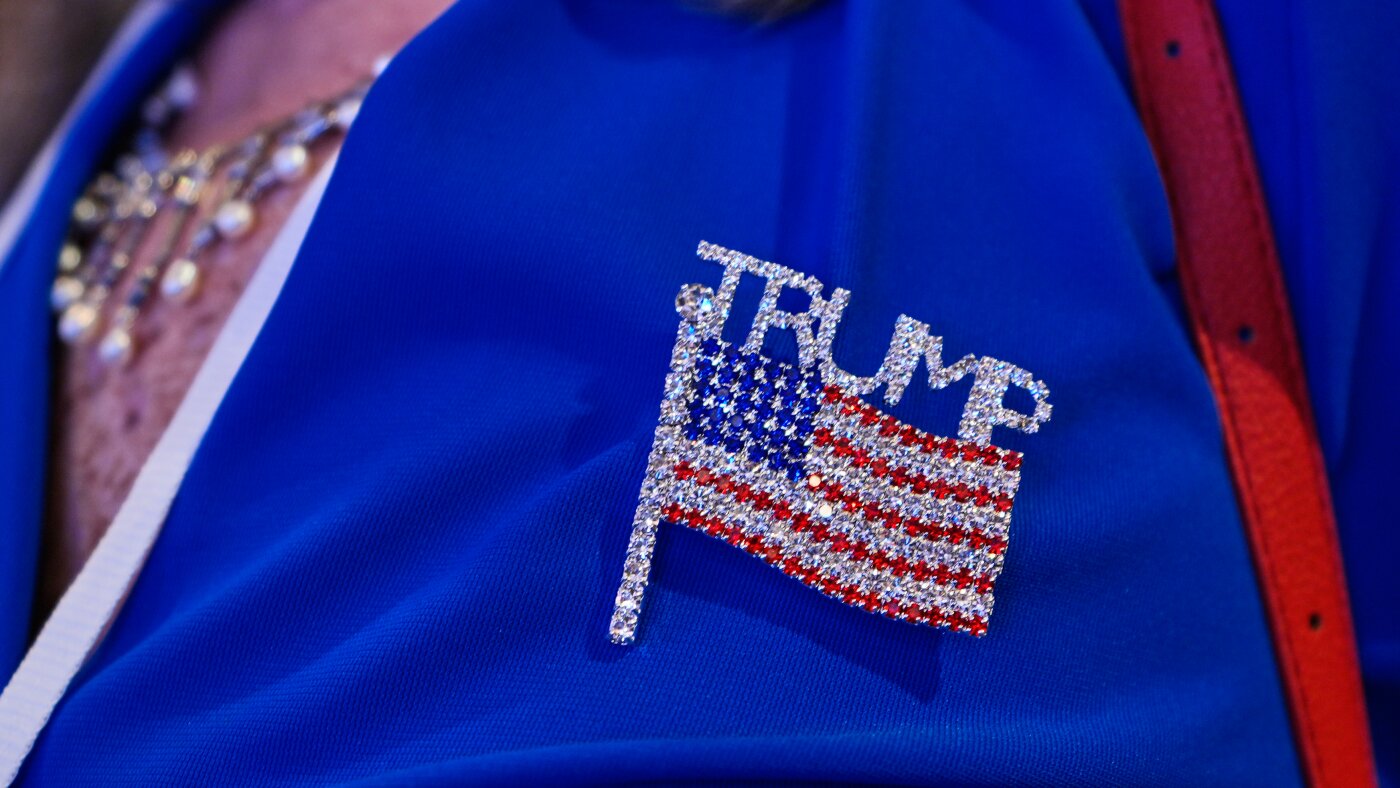

A participant wears party colors during a primary election night for Georgia gubernatorial candidate Rick Jackson May 19 in Atlanta.
Brynn Anderson/AP
hide caption
toggle caption
Brynn Anderson/AP
President Trump scored more victories in the Republican primaries on Tuesday, including in Kentucky.
There, Rep. Thomas Massie lost to a Trump-backed candidate after the president and his allies bombarded Massie with tens of millions of ads.
In fact, it was the most expensive primary in history with $33 million spent in total on TV ads, much of which was aimed at Massie, according to NPR’s ad tracking partner AdImpact.
As Trump continues to rack up victories on his revenge tour, general election opponents wait in swing districts and states, and Trump is a double-edged sword — popular with the base but unpopular with more than half the country.

Can front-line Republican candidates navigate these choppy waters? And what happens next?
Here are four takeaways from Tuesday night’s election:
1. Trump flexes his muscles (again) during the Republican primaries
Trump has once again made it clear that he is the alpha dog of Republican Party politics.
Massie became the latest high-profile political casualty Tuesday night. Trump said all he needed was a “warm body” to remove the thorn in Trump’s side that Massie had become.
And at Ed Gallrein, who served in the Navy as a SEAL officer, Trump said he had that hot body — with “a big, beautiful brain.” In the end, it wasn’t a very close race, with a 10 point lead.
After Republican Sen. Bill Cassidy’s defeat in the Louisiana primary on Saturday, this week has been a punctuation mark on Trump’s strength with the party. In addition to Massie and Cassidy’s defeat, another Trump foe, Georgia Secretary of State Brad Raffensperger, also failed to advance to the Georgia gubernatorial runoff Tuesday night.

Raffensperger was at the center of controversy over the 2020 presidential election in the state when Trump pressured him to overturn the election results that saw Democrat Joe Biden narrowly win the state. Raffensperger refused to follow and now joins a list of Republicans whose political careers were cut short because Republican voters punished them after their opposition to Trump.
2. Primaries, however, are not general elections. Georgia, in particular, is a good reminder of this.
The Senate primaries in Georgia and Alabama also focused on candidates trying to outdo each other. They hugged Trump as tightly as possible to get through these contests.
Trump certainly showed his strength in these Republican primaries, but primaries are not general elections, and Alabama and Georgia, although neighbors, have become very different states. They both have conservative primary electorates, but Alabama is a much more conservative electoral state. Georgia is much more purple and has two Democratic senators. One of them, Jon Ossoff, is a top GOP target this fall.
It’s worth remembering that as the Republican primary heads toward a runoff between the two top vote-getters on June 16, Trump may be popular with conservative base voters, but he is just as, if not more, unpopular with undecided voters, according to polls, focus groups and reports. His approval ratings are among the lowest in any of his presidential terms, particularly when it comes to the economy – the top issue for voters. This has been Trump’s dilemma for Republicans for as long as he has been party leader. Republicans need him to mobilize the base, but he is toxic to independents and now to many crossover voting groups, who voted for him in 2024, like Latinos, according to polls.
In a general election in a place like Georgia, Republicans must be careful not to appear too extremist if they want to have any chance of unseating Ossoff in November.

3. Pay attention to economic messages from Republican candidates in swing districts
One way to do this is to focus on table issues. The economy and prices in particular remain voters’ main concerns. Let’s zoom in on a place where this economic district message is going to be tested, a place that still seems full of indicators: Pennsylvania.
In fact, there are three congressional elections here that the Cook Political Report considers toss-ups. This includes the 7th Congressional District in the Lehigh Valley. It features freshman Republican Ryan Mackenzie, who will now face Democrat Bob Brooks, president of the state firefighters union.
Mackenzie focused on the economy — and how he believes it helped working-class voters. In a roughly $225,000 ad, according to AdImpact, Mackenzie points out that he “voted for tax cuts for working families, which means higher wages and lower taxes for working families, no tax on tips and no tax on overtime.” He also mentions wanting to develop health savings accounts and maintains a hard line on immigration.
Is this a winning message? This will be tested as Republicans in these types of districts are currently struggling given the national political environment and while Democrats are looking to flip this district, Trump won by 3 points in 2024 and narrowly lost four years earlier. Trump’s economic approval rating is in the 30s, and people blame him for rising prices, according to polls.
Democrats, meanwhile, are portraying Brooks as “one of us” — “a firefighter, snowplow driver and labor leader” who “will stand up to corporate greed and a corrupt political system.” It’s a left-wing, working-class populist message that will also be tested — as will Democratic Gov. Josh Shapiro’s political strength in this key presidential state as he eyes a possible run for higher office in 2028.
4. Trump seeks to stay high – in Texas

Trump seeks to complete May sweep in Lone Star state. On Tuesday, Trump made the surprise decision to support Ken Paxton, the controversial state attorney general, in the Republican primary runoff against Republican Sen. John Cornyn. Trump had pledged his support after Cornyn failed to reach the more than 50% threshold to win the primary.
The smart money was on Trump to support Cornyn to avoid a complicated, drawn-out primary — and to keep that Senate seat safely in Republican hands. Agents close to Trump were working for Cornyn, and that seemed to be the direction things were heading. But Paxton then came out in favor of the SAVE America Act, the election law championed by Trump that would require not only voter ID but also birth certificates or passports to register to vote.
That seemed to put an end to Trump’s endorsement of anyone — until Tuesday, when Trump flipped the script and went with the uber-MAGA Paxton. Make no mistake: This puts Texas on the map. Texas was seen as likely a much easier victory for Republicans in November with Cornyn as the GOP nominee than if it were Paxton.
Paxton will likely still be the slight favorite against the Democratic nominee, state Rep. James Talarico. After all, this is Texas, and no Democrat has won statewide since 1994. But Republicans will now have to call on money to try to save this seat — and it will cost a lot of money. Expect Trump’s political action committee, MAGA Inc., with its massive war chest and now Trump’s support, to play a big role in trying to keep this seat red.


